
IMPACT OF SOCIAL MEDIA INFLUENCERS ON YOUTH
how online influencers are affecting youth and money


Anybody who uses a mix of social media channels and tools to influence their fans is known as a social media influencer. These people are usually highly active on the internet, have a big fan base, and are well-versed in trade techniques. Surprisingly, statistics show that social media influencers have a greater social media impact than celebrities like actors and athletes. According to statista, online influencers are trusted by 70% of the youth of India in the age group of 15-24 years.
Businesses nowadays adopt a consumer-centric approach and tend to prefer digital media marketing. On social media platforms, advertising and marketing are done in a very adroit manner, usually by online influencers. These online influencers have a strong fan base and followers and are well-versed in marketing techniques, and they get paid by online branding. Youngsters have a higher admiration for influencers.
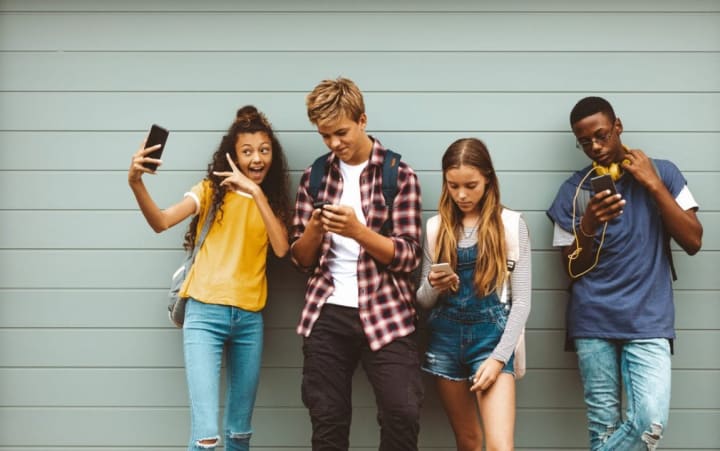
According to McKinsey & company’s research in India, 80% of customers consider a brand that is suggested by prominent influencers. Every day, millions of products are marketed by online promoters. On a social media platform such as Instagram, influencers aim to connect their followers by interaction, including trust-building. In order to market a product and build trust, influencers provide audio-visual content in which they prove the authenticity of products.
The alluring audio-visual content of social media influencers, such as filtered photos, travel vlogs, and partying pictures, can have a greater negative effect on youth’s lives. According to Statista 2021, teens and adolescents in the age group of 13-19 years constitute 31% of total social media users in India; on average, they spend 2.4 hours on social media a day (The Hindu). One viewpoint seems to be that teenagers are now more lured to this social media culture because they are at a stage of life when their self-esteem is being seriously questioned. Excessive usage of social media can hinder social adaption and coping processes.
Sometimes teens get worried and sad, and they think that why they are not as privileged as the influencers, and this thought leads to low self-esteem and insecurity; this can have a huge impact on their mental health as well. Influencers have the skill to lure their followers. By applying makeup and wearing trendy outfits, they make their followers feel insecure about their looks and body. Attractive pictures showing ideal body shape make their followers consider an option of artificial surgery.
Sometimes influencers spread misinformation on social media; adolescents of age group 13-19 trust these influencers blindly; as a result, they are having less interaction with their family members. To find a solution to a personal problem, adolescents first search it on youtube; they want to listen to an influencer’s view instead of their family members and friends.

Youngsters, by following influencers, have become politically and socially biased in some or another way. Our country's young have reached an age when they are grown and educated enough to make judgments about what is and is not best for them. For any of their life choices, they don't require the guidance of any so-called influencers. So, instead of idolizing selfish influencers, it's time to become more self-aware and self-reliant.
Parents and teachers have a great role in teaching media literacy to the youths, and youths should also think about what is good and bad for them; here, influencers also have a responsibility to be ethical and honest with their followers on social media. Without a question, social media platforms has a strong influence on Modern youths, and how people utilizes this digital platforms is crucial.
When utilized appropriately, social media may be a powerful tool, but "because something is free online, you are the product, not the consumer" (Jonathan Zittrain).
About the Creator
Keep reading
More stories from writers in Motivation and other communities.
“The Selflessness of Hatim Tai”
In pre-Islamic Arabia, where evils were everywhere, there were still some good people. Among them was Hatim. Numerous stories have been told about Hatim. Even if we set aside the exaggerations in these stories, the truth remains that Hatim’s generosity is proverbial. In Islam, the generosity of Hazrat Uthman (RA) is exemplary, and countless incidents about him are well known.
By Sudais Zakwan6 days ago in Motivation


Comments
There are no comments for this story
Be the first to respond and start the conversation.