
I Was Average at Everything I Did Until I Learned How to Do This
What kills dreams and goals isn’t toxic positivity.

If I had to use one word to describe the majority of my life, the word that comes to mind is “mediocre”.
Don’t get me wrong, I’ve always worked really hard at stuff, but for most of my life, mediocrity was my middle name. I had mediocre grades, I was a mediocre athlete, a mediocre friend, and I had a haunting sense of my limits that followed me everywhere I went. I was busy, but I was never exceptional.
To make matters worse, my mind couldn’t handle my overwhelming mediocrity.
I had a full-blown victim mentality. The orientation through which I viewed the world was constructed around the idea that I had no power to change the person that I saw in the mirror. Deep down, I never believed in my hard work because no matter how hard I tried, I knew my results would be mediocre. I worked hard, but I didn’t believe in myself.
This was true for my entire life until I learned how to quit.
How quitting took me to the next level
The first time I experienced the benefits of quitting, I was just 16.
I was a highly mediocre high school wrestler and a highly mediocre soccer goalie. I had the best of both worlds in terms of social clout — the soccer players were “the cool kids” and the wrestlers were “the tough guys” — I was both. But on the field and on the mat, I struggled to be cool or tough. I was a letdown to myself, my teammates, and my coaches.
I wanted to be everything, and because of that, I was nothing. Eventually, I realized that I had to make a choice. I had to quit something, and the decision terrified me. I’ve always been anxious, so the thoughts of who I’d let down, the friends I’d lose, and the fear of regret gave me panic attacks, insomnia, and a nervous hair-pulling tick that I still get to this day.
But I had to make a choice, and eventually, I said “fuck it” and made one. I quit playing soccer and became a wrestler and focused my entire life on wrestling for the next 2 years. I got pretty good at wrestling. Not all-state or anything, but good enough to realize that the right choice was making the choice.
When high school graduation rolled around, I had the option to continue wrestling in college, but I quit again. I was starting to get the hang of this quitting thing. I quit wrestling to focus on my studies and to become a mixed martial artist, and quickly I became obsessed with fighting — specifically, I became obsessed with Brazilian Jiu-Jitsu, one of the key aspects of MMA.
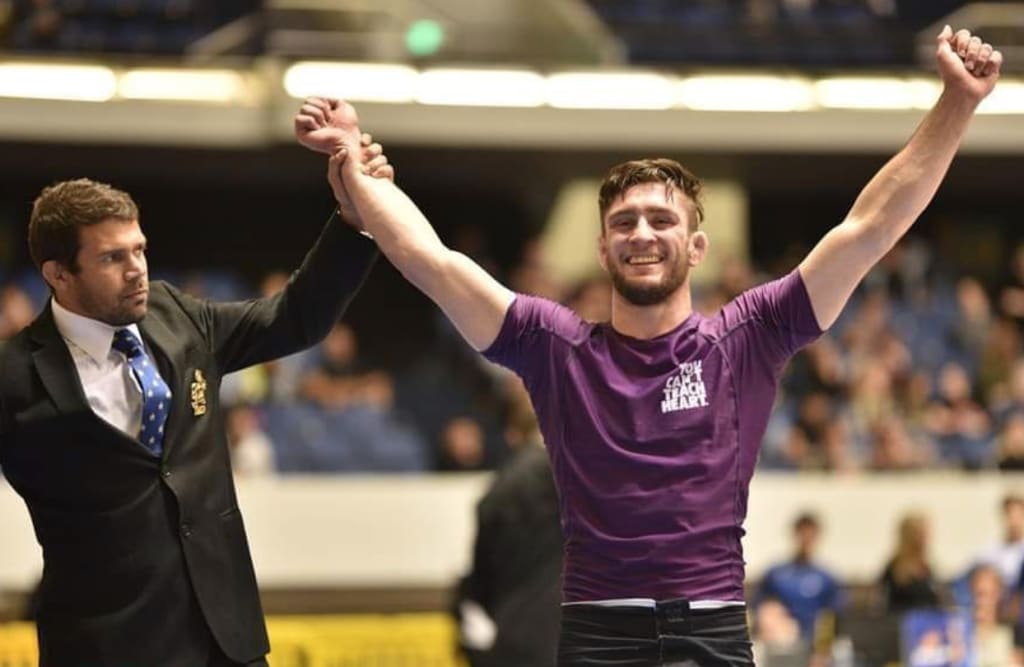
Then, at 20, I quit MMA and became a full-time Brazilian Jiu-Jitsu competitor. I’ve never looked back. As I look at my medals from all of the biggest tournaments in the world (including a world championship gold in 2019), one thing is clear: I’ve quit the right things.
Grit is only important if you can quit something else
Psychologist Angela Duckworth’s book Grit: The Power of Passion and Perseverance does an incredible job of teaching us how not to quit, but most people miss the point of the book.
Not quitting just for the sake of not quitting is just as detrimental as quitting.
“It soon became clear that doing one thing better and better might be more satisfying than staying an amateur at many different things” — Angela Duckworth, Grit: The Power of Passion and Perseverance
Duckworth’s book bothers a lot of people because people don’t like being told to “work harder”. It’s an exhausting solution to our problems, and not every problem can be solved with hard work. However, the truth is, if you want to become world-class at anything, hard work is one of the most important prerequisites.
If you want to win world championships, have incredible relationships, and be wildly successful, hard work is required. However, that’s still only a part of the story.
Another part of the story that gets way less air time is all of the quitting that you have to do on your way to the top.
Obsession proceeds success
This is why you feel like a crazy person whenever you go “all-in” at something.
Whether it’s writing, Jiu-Jitsu, a relationship, or any other endeavor that you begin in life, there comes a time where you have to decide: do I press forward or do I quit?
Seth Godin calls this time of indecision “the dip”. The truth is, we never know if we have what it takes to become “the best in the world” at anything. We never know if we’re going to marry someone or if they’re going to leave us. We never know if we can win world championships or write bestsellers. Innate talent exists, but it doesn't dictate success nearly as much as we think it does.
I spent pretty much my entire life in college in a constant dip. I trained Jiu-Jitsu 6–7 days per week, 2–3 times per day for 5 years, and I was constantly underperforming. Sure, I was passionate about what I did, but I was still berated by my own doubts every single day. While my friends went out and partied, I went to the gym. While they studied, I went to the gym. While they slept, I studied… then went to the gym again.
I did the work I thought I had to do, and it made me feel like an outcast. I didn’t want to be uncommon, I wanted to fit in. I wanted to be included and invited to happy hours and house parties. I didn’t want everyone to think I was some crazy guy who “lived for the gym”. I’ve never “lived for the gym”, I just wanted to achieve my dream.
My dream of being a Jiu-Jitsu world champion was the first thing that I knew I couldn’t quit.
Treat your goals like investments
There was no productivity hack that helped me overcome the 5 year period where I felt like a madman for chasing my dreams. I tried everything. Cold showers, meditation, drinking alcohol, not drinking alcohol, serial dating, being antisocial. I tried it all.
Nothing made me less anxious about my future.
That’s because what helps you overcome the dip isn’t a habit, it’s a cost-benefit analysis (CBA).
We typically think of CBAs for analyzing our investments, but we don’t think of them for analyzing our goals. This is silly to me because goals are an investment. Goals are an investment of time, energy, and resources. To achieve a goal, we have to sacrifice time, money, relationships, and sometimes even our bodies.
I’m not trying to scare you, I’m just telling you how it is.
What can tell you is that everything that you think about achieving your dreams is true. It’s just as painful as you imagine — maybe even more so. It’s just as hard as you might think, and the risks are just as terrifying.
But at the same time, the feelings of satisfaction that you get when you achieve huge goals are just as magical as you think they are. When I was in my deepest dip, my biggest fear was that I’d make it out and I’d still feel just as empty and lost as I did before. I’m telling you right now that if your dream is true to your heart, you will not feel empty when you achieve it. You’ll feel more than a sense of purpose, you’ll feel true self-actualization.
That’s a cause worth quitting for.
Closing thoughts
The way that we talk about goals in 2021 breaks my heart. Whether it’s because of Covid, social media, or perhaps a combination of the two is irrelevant. We talk about goals the same way we talk about pipedreams. We act as if we have the same chances of achieving self-actualization as we do of becoming superheroes.
The funny thing is, to me, by achieving your goals, you have the capability of becoming the hero that you’ve always needed. It’s not “toxic positivity” to tell people that they can achieve their goals, it’s hope.
There’s a common cliche in English soccer, “it’s the hope that kills you”. This isn’t true. Hope doesn’t kill anything. What kills dreams and goals is a lack of commitment, a lack of selective grit, and most importantly, a lack of quitting the things that aren’t central to the overarching purpose.
If you’re anything like me, maybe you’re just a few big “quits” from achieving your wildest dreams.
About the Creator
Christopher Wojcik
writer. martial artist. thinker. for more: https://chrismwojcik.substack.com/
Keep reading
More stories from Christopher Wojcik and writers in Motivation and other communities.




Comments
There are no comments for this story
Be the first to respond and start the conversation.