
“I Quit Social Media for 60 Days—Here’s What Happened to My Mind”
Breaking free from the scroll: How disconnecting from social media rewired my focus, emotions, and inner peace.
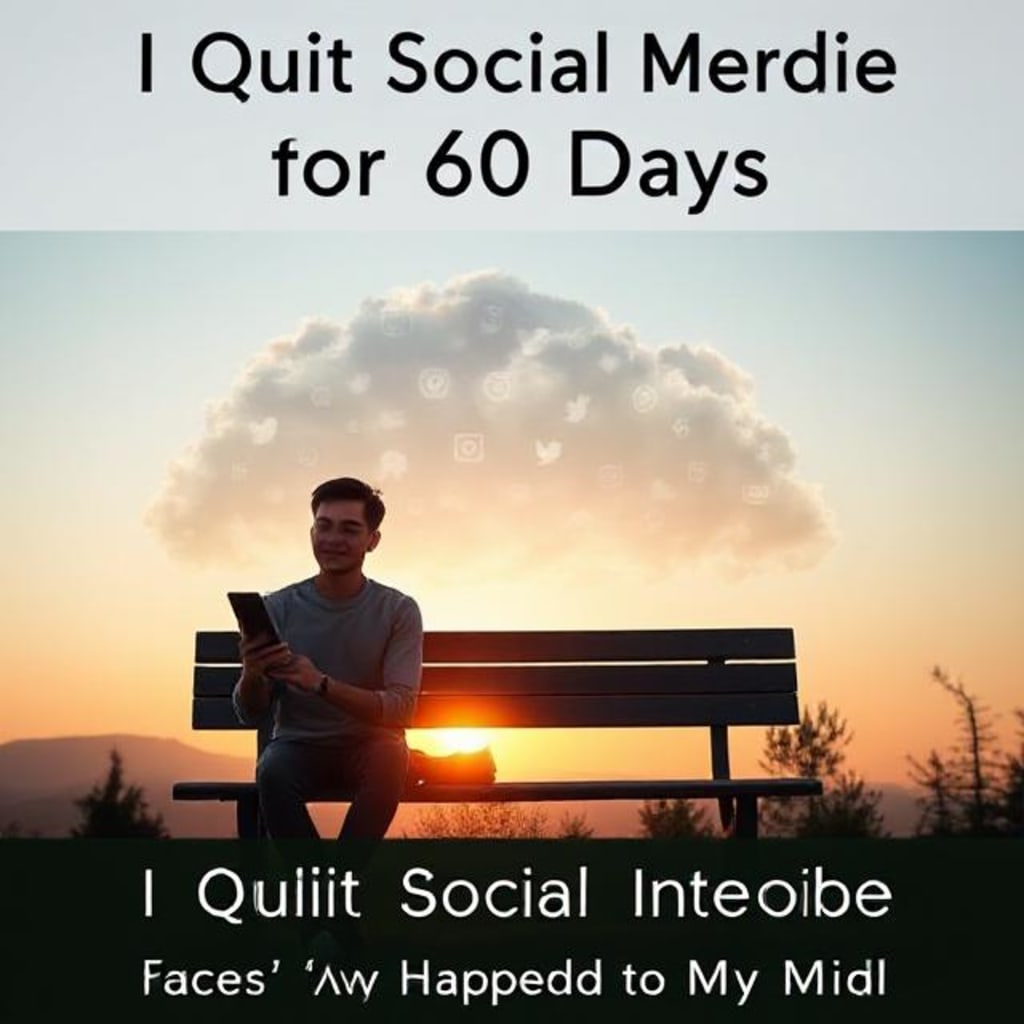
We live in a world constantly screaming for our attention—notifications, likes, shares, DMs, trends, reels, memes. For most of my adult life, I didn't realize how entangled my identity and emotional well-being had become with the digital platforms I scrolled daily. It wasn’t until my mental health hit a wall that I decided to experiment with something radical: a 60-day total break from social media.
What followed was far more profound than I expected—not just a digital detox, but a complete rewiring of my mental clarity, emotional resilience, and sense of purpose. This is my story, and what I learned.
Day 1–7: The Digital Withdrawal Was Real
The first few days were surprisingly brutal. I felt a constant, nagging pull to check my phone, even though I had deleted Instagram, Facebook, TikTok, Twitter, and even YouTube. My thumb hovered over the spot where my social icons used to be—out of pure habit.
I realized I wasn't just addicted to content—I was addicted to dopamine spikes. Every like, every story view, every comment gave me a little hit. Without it, I felt… empty. Anxious. Left out.
By Day 5, I experienced something I hadn’t in years: silence. Not just external quiet—but internal stillness. No noise from the endless opinions of strangers. No mental clutter from comparing myself to influencers or friends.
Week 2: Mental Clarity and Emotional Flashes
Around the 10-day mark, something unexpected began to happen—I started thinking in full paragraphs again.
Instead of fragmented thoughts and split attention, I found myself able to focus on tasks without instinctively checking my phone. I could read an entire chapter of a book without losing track. I started journaling again. It felt like my brain was defragmenting, like an old hard drive finally being optimized.
But along with clarity came emotional turbulence.
I noticed emotions I had been suppressing or scrolling past—insecurities, loneliness, even boredom. Social media had become my numbing agent. With it gone, I was forced to sit with my feelings—and surprisingly, that’s where the real healing began.
Week 3–4: Reconnection With Real Life
By the third week, I began to feel more connected to reality—and to people.
Conversations felt deeper. Meals became intentional moments, not just something to photograph. I even started calling old friends I hadn’t spoken to in years. The absence of curated feeds made me crave real connection, not just likes and emojis.
I began walking every evening—no earbuds, no phone. Just me and the world. The sky. The trees. The sound of my own footsteps. I realized how long it had been since I had fully noticed the world outside the screen.
Week 5–6: Creativity Returns
Social media gives the illusion of creativity—but more often, it consumes it. During my detox, I found myself doodling again. Writing poems. Creating music. Not for validation. Not for likes. Just because I wanted to.
This part was the most magical: I had unknowingly been comparing myself to everyone’s highlight reel, and it was quietly killing my own creative voice. Once I stepped away, that voice returned.
My sleep improved. My anxiety reduced. My to-do list shrank, but my accomplishments grew. Without the constant bombardment of others' opinions, I began to hear my own voice again—clearly, for the first time in years.
The Lessons I Learned
Here are some of the most profound takeaways from this 60-day experiment:
1. Social media is not inherently bad, but our relationship with it often is.
It’s designed to keep you scrolling, comparing, and craving approval. Knowing this, you can choose to use it consciously—not compulsively.
2. Digital clutter creates mental clutter.
Every post, comment, ad, and story you consume takes up mental real estate. Reducing input allows room for deeper thought.
3. Boredom is not the enemy—it’s a doorway.
Boredom breeds creativity, reflection, and insight. But we rarely feel it anymore because we fill every second with digital distraction.
4. True connection doesn’t come from likes—it comes from presence.
I had fewer “interactions,” but more meaningful relationships during this period than in the months prior.
5. You don't have to share everything to live it fully.
Some moments are more sacred when kept private. I realized not everything I do needs an audience.
Reintegrating—But on My Terms
After 60 days, I didn’t go back to how things were.
I redownloaded a few apps—but with new boundaries:
No social apps before 10 AM or after 9 PM
One day a week completely offline
30-minute daily screen time limit
No phone in bed or at the dinner table
Turned off all notifications
And most importantly: I ask myself before I post—why am I sharing this?
Final Thoughts
Quitting social media didn’t just give me time—it gave me my mind back.
It helped me realize that while social media can be a useful tool, it should never be a substitute for real life. For quiet. For connection. For purpose.
If you’ve ever felt overwhelmed, anxious, or distracted from your own life because of the endless scroll—I urge you to try this. Even if just for a week. You might be surprised by what you find on the other side.
Sometimes, the most powerful way to reconnect is to disconnect.
About the Creator
Keep reading
More stories from Hamza Habib and writers in Motivation and other communities.
How to Stop Seeking Validation
Seeking validation is one of the most common- and most exhausting- human habits. At its core, validation-seeking is the desire to be seen, approved of, praised, or accepted by others in order to feel worthy. While it’s natural to want connection and acknowledgment, constantly relying on external approval can quietly drain your confidence, distort your decisions, and keep you from living authentically.
By Emma Ade7 days ago in Motivation


Comments (1)
Outstanding