
Hulk Hogan: The Real American
What Hulk Hogan Taught Us About Life

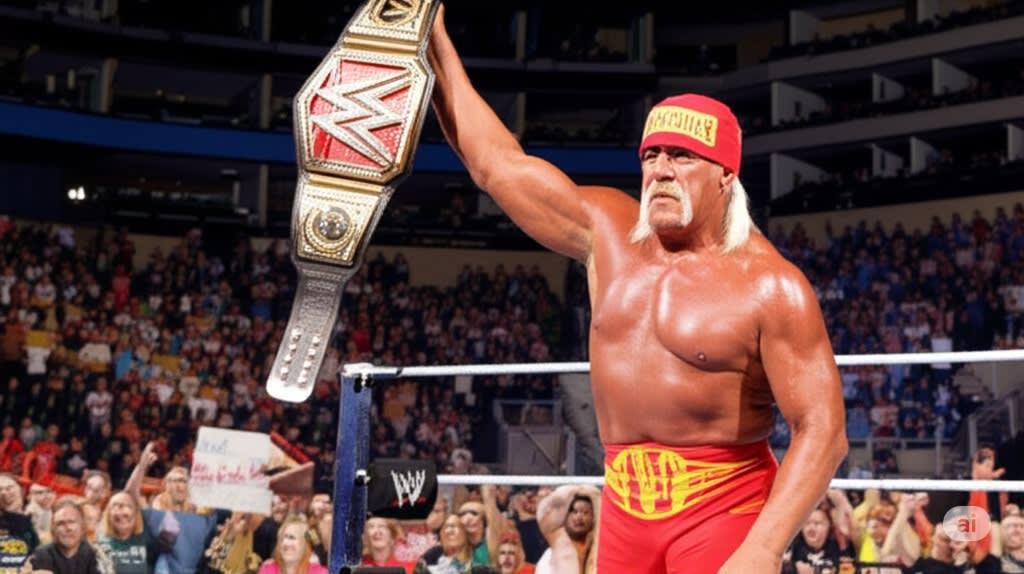
This is a tribute to the icon, to the simple yet profound wisdom he offered between the bell rings and bodyslams.
First and foremost, Hulk Hogan taught us about the power of belief. Not just in a higher power, though that was part of his famous “three demandments,” but in ourselves. The most dramatic part of any Hogan match wasn't the leg drop; it was the "Hulk Up." We all remember it: Hogan is down, beaten, the villain gloating over him. The referee’s hand is about to hit the mat for the three-count. All seems lost. Then, a flicker. His finger begins to wag. He shakes his head, impervious to the punches raining down on him. He is feeding off the energy of the crowd, the "Hulkamaniacs."
This was more than theatrics; it was a weekly masterclass in resilience. It taught every kid watching that no matter how defeated you feel, no matter how dire the circumstances, there is a reserve of strength inside you. You can absorb the blows, find your second wind, and rise again, stronger than before. He showed us that our belief, fueled by the support of those around us, is the ultimate superpower.
Then there was his simple, unforgettable creed: “Train, say your prayers, and eat your vitamins.” In a world that grows more complex by the day, this mantra remains a masterwork of clarity. “Train” wasn't just about lifting weights; it was about discipline, hard work, and preparing yourself for the challenges ahead. It was a call to put in the effort required to achieve your goals. “Say your prayers” transcended any single religion; it was about having a moral compass, a sense of gratitude, and a connection to something bigger than yourself. It was about humility and faith. And “eat your vitamins” was the purest form of self-care: look after your body, for it is the only vessel you have. This three-point plan was a blueprint for a balanced, principled life, delivered not from a pulpit, but from the heart of a champion.
Hogan also taught us the importance of connection. He wasn’t a remote, untouchable hero. He was ours. When he cupped his ear to the crowd, he wasn't just showboating; he was asking for our help. He was acknowledging that he couldn’t do it alone. In that moment, every single person in the arena, from the front row to the nosebleeds, felt like they were part of the victory. He made us feel seen and heard. He ripped his shirt not just as an act of strength, but as a symbolic shedding of restraint, inviting us all to be a part of the raw, unbridled energy. He taught us that true strength isn't solitary; it's communal.
Of course, the man, Terry Bollea, is a complex human being with flaws and controversies, like any of us. He even taught us a lesson in reinvention and the duality of human nature with his shocking turn to the villainous "Hollywood" Hogan. But the character he perfected, the red-and-yellow hero, offered a pure and powerful ethos. He was a symbol of unwavering American optimism, a force for good who proved that with enough heart, you could overcome any giant, any "un-American" villain, any insurmountable odd.
The legacy of Hulk Hogan is written in the roar of the crowd, in the memory of every kid who ever ripped their t-shirt in the backyard. He taught us to stand up for what's right, to believe in ourselves when no one else does, and to draw strength from the people who believe in us. His lessons were simple, powerful, and timeless. So, whatcha gonna do, brother, when those lessons run wild on you?
About the Creator
Fred Bradford
Philosophy, for me, is not just an intellectual pursuit but a way to continuously grow, question, and connect with others on a deeper level. By reflecting on ideas we challenge how we see the world and our place in it.
Keep reading
More stories from Fred Bradford and writers in Motivation and other communities.
The Imaginary Line That Holds You Back: Step Over It
There’s a line. You won’t find it drawn in chalk or guarded by a fence. It doesn’t beep when you get too close, and no one else can see it—but you feel it. Every time you think about changing your life, doing something bold, or chasing something meaningful, that invisible line shows up like a wall that says, “Not for you.”
By Fred Bradford7 months ago in Motivation


Comments
There are no comments for this story
Be the first to respond and start the conversation.