
How to Slow Down Time (Yes, Really—According to Neuroscience)
Discover the Neuroscience Behind Slowing Down Time and Living Fully

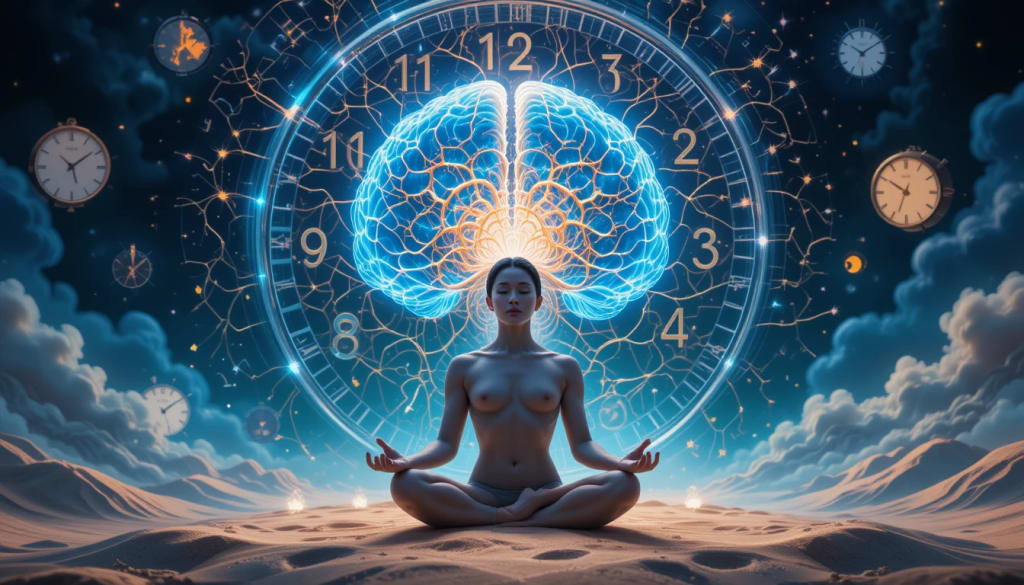
Ever feel like time is speeding up with every passing year? Like your days blur into weeks, and before you know it—months have vanished? You’re not imagining it. And no, you're not getting old just yet. Neuroscience has a fascinating explanation—and even better, it has hacks to help you actually slow down your experience of time.
Let’s dive into this time-bending trick your brain has been hiding.
Time Is All In Your Head
Here’s something mind-blowing: time isn’t a fixed, objective thing in your brain. While clocks tick at a constant rate, your experience of time is completely different. It depends on your attention, memory, and how new or emotional an event is.
That’s why a childhood summer felt endless—but last summer? Over in a blink.
The truth? Your brain measures time based on how much new or intense information it processes. The more memorable something is, the “longer” it feels in your mental timeline.
Your Brain’s Secret Timekeeper: Attention
One of the fastest ways to make time feel slower is to increase your awareness.
When you’re fully present—whether it’s tasting your coffee, noticing the wind on your skin, or listening carefully to someone talk—your brain records more detail. More detail equals more “time” stored.
Think of it like this: your brain is a camera. The more light (attention) it gets, the clearer and fuller the photo (your memory of time).
Try this: Take a walk and notice five new things you’ve never seen before—like the color of a neighbor’s door or the pattern in the pavement. You’ll feel like time slowed down just a bit.
Novelty is the Brain’s Pause Button
Ever notice how time stretches when you travel to a new place or try something you’ve never done before? That’s no coincidence.
This is called the “oddball effect.” When your brain experiences something new, it pays extra attention, and that attention expands your perception of time.
So, if your life feels like it’s flying by in fast-forward—it might be time to mix it up.
Take a different route home. Watch a genre of movie you’ve never tried. Learn to cook something new. Start dancing in your room if you have to. It doesn’t have to be big—it just has to be different.
Emotions Can Bend Time Too
There’s a reason why scary or emotional moments feel like they last forever—your brain goes into full alert mode and starts recording everything in detail.
You don’t need to live in fear to make time feel slower, but you can seek powerful, emotional experiences.
Listen to live music. Watch a breathtaking sunset. Laugh so hard you cry. Be deeply in the moment. These emotionally rich experiences get locked into your memory and make life feel more vivid—and longer.
Want to Stretch Your Days? Journal or Take Photos
You can’t actually add more hours to your day, but you can add more moments to your memory.
Journaling—even just a few lines a night—or taking a photo every day forces your brain to reflect. This makes time feel fuller in hindsight. Researchers call this “temporal richness.”
In other words: if you remember more, it feels like you lived more.
Meditate: The Science-Backed Time Machine
Studies show people who meditate regularly report that time moves slower for them. Meditation increases your awareness, reduces mental clutter, and strengthens your attention span.
Even five minutes a day can make a difference. You don’t need a fancy cushion or candles. Just sit, breathe, and pay attention. That alone can help you reclaim the present.
In a World That’s Always in Fast-Forward…
Learning to slow down time isn’t about escaping life—it’s about entering it fully.
By paying attention, breaking routine, welcoming emotional moments, and engaging your memory, you can stretch your perception of time and live a richer, deeper life.
Because you don’t need to live longer to live more—you just need to live now.
About the Creator
Noman Khan
I’m passionate about writing unique tips and tricks and researching important topics like the existence of a creator. I explore profound questions to offer thoughtful insights and perspectives."
Keep reading
More stories from Noman Khan and writers in Motivation and other communities.
A Letter to My Future Self—Ten Years From Now
Hey, you. Ten years. It feels like a lifetime and a blink at the same time. If you’re reading this, I guess we made it. Not to perfection, not to some flawless destination, but to somewhere. A different version of life. One that hopefully feels more grounded, more lived in, more yours.
By Noman Khan 7 months ago in Motivation


Comments
There are no comments for this story
Be the first to respond and start the conversation.