
How to Be Consistent: The Secret to Long-Term Success
The only thing you need to be successful
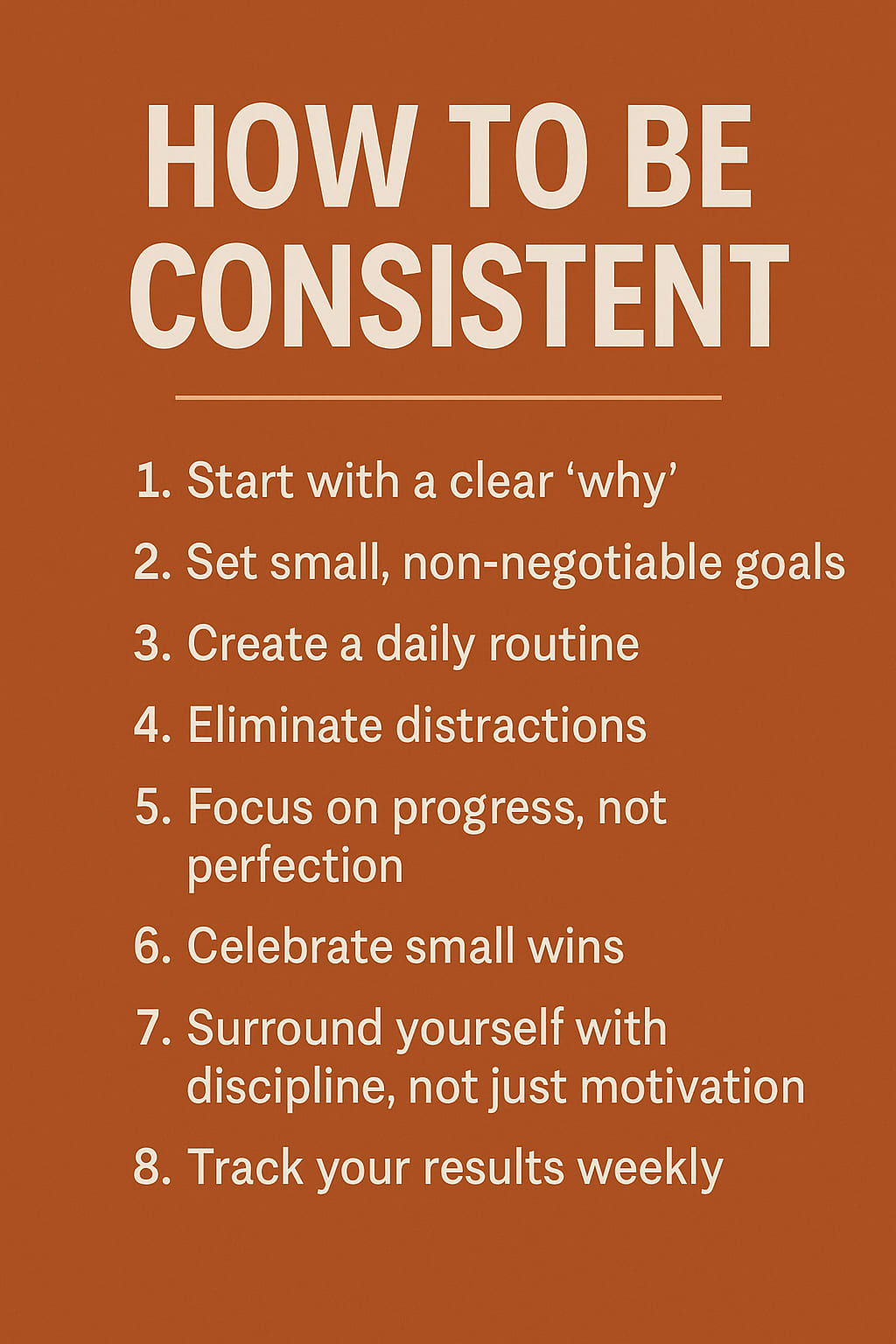
We often hear that consistency is the key to success, yet it's one of the hardest things to maintain. We start with excitement, make a plan, take the first few steps… and then slowly fade. Why does that happen?
Because consistency isn’t about motivation — it’s about discipline, clarity, and mindset.
Let’s explore how you can become more consistent in any area of life — whether it’s study, fitness, building a side hustle, or improving a habit.
---
1. Start with a Clear 'Why'
Before anything else, ask yourself:
Why do I want this? What’s the bigger picture?
Consistency becomes easier when you're emotionally connected to your goal. Don’t just say, “I want to work out every day.” Say, “I want to be healthy so I can feel confident, energized, and strong every day.”
Tip: Write your reason down and place it where you can see it daily — like on your wall, notebook, or phone wallpaper.
---
2. Set Small, Non-Negotiable Goals
Many people break their consistency because they try to do too much, too fast.
Instead of saying, “I’ll study for 5 hours every day,” start with 30 minutes. Make it so easy, you can’t skip it. Once you build the habit, increase the intensity.
Remember: Success isn’t about doing everything at once. It’s about doing something every day.
---
3. Create a Daily Routine
Consistency thrives in structure.
Build a routine that includes:
Your work or study time
Short breaks
Learning sessions
Sleep and relaxation
Your brain loves patterns. The more you follow a routine, the easier it becomes to stay consistent.
Bonus Tip: Use a planner or habit tracker. Seeing your progress visually is a powerful motivator.
---
4. Eliminate Distractions
You can't be consistent if you're constantly pulled in different directions. Identify what distracts you — social media, unnecessary notifications, too many commitments — and reduce them.
Turn off notifications. Set specific “work” hours. Tell others you’re unavailable during those hours.
Protect your focus like it's your money — because your time is valuable.
---
5. Focus on Progress, Not Perfection
One of the biggest killers of consistency is the belief that if you miss a day or mess up, you've failed.
You haven't.
Missing one day is normal. Just don’t let it become two. Be kind to yourself and restart. Consistency isn’t about being perfect — it’s about not quitting.
---
6. Celebrate Small Wins
Each time you stick to your plan, celebrate it — even silently.
Finished your daily goal?
Ate healthy for a day?
Stayed off distractions?
That’s a win.
Reward yourself. It tells your brain that consistency feels good, and you’ll be more likely to repeat it.
---
7. Surround Yourself with Discipline, Not Just Motivation
Motivation fades. Discipline stays.
Follow people online who inspire you with their work ethic. Create an environment that reminds you of your goals. Talk to friends who keep you accountable.
Discipline is built by showing up even when you don’t feel like it. And the more you do, the stronger your self-trust becomes.
---
8. Track Your Results Weekly
Review your efforts every week. What worked? What didn’t? Where did you lose focus?
This will help you adjust your approach and stay in control. It’s like being the CEO of your own life — constantly reviewing and improving your system.
---
Final Words: Be Consistent, Be Unstoppable
Being consistent isn’t always easy — but it’s worth it. The small things you do daily shape your future more than the big things you do occasionally.
So show up. Even on hard days.
Even when no one is watching.
Even when it feels slow.
Because one day, you’ll look back and realize:
Your consistency changed everything.
Consistency is the foundation of growth and success. It transforms small daily actions into powerful habits that lead to long-term results. By staying committed, even when motivation fades, you build discipline, gain confidence, and move steadily toward your goals.
About the Creator
Keep reading
More stories from Bella and writers in Motivation and other communities.
The day I left behind everything
The day I left behind everything wasn’t loud. There was no fight, no broken glass, no screaming goodbye. It was quiet — hauntingly quiet. Just the low hum of the fan spinning above my head, and the soft sound of my heartbeat trying to convince me I was doing the right thing.
By Bella7 months ago in Motivation
DREAM YOUR LIFE
Everyone, at some point of his or her life, has dreamed of being somebody special, somebody big. Who hasn't fantasized about being the one who hits the game-winning homer? Who hasn't dreamed of being the homecoming queen? And how many times have we dreamed of being rich, or successful, or happy with our relationships?
By Junaid Shahid a day ago in Motivation
Wild Card Weekend Recap: What Happens Now?
I think I figured out why I love Wild Card Weekend so much. It's because it's the first playoff anything of the calendar year. The NFL season starts in the fall, and once upon a time, the champion was crowned either on or slightly before New Year's. The evolution of the NFL schedule has resulted in the playoffs starting just into the New Year, and currently, the final week of the season falls on the first weekend of the New Year, with Wild Card Weekend coming a week after that. So yes, chronologically, the NFL's Wild Card Weekend serves as the first playoff anything of the calendar year.
By Clyde E. Dawkins6 days ago in Unbalanced




Comments
There are no comments for this story
Be the first to respond and start the conversation.