
How One Girl’s Defiance Ignited a Revolution for 130 Million Girls
Bullet to Nobel Prize: The Unstoppable Fight of Malala Yousafzai
## *Chapter 1: A Seed of Courage in the Swat Valley*
Malala Yousafzai was born on July 12, 1997, in Mingora, a bustling town nestled in Pakistan’s picturesque Swat Valley. Her father, Ziauddin Yousafzai, a passionate educator and social activist, named her after Malalai of Maiwand, a 19th-century Afghan heroine who rallied troops against British colonialism. This choice foreshadowed the destiny of the girl who would one day defy a far more oppressive force: the Taliban.
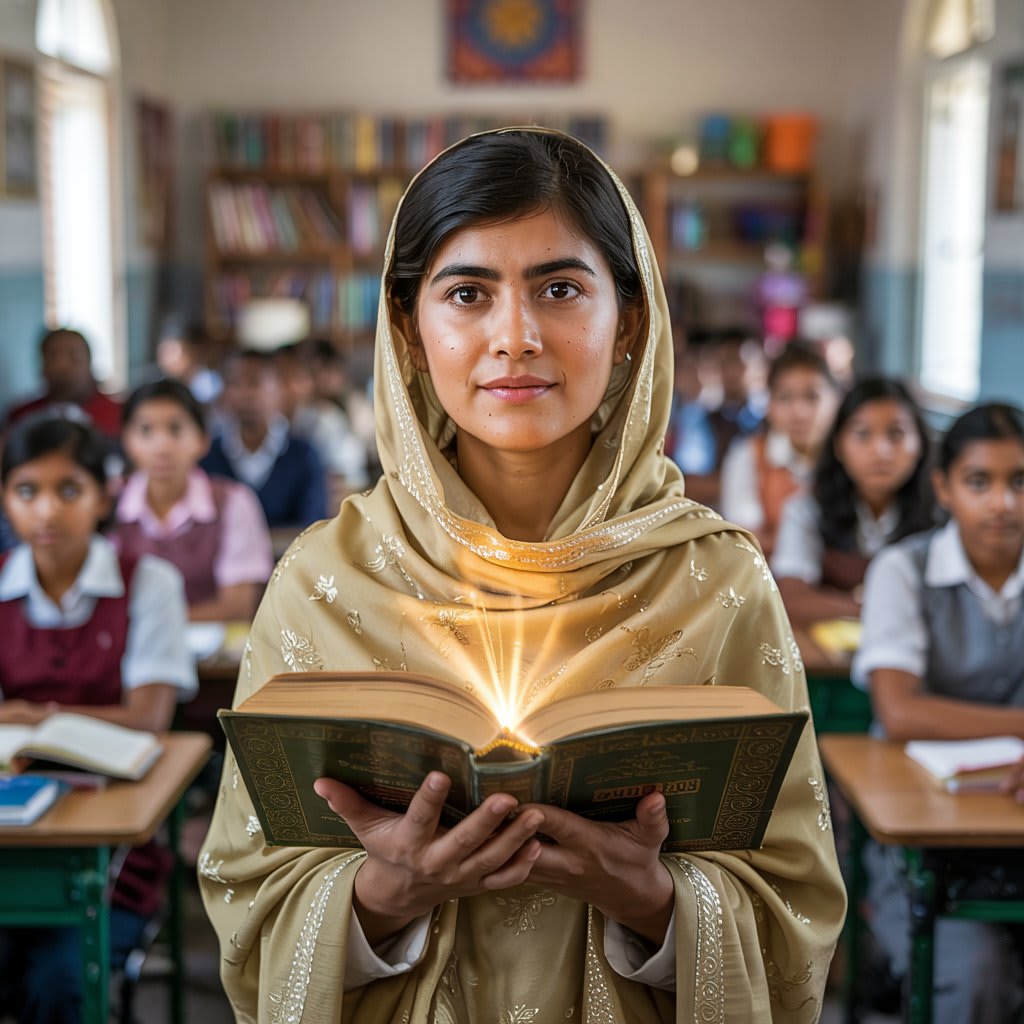
Ziauddin founded the Khushal School, a coeducational institution that defied conservative norms in a region where girls were often sidelined. Malala grew up in classrooms filled with the laughter of boys and girls learning side by side. Her father’s mantra—“Malala will live free as a bird”—imbued her with a fierce belief in equality. By age 10, she was already debating politics at dinner, her voice sharpened by her father’s encouragement.
But the Swat Valley’s tranquility was fragile. By 2007, the Taliban had infiltrated the region, imposing a reign of terror. Militants banned music, destroyed television sets, and lashed men for shaving their beards. Most devastatingly, they declared girls’ education a sin. “Every girl who goes to school will be buried alive,” they warned. Schools were reduced to rubble, their blackened walls standing as grim reminders of the Taliban’s wrath.
---
### *Chapter 2: The Girl Named Gul Makai*
In early 2009, as the Taliban tightened its grip, a BBC Urdu editor reached out to Ziauddin, seeking a local student to document life under extremism. No one volunteered—families feared retaliation. But 11-year-old Malala, her eyes blazing with resolve, whispered, “I’ll do it.”
Under the pseudonym Gul Makai (“cornflower” in Urdu), Malala began writing a diary for the BBC. Her entries, typed on scratch paper and smuggled to journalists, exposed the terror gripping Swat:
“I had a terrible dream yesterday… I was afraid going to school because the Taliban had issued an edict banning all girls from education.”
“My friend came to school in a bright red dress today. The principal scolded her—‘The Taliban will kill us for this!’”
Her words humanized the crisis, sparking international outrage. But anonymity couldn’t protect her for long. By 2011, Malala began appearing in documentaries, her face uncovered, her voice unshackled. “How dare the Taliban take away my basic right to education?” she demanded in a New York Times film. The Taliban retaliated, labeling her a “spy of the West” and issuing death threats.
Yet Malala refused silence. “If I am stopped, I will shout,” she declared. “The more you silence me, the louder my voice will become.”
---
### *Chapter 3: The Bullet That Shook the World*
On October 9, 2012, Malala boarded her school bus, clutching textbooks to her chest. Moments later, a masked gunman stormed the vehicle. “Which one is Malala?” he barked. Her classmates’ terrified glances betrayed her. Three bullets rang out. One struck her left brow, tunneling through her skull and neck before lodging in her shoulder.
As Malala lay bleeding, the Taliban celebrated. “She was pro-West, spreading secularism—this was a warning,” they declared. But the attack backfired. The world erupted in outrage. Pakistanis marched with banners: “I am Malala.” Then-UN Secretary-General Ban Ki-moon called her “our daughter.”
Malala’s survival defied medical odds. Airlifted to Birmingham, England, she underwent multiple surgeries to reconstruct her skull and restore hearing in her left ear. When she awoke, her first words were: “Where is my father? Is my country still fighting for peace?”
---
### *Chapter 4: “They Thought the Bullet Would Silence Me”*
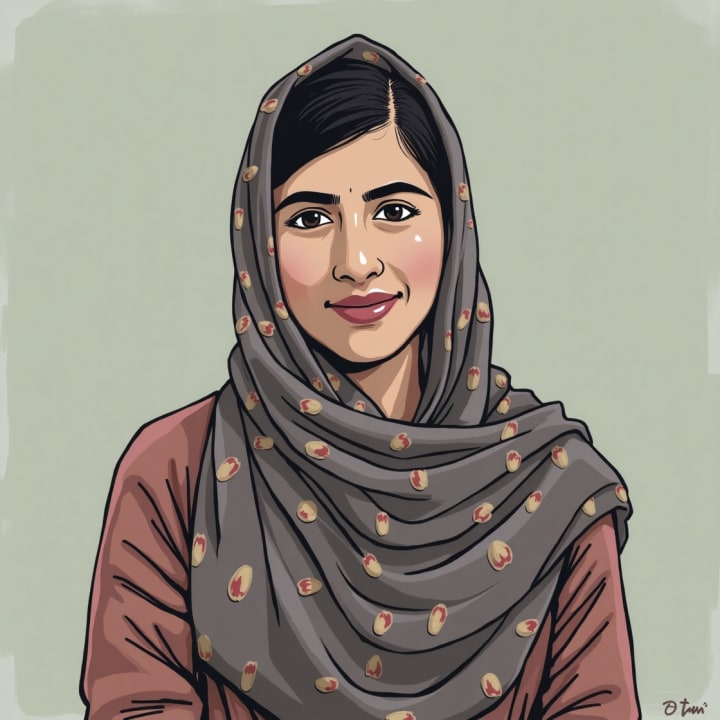
Malala’s recovery was grueling. She relearned to walk, endured facial nerve damage, and grappled with PTSD. Yet her resolve only hardened. On July 12, 2013—her 16th birthday—she stood before the United Nations, her pink headscarf a defiant splash of color.
“They thought the bullet would silence me, but out of that silence came thousands of voices,” she proclaimed, her speech echoing through the chamber. “Let us pick up our books and pens. They are our most powerful weapons.”
The speech went viral. Overnight, Malala became a global icon. But fame brought backlash. In Pakistan, conspiracies swirled: Was she a CIA agent? A “drama” to smear Islam? Undeterred, Malala doubled down. “Criticism is part of the journey,” she said. “I will not wait for others—I will fight myself.”
In 2014, at 17, she became the youngest Nobel Peace Prize laureate in history, sharing the honor with Indian child rights activist Kailash Satyarthi. Holding the medal, she dedicated it to the “forgotten children who want education… the frightened children who want peace… the voiceless children who want change.”
---
### *Chapter 5: The Malala Fund—Turning Pain into Power*
With the $1.1 million Nobel Prize money, Malala expanded the Malala Fund, co-founded with her father in 2013. The organization’s mission: to dismantle barriers to education for girls worldwide.
In Nigeria, the Fund supported survivors of Boko Haram kidnappings. In Lebanon, it funded schools for Syrian refugees. In Kenya, it championed menstrual hygiene programs to keep girls in class. Malala herself met with world leaders, from Barack Obama to Justin Trudeau, urging them to prioritize education funding.
But her fiercest advocacy was grassroots. In 2018, she visited Brazil’s favelas, sitting cross-legged with Indigenous girls who walked miles to school. “Tell me your stories,” she urged. “Your voices matter.”
---
### *Chapter 6: The Unstoppable Normalcy*
In 2020, Malala graduated from Oxford University with a degree in Philosophy, Politics, and Economics—a milestone she celebrated with ice cream and TikTok dances. “For the first time, I felt like a normal 22-year-old,” she laughed.
Yet “normalcy” for Malala remains relative. In 2021, she married Asser Malik, a cricket coach, sparking both celebration and controversy. Critics accused her of betraying feminist ideals by marrying young. She responded: “Feminism is about choice. I chose love—and I’ll keep fighting for girls to choose their futures too.”
Today, the Malala Fund operates in 12 countries, advocating for 130 million out-of-school girls. Its successes are tangible: In Afghanistan, after the Taliban’s 2021 resurgence, it launched underground schools, defying the ban on girls’ education.
---
### *Chapter 7: The Legacy—A Ripple That Became a Wave*
Malala’s journey—from a bloodied school bus to the Nobel stage—is more than a story of survival. It is a blueprint for turning trauma into transcendence.
Her impact is quantifiable: According to UNESCO, global girls’ enrollment rose by 15% in the last decade, with her advocacy cited as a key driver. Yet her greatest legacy is intangible: the courage she ignited. In Pakistan, girls now chant “I am Malala” during protests. In Iran, young women cite her while defying hijab laws.
“Education is liberation,” Malala insists. “It is the antidote to extremism, poverty, and fear.”
---
### *Epilogue: The Fight Continues*
At 26, Malala remains relentless. Whether lobbying Congress for refugee aid or mentoring Afghan girls via Zoom, her mission is unchanged. “I will never stop,” she vows. “Not until every girl can learn without fear.”
Her story, once punctuated by a Taliban bullet, now unfolds as a testament to humanity’s resilience. As she writes in her memoir: “One child, one teacher, one book can change the world. But only if we dare to stand up.”
About the Creator
ARIF KHAN
student of college
Keep reading
More stories from ARIF KHAN and writers in Motivation and other communities.
I Paused Time for 10 Minutes a Day—Until the Stranger Knocked on My Door
1. The Pocket Watch Grandpa’s antique shop smelled like dust and regret. I’d inherited both when he died—along with the brass pocket watch he’d clutched in his coffin. “Keep it wound, Clara,” his lawyer had said. “He insisted.”
By ARIF KHAN9 months ago in Motivation
The Barefoot Boy Who Built Hyundai
In 1915, in a small poor village in what is now North Korea, a boy named **Chung Ju-yung** was born into hardship. His family were rice farmers. They lived in a straw-roof house, ate simple meals, and often went to bed hungry. Shoes were a luxury. Education was a dream. Survival was the goal.
By nawab sagar4 days ago in Motivation
A Dart at Dusk
Seconds ago, the sullen sun set on the two of us… my exuberant furry companion and me. A fresh breeze embraces us, delivering welcome relief from the day’s oppressive heat. His typical stumbling and staggering along — apace with a sloth — has turned into trip-trapping, high-stepping, almost skipping along.
By Angie the Archivist 📚🪶5 days ago in Petlife


Comments (1)
great story