
Hadzina – The Lady of the Garden
A tribute to a humble grandmother whose garden was her kingdom — and her soul, nobility.

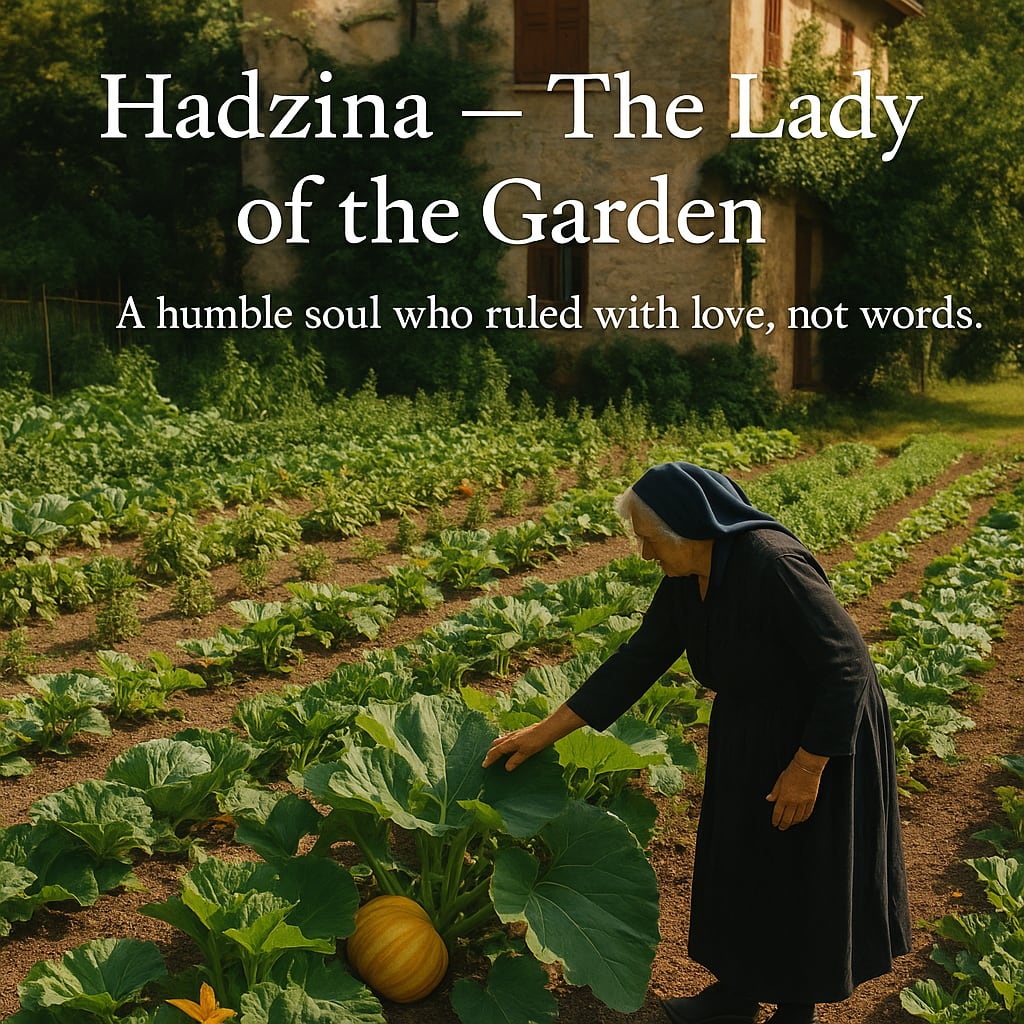
They called her “Hadzina” — a word that, in Greek-Cypriot culture, evokes dignity, spiritual grace, and quiet authority. It was not her real name, but the name that her life had earned.
Grandma Maritsa had barely attended a few years of primary school, yet she possessed something far more powerful: the gift of storytelling. Her voice, steady and warm, could carry you far beyond the walls of her humble home. You never got tired of listening to her. She would speak of fairy tales, of storms that shook the village, of harvests and hard winters, always with a sparkle in her eyes and a subtle smile curling at the corners of her lips.
But more than anything else, she would speak of her garden.
Her hands, weathered and strong, carried the scent of mint, basil, and soil. She would rise with the sun, tie a faded scarf around her head, and step barefoot into the earth. Her garden was small — just a patch behind her stone house — but to her, it was a kingdom. In that little kingdom, she grew parsley, spring onions, zucchinis, and pumpkins that seemed to swell with pride under her care.
The time of year when the pumpkins flourished was her favorite. Their golden color, thick vines, and curving stems delighted her like grandchildren. She would stroke the broad leaves as though they were silk. She would bend over, examine each flower, whispering to them like old friends.
“The pumpkin is the queen of the garden,” she’d say with a quiet laugh, “and I am her Archontissa.”
She never boasted, never raised her voice. But in the garden, she was transformed. She moved with the calm of someone who knew their place in the world — not as someone elevated above it, but rooted deeply within it.
Inside her home, things were simple. A small oil lamp sat on a shelf beside a jar of homemade jam. There were cracks in the walls and the ceiling leaked in winter, but the house always smelled of thyme, firewood, and slow-cooked beans. There was always a warm chair by the window and a cup of sage tea waiting for a guest. For her, hospitality was not a matter of wealth, but of heart.
I remember watching her as a child. I would follow her through the rows of green, helping her carry bundles of herbs, listening to her hum as she worked. I didn’t understand it then, but I do now — she was teaching me something sacred: that peace is found in simple things. That nobility is not a title, but a way of living.
She rarely spoke of pain, though I know her life was not easy. She had lived through war, widowhood, and long years of poverty. But she carried those wounds like roots beneath the soil — hidden, but holding her steady.
When she passed away, the garden withered for a while. No one tended to it as she did. The pumpkins never grew as large again. But the scent of her mint still lingers when the wind is right. And sometimes, when I close my eyes, I hear her voice in the leaves.
We called her Hadzina. She was never rich. Never famous. But she ruled her little world with gentleness and strength. And she taught us — not through lectures, but through daily life — that greatness is not measured by how loudly you speak, but by how quietly you love.
About the Creator
Constandinos Olymbios
I write stories inspired by real life, exploring moments of quiet strength, kindness, and faith. You can find more of my work on my blog: zoisistories.blogspot.com
Keep reading
More stories from Constandinos Olymbios and writers in Motivation and other communities.
The Stamps That Traveled Farther Than Ever Before
Once upon a stamp — or rather, once upon a collector — there was someone who loved to travel. Not through airports or highways, but through small, colorful bits of paper that stuck to envelopes and soared across borders, carried by postal pigeons… or rather, very slow postal snails, depending on the day!
By Constandinos Olymbios8 months ago in Motivation
The 5 Essential Traits of Effective Leaders Who Succeed in Every Industry
Effective leaders shape teams, guide decisions, and build trust across every field. Whether someone works in business, healthcare, education, technology, or nonprofit work, leadership skills matter. While tools and systems change by industry, the core traits of effective leaders stay the same. These traits help people lead with clarity, confidence, and purpose.
By Jaime Irick2 days ago in Motivation



Comments
There are no comments for this story
Be the first to respond and start the conversation.