
"From Prime Ministers to Prisoners: A Nation Between Two Leaders"
"How Two Titans Shaped—and Shattered—Pakistan’s Political Landscape

In the heart of South Asia lies a nation shaped by heroes, controversies, and resilience—Pakistan. Among its most polarizing and powerful figures are two men whose rivalry has defined modern political history: Nawaz Sharif, the seasoned "Lion of Punjab," and Imran Khan, the charismatic "Falcon of Change."
Their story is not just a political saga—it’s a battle of ideologies, egos, and destinies.
The Rise of the Lion
Nawaz Sharif was born into wealth but carved his place through politics, not inheritance. His journey began under the shadow of military rule, but his ambitions were crystal clear: to lead Pakistan towards prosperity with a business-minded approach. By the 1990s, he had already served two terms as Prime Minister, earning both admiration and suspicion.
People called him pragmatic, others called him a master of manipulation. But Nawaz had what few possessed: control over Punjab, Pakistan’s political heartland. He knew the art of power-building—alliances, development work, and control over institutions.
But his Achilles' heel? The deep state's mistrust, and a refusal to bow completely.
The Falcon Takes Flight
On the other side, Imran Khan was not born a politician—he was forged into one by the fire of public frustration. The World Cup-winning cricket captain turned philanthropist had a dream. A "Naya Pakistan"—free from corruption, elite control, and dynastic politics.
For years, he was ridiculed as a political outsider. His rallies were small, his party weak. But Imran had something more powerful than votes—belief. His narrative was clean, simple, and catchy: justice, accountability, and change. By 2013, he had become a real threat. By 2018, he had the throne.
Clash of Titans
But power is a dangerous game.
Imran accused Nawaz Sharif of looting billions. He pointed to offshore accounts, Panama Papers, and luxurious flats in London. Nawaz called it political engineering. The courts intervened. In 2017, Nawaz was disqualified and later jailed. His supporters cried foul; Imran’s followers cheered, calling it justice.
But the truth? Somewhere in between.
Imran Khan, now Prime Minister, promised everything: ten million jobs, five million homes, and a war on corruption. But governance was harder than opposition. Inflation soared, institutions cracked, and whispers grew—was he really independent, or just another pawn of the establishment?
Tables Turn
In a twist worthy of Shakespeare, the very forces that once seemed to support Khan began turning away. The military establishment, long seen as kingmakers, reportedly grew disillusioned with his confrontational style.
By 2022, a no-confidence motion ended Imran Khan’s government. Nawaz Sharif, from London exile, saw the opening. His brother Shehbaz became Prime Minister, and the Sharif legacy found a second wind.
But Imran was not done.
From PM to Prisoner
What followed was unprecedented in Pakistan’s history. Imran launched a mass movement, alleging foreign conspiracies, backdoor deals, and betrayal. His speeches drew millions. His social media exploded. He became a symbol—of resistance for some, of populism for others.
Then came May 9, 2023.
Protests turned violent. Military installations were attacked. The state struck back hard. Hundreds arrested. Imran Khan, once a Prime Minister, now sat behind bars.
The falcon had fallen.
The Lion Returns?
With Imran silenced, Nawaz Sharif returned to Pakistan in 2023. His entry was grand, his tone was moderate. The courts offered relief, the party reunited. Many believed he would make a fourth attempt at power. But Pakistan had changed.
The youth idolized Khan. The economy was in crisis. The people were tired.
Now, both Nawaz and Imran stand at a crossroads. One has ruled thrice, the other once. One mastered the art of establishment politics, the other mastered the hearts of the masses. But neither could fully deliver.
A Nation Between Two Shadows
This is not just a story of two men. It is the story of Pakistan—caught between democracy and dictatorship, between hope and reality, between memory and future.
Will Nawaz finally secure stability? Will Imran rise again? Or will Pakistan move past both, towards a new chapter?
Moral:ne thing is certain: the story of Nawaz Sharif and Imran Khan will be told for generations. Not just as a tale of rivalry, but as a reflection of a nation struggling to define its soul.Leadership is not just about rising to power—it’s about serving with integrity, learning from failure, and putting the nation above personal rivalry. In the end, it’s the people who carry the weight of broken promises. True change begins when leaders rise beyond ego and history, and when citizens hold them accountable—not by loyalty, but by values.
About the Creator
Keep reading
More stories from Uzairkhan and writers in Motivation and other communities.
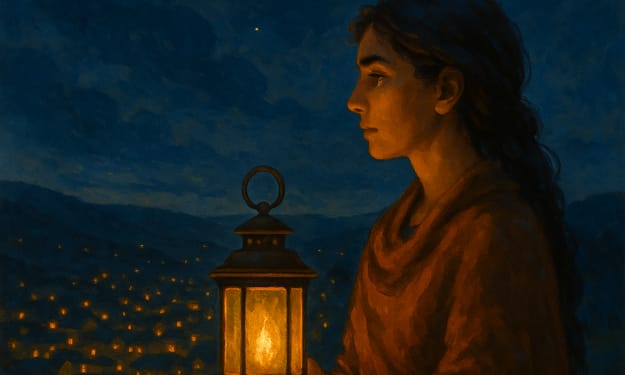
The Final Lantern: A Story of Hope
In a small village tucked away between rolling hills and dense forests, there lived a young woman named Asha. She was known throughout the village as the embodiment of hope — a bright, unwavering light that touched everyone’s lives. The villagers often said that as long as Asha believed in a better tomorrow, their own struggles felt lighter, and despair never fully took root.
By Uzairkhan8 months ago in Motivation
A Journey of Angelic Healing
We are going to enter into a gentle, healing atmosphere filled with the intention of calming our minds, calming our bodies, and calming our souls. When we experience crisis, stress hormones are vital. They are necessary. Our bodies make them to keep us safe and allow us to meet stressful circumstances with alertness and action. Over time they build up in our bodies, making it difficult to fully relax and embrace wellness. Today we are going to thank them for their help and gently let them go with gratitude. We are going to embrace calm and let our nervous system delight in relaxation.
By Karen LaRueabout 16 hours ago in Motivation
Smart phones, Humans and Aliens.
WARNING. I will be tapping into one of your favorite creative tensions: The absurdity of humans worshipping their glowing rectangles as if they were tiny oracles. There’s something deliciously poetic about that contradiction, and it lends itself beautifully to an instructive proviso.
By Novel Allen6 days ago in Poets


Comments
There are no comments for this story
Be the first to respond and start the conversation.