
In March of 2019, disaster struck for my family. I was heading to work when I was struck by a pickup truck, caving in my door and tire so badly I needed cut out of my van. I was knocked unconscious and my van was sent across the three-lane road. The last thing I remembered was blinding headlights, but I was not aware that I had lost consciousness until I came to, covered in blood. My nose was smashed and laying on my right cheek, and I had a cut that went up the side of my nose to the corner of my left eye, across my left eyelid, and down the left side of my face. I struggled mentally, finding it difficult to think clearly, keep my emotions under control, remember simple things, or speak clearly. I developed a stutter as I began to lose my train of thought in the middle of speaking, going completely blank as I stared helplessly at the person I was speaking to. I couldn’t remember simple words, got stuck on a different word, or simply became unable to translate a word from thought to speech. I found myself physically disabled and completely dependent on my husband and our families. My legs would randomly quick working, so I had to use a wheelchair frequently until my back surgery took some of the pressure off of my nerves, but even then, I had a significant limp that made walking a constant, almost unbearable struggle. I had to undergo nose, back, and neck surgery. My fear of addiction made it difficult to stay on medications reliably.
After the wreck, my husband and I were struggling with everything, and living in the city surprisingly made everything more difficult. Everything was expensive, doctors let us down or took advantage of us repeatedly, landlords became less attentive, and there wasn’t the sense of community that you see in smaller towns. More and more, we began looking for these smaller towns and dreaming of rural life. We searched for undeveloped land that we could build a homestead and small farm on, keeping us surrounded by forest. We knew the task at hand would be a large one, and I would largely be unable to help, but we were determined to make it work.
Then, in late 2021, a miracle happened. An abandoned farm was being sold by a logging company and was in our price range. After visiting the place, we were instantly in love. There was a lot of work to be done, but the structures were already there and sound, so it would be significantly less work than undeveloped land. Suddenly, we had a house, barn, guest house, and acres of land that we could call home. We had peace, freedom, and a future. But there was still the problem of my new disabilities.
I had trouble walking; the damage to my back and neck left me in constant, complete head-to-toe pain. Migraines could erupt without warning, spasms would render my legs or arms useless, and the trauma to my head created issues with my memory, focus, and speech. The weakness and spasms in my legs made it dangerous for me to drive, and the overwhelming panic I felt just sitting in a vehicle made it impossible to try. I lost my job and any prospects of a new one, and my husband was so busy caring for me and our kids that a job wasn’t plausible for him either. So how were we going to manage a farm?
It took a lot of work. Friends and family came to help around the farm, building outside pens for animals, fixing up the barn stalls, and cleaning the house to make it livable. New neighbors helped us find animals to fill the barn, stores to get necessities, and general tips for the area. We got exactly what we wanted – a place to grow with a village we could be a part of. While I was recovering from my most recent surgery, my husband was making the farm a home. After 3 months, my therapy began.
I started with very basic yoga, stretching my body and slowly building strength. I had the peace of the woods surrounding me, the bleat of my goats making me smile, and the support of my husband egging me on to keep pushing. I began walks with my husband, starting small (circling the house, if I’m being 100%) until I could make it to the barn. This carried on for months, pushing myself to do a little more, then needing days to recover before I could start again. But my family and friends were always there in some fashion, cheering me on. The goats herding around me actually helped with walking, as they would let me lean on them gently for balance support.
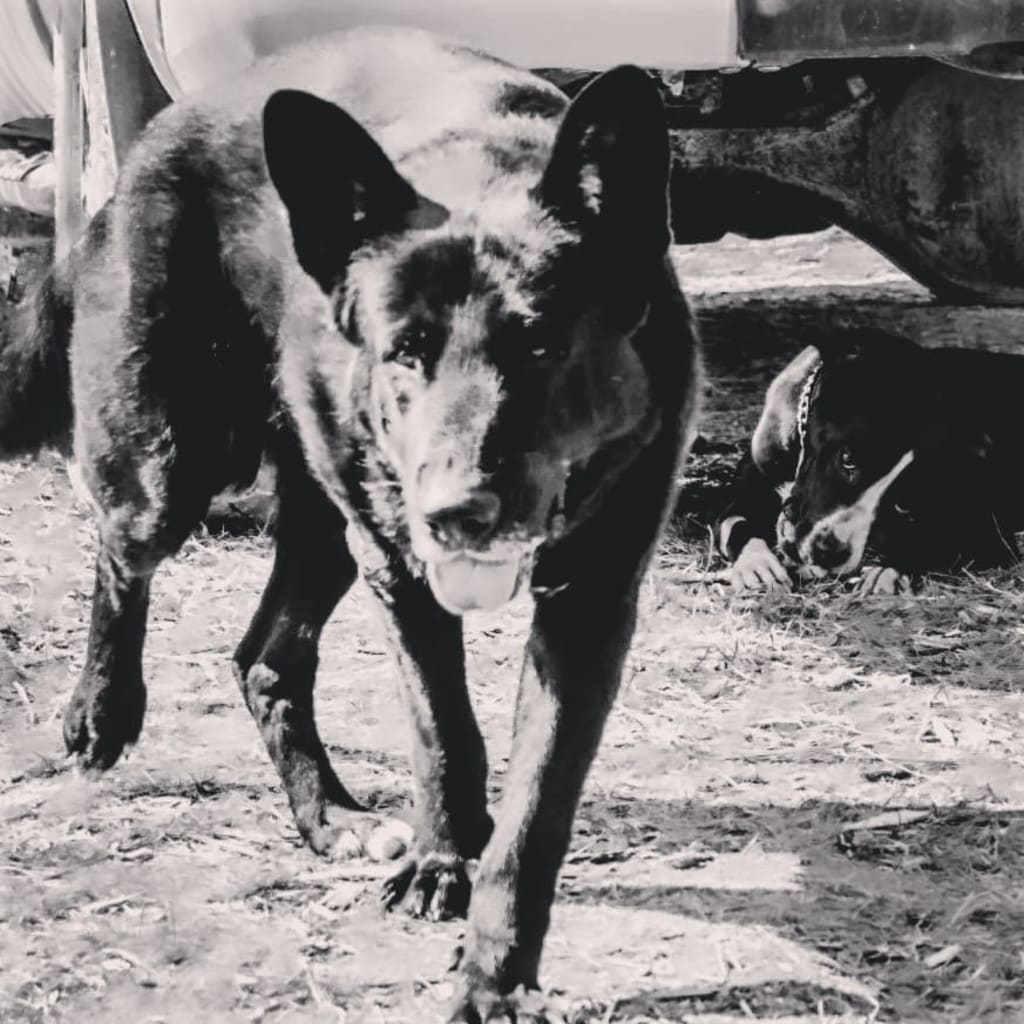
My dog Horus naturally came into service. He seemed inclined to notice nerve spasms before they happened. He never gets on the furniture, but not long after the wreck, my first spasms in my legs took hold. I would be on the couch when suddenly he would jump up and lay on my legs, watching me intently until the spasms came and went. When I struggle to stand, he will post up next to me so I can use him. I particularly struggle with stairs, but if he is leashed, he will gently pull me up them and will escort me down them while I lean on him. After surgeries, I couldn’t sit up without a good deal of assistance, so he would come as close as possible, let me wrap my arms around his neck, and he would pull me up until I told him I was good. Our other dog, Xena, naturally came into emotional support, smothering me with love whenever she saw me crying until I would stop.
Don’t get me wrong, this was not always a positive experience. I got frustrated, discouraged, depressed, and angry. After over three and a half years after the wreck and almost a year on the farm, I still struggle substantially. I still can’t do what the average person can. I still struggle with nearly every aspect of life. But I can see small improvements happening here and there, and I dream of one day being as close to average as I can get. I dream of going on hikes again, of swimming for hours, riding horses, lifting heavy things, and wrestling around with my husband and sons. I dream of climbing, crawling, bending, and reaching. There’s no more doubt in my mind that the wreck substantially changed my life permanently, but I am willing to try to get as close to normal as I can manage.
I share this story with you because I want others going through this to know that they aren’t alone. One of the biggest discoveries I made was the community of people all over the world who had problems similar to mine, and problems worse than mine. I learned coping mechanisms, made friends, and learned more about myself and how to safely push for improvement. I learned how to better communicate, learned about writing as an outlet as it became easier than speech, and discovered work that I could do from home that wasn’t affected by my hardships. If you’re going through something like this, understand that it’s not the end. There will be times when it feels like there’s nothing you can do, like you’re useless. I still get those feelings sometimes. But keep pushing, keep looking ahead. Don’t isolate, reach out to your friends and family. Reach out to communities online until you find one or more that you really connect with. Understand your limitations and find ways to work around them. You will get through it and be better for it.
About the Creator
Keep reading
More stories from Elizabeth Cullum and writers in Motivation and other communities.
Wild & Wonderful Firsts
West Virginia has a bad reputation, brought on by Hollywood and the media portraying it as backwoods and at times an uncivilized place. In reality, West Virginia is full of amazing things and rich history everywhere you go. There are urban and rural areas, universities, mountains, valleys, rivers, and so much more. Even more interesting, West Virginia has some wild “firsts” that occurred there, and you’d be surprised at some of them.
By Elizabeth Cullum3 years ago in Earth
You are not a failure
“ You look sad, David, what’s going on?” the old man noticed, as David pulled out a chair when he entered the room. “ When I look at my life, I’m not happy. Nothing is working. I’m forty-three. I have no house, no money, no kids. I make minimum wage at my job to survive. Not to mention the credit card debts and some health issues. I think that I’m a failure,” David said, almost in tears.
By Michel Tetchi 6 days ago in Motivation


Comments (1)
Beautiful story, I am forever grateful I've met you ❤️