
Failure Is Proof You’re Trying: Why Setbacks Matter More Than We Think
Failure Is Proof You’re Trying: Why Setbacks Truly Matter

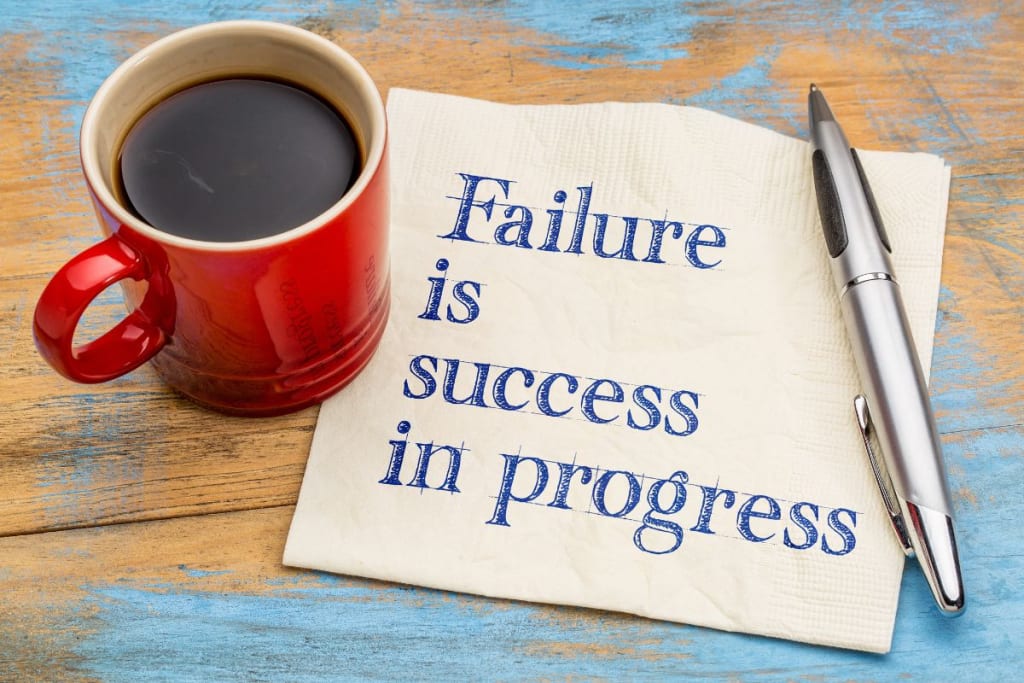
“Failure is proof you’re trying” is more than just a motivational slogan — it reflects a deep truth about how we grow, learn, and innovate.
In a world that often glorifies overnight success, setbacks can feel like dead ends. Stories today, from startups to classrooms to everyday workplaces, increasingly show that failure isn’t just a byproduct of effort — it’s a critical ingredient in progress.
The Psychology of Failure
Most people instinctively avoid failure. In fact, when confronted with mistakes, many struggle not just emotionally but cognitively, because failure feels unpleasant and threats to our self-esteem trigger avoidance responses. Researchers have found that people often underlearn from failure: even when feedback is available, they tend not to adjust their strategies or understanding as much as they do after success — even when the incentive to improve is high.
Another recent study highlights a sobering reality: we tend to overestimate how often failure leads directly to success. Participants vastly overpredicted how many people eventually succeed after failing — such as passing licensing exams after failing them once — revealing a societal belief that success naturally follows setbacks more frequently than it often does.
These findings don’t dismiss the value of failure — rather they reveal why most people don’t benefit from failure the way they could. Failure doesn’t automatically teach us lessons; we have to learn how to learn from failure.
A Growth Mindset: Rethinking Effort and Ability
One of the most influential frameworks for understanding failure comes from psychologist Carol Dweck’s concept of growth mindset — the belief that abilities and intelligence can grow with effort. People with a growth mindset don’t see failure as evidence of inability, but as information that guides improvement. They ask: What didn’t work, and why? rather than Is this proof I’m not good enough?
Studies show that environments encouraging growth mindsets — where challenges and mistakes are normalized — can support deeper learning. For example, educational research has identified practices such as engaging with challenging tasks and promoting peer feedback as ways students develop comfort with failure and persistence after setbacks.
A 2025 academic conference paper also highlighted efforts to make failure desired in learning environments — turning what is usually painful into a positive signal that can guide better strategies and skill growth.
How Failure Benefits Learning and Innovation
Failure advances learning in several key ways:
Feedback-Driven Improvement:
When we fail, we gain specific information about what didn’t work. Reflection on these breakdowns fuels adjustments in strategy, leading to smarter attempts in the future.
Cognitive Growth:
Engaging with mistakes forces the brain to form new neural connections, particularly when we analyze errors and adjust our approach. This rewiring strengthens problem-solving abilities.
Resilience and Adaptability:
Repeated setbacks — handled constructively — build mental toughness. Like muscles that grow stronger under strain, repeated effort despite failure reinforces persistence.
Creativity and Innovation:
Many breakthroughs emerge not from linear success but from cycles of trial, error, and adjustment. When Thomas Edison tested thousands of filament materials before inventing the light bulb, his failures were steps toward insight, not detriments.
Common Misconceptions About Failure
Despite its value, failure is often misunderstood:
Failure ≠ Incompetence: According to Harvard Business School professor Amy Edmondson, people often confuse mistakes with failures, but there’s a difference: a mistake is a deviation from a known path, while a productive failure is a thoughtful attempt that expands understanding even if it falls short.
Failure Doesn’t Guarantee Success: The research cited earlier shows that simply failing doesn’t automatically lead to success; without reflection and strategy change, people can repeat unproductive patterns.
Failure Is Not Permanent: Failure should be seen as a temporary result of effort, not a fixed judgment on ability. People with a growth mindset view failure as specific and changeable — a chance to learn rather than a verdict on worth.
Practical Ways to Learn From Failure
Here are practical steps people can use to turn setbacks into growth:
Reflect Deeply: Don’t just feel bad about failing — analyze it. What worked? What didn’t? How can you adjust? Clear reflection turns data into wisdom.
Separate Self-Worth from Results: A failure doesn’t mean you’re a failure. It means your approach didn’t yet achieve the goal. That mindset shift is critical.
Build Support Systems: Success rarely happens in isolation. Communities, mentors, and peers help interpret failure constructively.
Celebrate Effort: Rewarding effort — regardless of outcome — encourages persistence, which is the key to eventual improvement.
Failure and Real-World Motivation
Across cultures and careers, many leaders emphasize that failure is not a sign of weakness but of engagement and risk-taking. At a recent alumni event in India, author and philanthropist Sudha Murty highlighted that facing failure with resilience and learning equips young people with courage and patience for real-world challenges — reinforcing that setbacks are integral to growth.
Conclusion
Failure is not just a byproduct of effort — it’s evidence of engagement, risk-taking, and ambition. But failure only lives up to its potential when we learn from it, reflect on it, and use the insights to guide future actions. While success is often a nonlinear and sometimes elusive destination, setbacks are the milestones that show you’re on the path.
Understanding that “failure is proof you’re trying” doesn’t make failure easy — but it makes it meaningful.
About the Creator
Stories Today
Stories Today is a place where real people share real stories, and that’s it. We believe every person has an incredible story to tell.
Visit us:https://storiestoday.co.uk/
Keep reading
More stories from Stories Today and writers in Motivation and other communities.
Motivational Success Story: The Journey From Failure to Unstoppable Growth
Success stories don’t begin with applause — they begin with uncertainty, setbacks, and the decision to keep going despite everything. This is the story of Arjun Mehta, an ordinary young man who turned repeated failures into the fuel that built his extraordinary journey.
By Stories Today2 months ago in Motivation
What is your calling
What is a model human being? Can anyone follow all of these steps and guides in a life unpredictable? Yes there are privileged individuals out there who take a very structured path to success but for 90% of people in the world this is not reality, and mor
By Malachai Hough7 days ago in Motivation



Comments
There are no comments for this story
Be the first to respond and start the conversation.