
Echoes of Silence
Manzoor Pashteen and the Quiet Rebellion of the Pashtun People
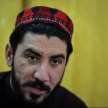

In the cacophony of modern-day political turmoil, some movements speak not with volume but with resonance. They do not erupt like firestorms, but rather seep through the cracks of oppression like steady rain—imperceptible at first, yet ultimately transformative. Such is the story of Manzoor Ahmed Pashteen, the emblematic leader of the Pashtun Tahafuz Movement (PTM), a civil rights movement that rose from the ashes of war, prejudice, and state-sanctioned violence.
Born in the war-ravaged lands of South Waziristan, Pashteen is not the archetypal revolutionary. He did not wield a weapon nor command a militia; instead, he emerged with an ironclad will and a disarming smile. His iconic red cap became a metaphorical banner, a symbol of dissent and cultural pride, embodying the dignity of a people often marginalized, vilified, and rendered invisible.
The Pashtun belt—long a geopolitical conflagration—has suffered decades of militarization, insurgency, and dispossession. Pashtuns have been inundated by war, their villages obliterated, their youth disappeared under the guise of counter-terror operations. And through all this, their narratives were carefully expunged from national discourse.
Pashteen changed that. But not with spectacle—with silence.
His earliest protests were unostentatious, almost imperceptible, as he and a small cohort of students questioned extrajudicial killings and landmine injuries. Yet each quiet demand held the gravitas of accumulated decades of pain. Their slogans were not incendiary; they were incisive. “What is our crime?” they asked. “Why are we treated as aliens in our own land?”
The 2018 extrajudicial killing of Naqeebullah Mehsud was the catalyst. The tragedy ignited the first major PTM sit-in in Islamabad. Thousands joined—youth, women, elders—chanting not with vengeance but with clarity, cohesion, and courage. The state, unable to counter their moral certitude, responded with suppression—media blackouts, arrests, smear campaigns. But the more silent the coverage, the louder their resonance grew.
Manzoor Pashteen's leadership is antithetical to populist demagogues. He does not traffic in hyperbole or jingoism. His speeches are deliberate, rational, and steeped in historical context. He invokes the Constitution, not slogans. He cites data, not conspiracies. In doing so, he reclaims the political space not just for Pashtuns, but for all disenfranchised communities across Pakistan.
Internationally, PTM is seen as a litmus test for Pakistan’s commitment to pluralism, civil liberties, and rule of law. Within Pakistan, however, the establishment brands them seditious, a threat to national unity. But to the thousands who walk beside Pashteen, he is not a separatist—he is a unifier. His rhetoric never calls for division, only accountability.
There’s power in his restraint. In a world addicted to spectacle, Pashteen’s humility is revolutionary. His weapon is truth, his armor is resilience, his strategy is consistency. He embodies stoicism, and in his equanimity, there is defiance.
To those in power, silence is often comforting—it signals compliance. But when silence becomes organized, articulate, and unrelenting, it transforms into a reverberating challenge. The PTM's rallies—despite bans and threats—continue to swell. Each gathering is an act of civil disobedience, a testament to the indomitable human spirit.
Manzoor Pashteen's journey is not without peril. He has faced incarceration, vilification, and threats. Yet, he remains unflinching, anchored in a vision that refuses to be subdued. His story is not merely of protest, but of philosophical resistance—a belief that truth, even when ignored, will eventually resound.
Indeed, the dialectic of power and resistance is centuries old. But in the case of PTM, the power lies in nonviolence, civic consciousness, and collective dignity. Pashteen has woven these threads into a tapestry of defiance that continues to challenge entrenched orthodoxies.
This is what makes his movement extraordinary: it is loud without shouting, powerful without violence, unrelenting without chaos. It is a whisper that unsettles an empire. It is silence that screams.
As history often teaches us, it is not always the gun that wins revolutions. Sometimes, it is the word. And sometimes, even a word is not needed—just the presence of those who refuse to bow.
“Silent movements,” as Pashteen has proven, “create the loudest sounds.”
About the Creator
Kaleem Ullah
Hi everyone well come to my profile enjoy your day with in best story.
Keep reading
More stories from Kaleem Ullah and writers in Motivation and other communities.
The Question of the Silent Chair
The golden light of evening slowly crept across the faded walls of a small, quiet room. In one dimly lit corner stood an old wooden chair — silent, weathered, and heavy with the weight of untold stories. And there, on that very chair, Ahmed sat every evening. His arms folded tightly, his brows furrowed, and his eyes fixed on the ground as if searching for answers buried deep beneath the floor.
By Kaleem Ullah 8 months ago in Motivation
This Mistake Almost Broke Me
ign There was a time when I believed that staying quiet was the safest choice. I thought avoiding conflict meant maturity, and trusting people without questions meant kindness. I never imagined that one simple mistake — ignoring my own inner voice — would almost break me.
By Silent Lessons3 days ago in Motivation
"Hear Me Out"
"Hear me out, what if we ran away together?" "Where do you want to go?" "Anywhere but here. We could move to a new city or to Canada, or we could disappear from society to live in the middle of the woods. Maybe a combination of two of those things would be good. What do you say?"
By Kay Husnick6 days ago in Fiction


Comments
There are no comments for this story
Be the first to respond and start the conversation.