
Circular Economy: A Sustainable Model for the Future
Embracing Circular Economy: Transforming Waste into Wealth for a Sustainable Future

Introduction
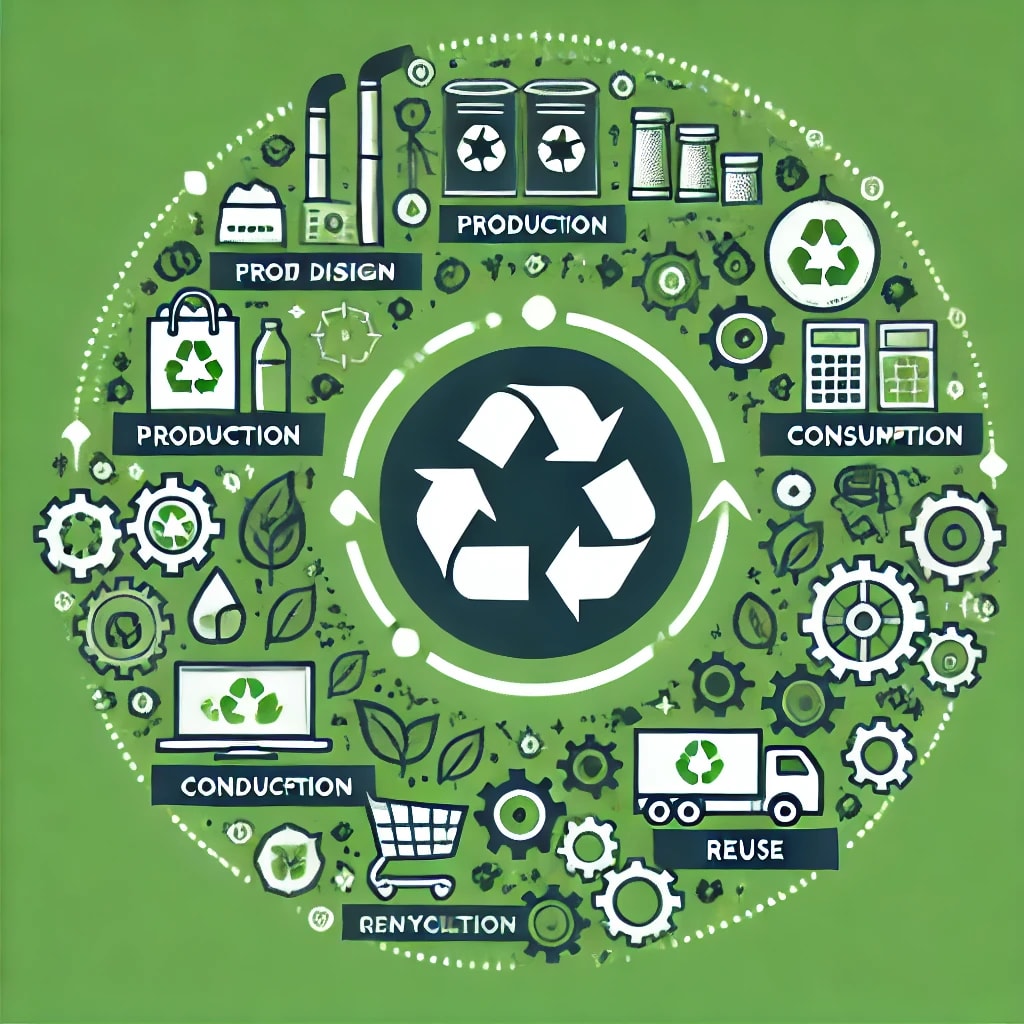
The circular economy represents an alternative and sustainable economic model that diverges from the traditional linear model of “take, make, dispose.” In a global context where natural resources are increasingly scarce and environmental pressure is rising, adopting a circular economy becomes crucial to ensure a sustainable future. This article will explore the fundamental principles of the circular economy, its environmental and economic benefits, the challenges for its implementation, and some success stories.
The Fundamental Principles of the Circular Economy
Reduction and Reuse
The first key principle of the circular economy is waste reduction and material reuse. This involves rethinking product design to facilitate reuse, repair, and recycling. For instance, designing modular electronic devices that can be easily disassembled and repaired extends their lifespan and reduces the need for new resources. This approach not only helps decrease the amount of waste generated but also promotes a cultural shift toward responsible consumption.
Reduction initiatives can also extend to corporate policies and industrial practices. For example, some companies are adopting just-in-time production practices, which reduce material waste and improve production efficiency. Additionally, the adoption of advanced technologies like 3D printing allows for the reduction of waste during the production process, using only the necessary material to create the final product.
Recycling and Recovery
Recycling is a key element of the circular economy. However, it involves more than just recycling materials like paper, plastic, and metals; it also includes recovering energy and other resources from waste. For instance, waste treatment plants can generate biogas from organic decomposition, which can be used as a renewable energy source. This approach not only reduces the amount of waste sent to landfills but also creates new opportunities for sustainable energy production.
Another important recycling strategy involves wastewater treatment. Advanced technologies enable the recovery of water from industrial processes for reuse, thus reducing potable water consumption and minimizing environmental impact. Additionally, recovering nutrients from organic waste for fertilizer production represents another example of how the circular economy can contribute to agricultural sustainability.
Regeneration of Natural Systems
Another fundamental principle is the regeneration of natural systems. This can include sustainable agricultural practices that improve soil health and promote biodiversity or the creation of urban green spaces that enhance air quality and community well-being. Regeneration not only restores degraded ecosystems but also creates more resilient environments capable of supporting human and animal life in the long term.
Regenerative initiatives can also include reforestation and the rehabilitation of abandoned areas. For example, planting trees in urban areas not only improves air quality but also helps regulate the local microclimate, reducing the urban heat island effect. Similarly, rehabilitating abandoned industrial areas and transforming them into parks and recreational spaces can improve the quality of life in local communities and promote more sustainable urban development.
Environmental and Economic Benefits
Reduction of Environmental Impact
The circular economy aims to minimize environmental impact through more efficient resource and waste management. By reducing the need to extract new natural resources, greenhouse gas emissions and other pollutants associated with extraction and production processes are decreased. Additionally, waste reduction helps mitigate pollution problems, such as plastic in the oceans. This approach also positively affects biodiversity by protecting natural habitats from industrial destruction.
Reducing environmental impact also translates into greater resilience to climate change effects. For example, sustainable agricultural practices that improve soil health can increase carbon sequestration capacity, helping to mitigate the greenhouse effect. Moreover, reducing the use of pesticides and chemical fertilizers protects wildlife and improves the quality of surface and groundwater.
Resource Efficiency
A circular approach enhances resource efficiency, allowing companies to reduce operational costs. For instance, material reuse reduces dependence on virgin raw materials, which are often expensive and subject to price fluctuations. Additionally, innovations in production processes can lead to significant energy savings. Companies that adopt the circular economy can also benefit from greater resource security, reducing vulnerability to supply chain disruptions.
Resource efficiency also translates into greater competitiveness for businesses. Companies that can optimize material use and reduce waste can offer products at more competitive prices, attracting more customers. Additionally, adopting sustainable practices can improve the company’s image and attract investors interested in supporting environmental and social initiatives.
New Economic Opportunities
The circular economy creates new economic opportunities and jobs. The recycling, repair, and regeneration sectors require a specialized workforce, while innovation and the development of new circular business models stimulate economic growth. Furthermore, companies that adopt sustainable practices often gain a competitive advantage, attract investments, and improve their reputation.
New economic opportunities also manifest in the creation of new markets and services. For example, the growing demand for sustainable and recycled products has led to the emergence of innovative startups offering circular solutions. These new enterprises not only contribute to environmental sustainability but also stimulate the local economy, creating jobs and promoting innovation.
Challenges for Implementation
Cultural and Behavioral Barriers
One of the main challenges for implementing the circular economy is cultural and behavioral change. People and businesses are accustomed to the linear consumption model, and shifting to a circular model requires a change in mindset. It is necessary to promote awareness and education on the benefits and practices of the circular economy.
Cultural change also requires long-term commitment from educational institutions and the media. Schools can integrate environmental education into their programs, teaching young people the importance of sustainability and responsible consumption. Similarly, the media can play a key role in raising public awareness of the benefits of the circular economy through informational campaigns and reports on successful circular practices.
Infrastructure and Technology
Implementing a circular economy requires adequate infrastructure and advanced technologies. This includes efficient recycling plants, integrated waste management systems, and technologies for material traceability. Investments in these areas are crucial to creating a functioning circular system.
The development of new technologies can facilitate the transition to a circular economy. For example, the Internet of Things (IoT) can improve material traceability along the supply chain, enabling more efficient waste management. Additionally, artificial intelligence (AI) can be used to optimize recycling processes and identify new opportunities for material reuse.
Regulations and Policies
Government regulations and policies play a crucial role in facilitating or hindering the adoption of the circular economy. It is necessary to develop a regulatory framework that incentivizes circular practices, such as taxing virgin materials and offering subsidies for recycling technologies. Furthermore, policies must support innovation and collaboration among various sector actors.
Government policies can also promote research and development of circular solutions. For example, public funding for research projects in the field of sustainability can accelerate the innovation and dissemination of circular technologies. Additionally, green public procurement policies can incentivize companies to adopt sustainable practices, creating a market for circular products and services.
Success Stories
The Textile Industry
The textile industry is one of the sectors successfully embracing the circular economy. Companies like Patagonia and H&M have implemented recycling and reuse programs for clothing. Additionally, they are investing in sustainable materials like organic cotton and recycled polyester, reducing the overall environmental impact of their production.
Another significant example is circular economy initiatives in the footwear sector. Companies like Nike and Adidas are developing shoes made from recycled materials and designed to be easily disassembled and recycled at the end of their lifecycle. This approach not only reduces waste but also promotes innovation in product design.
The Electronics Sector
In the electronics sector, companies like Apple and Fairphone are developing products with modular and easily repairable designs. This not only extends the lifespan of devices but also reduces the amount of electronic waste. Moreover, recovering valuable materials from discarded devices contributes to more efficient resource use.
Another success story in the electronics sector is initiatives for recycling electronic waste. For example, in Japan, the Tokyo 2020 Medal Project allowed for the recovery of precious metals from electronic waste to produce Olympic medals. This project not only reduced waste but also raised public awareness of the importance of recycling and sustainability.
Sustainable Construction
Sustainable construction is another success story in the circular economy. Designing buildings with recycled and reusable materials, such as wood and metal, reduces the environmental impact of construction. Additionally, constructing energy-efficient buildings with rainwater harvesting systems and solar panels contributes to more sustainable use of natural resources.
A notable example of sustainable construction is zero-waste buildings, which aim to minimize waste during construction and use. These buildings use advanced technologies for recycling construction materials and wastewater treatment, creating a more sustainable and resilient built environment.
Conclusion
The circular economy represents an indispensable economic model for addressing the environmental and social challenges of the future. Through waste reduction, material reuse, recycling, and the regeneration of natural systems, this approach promotes more sustainable resource management. Despite the challenges associated with its implementation, the environmental and economic benefits are significant. Success stories in various sectors demonstrate that it is possible to adopt circular practices with positive results. It is therefore essential to continue promoting and developing the circular economy to ensure a sustainable future for future generations.
About the Creator
Fabio Smiraglia
I am a passionate content writer with extensive experience in crafting engaging texts for blogs, websites, and social media. I love telling stories, informing, and connecting with audiences, always with creativity and precision.
Keep reading
More stories from Fabio Smiraglia and writers in Motivation and other communities.
The Impulse of Creativity: How to Cultivate and Harness Your Creative Potential
Introduction Creativity is one of humanity’s most valuable resources. It fuels innovation, solves complex problems, and enriches our everyday experiences. However, many people wonder how they can cultivate and harness their creative potential. This article explores the various dimensions of creativity, providing practical strategies for developing it and applying it in different aspects of life.
By Fabio Smiragliaabout a year ago in Motivation
The Silent Climb
In a small village cradled between gentle hills and glassy lakes, there lived a boy named Ayan. He wasn’t loud or bold, but he carried a stillness about him that made people notice. While other children played games or chattered in the square, Ayan often sat by the edge of the meadow, watching the distant mountains catch the first light of morning. There was something in the way the peaks touched the sky that made his chest tighten—not with fear, but with longing.
By meerjanan7 days ago in Motivation


Comments (2)
The circular economy is as important for achieving sustainability goals as decarbonisation but often gets forgotten, so I am pleased to see this story.
Detailed article