
The Silent Climb
A journey of persistence, resilience, and discovery
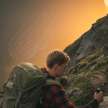

In a small village cradled between gentle hills and glassy lakes, there lived a boy named Ayan. He wasn’t loud or bold, but he carried a stillness about him that made people notice. While other children played games or chattered in the square, Ayan often sat by the edge of the meadow, watching the distant mountains catch the first light of morning. There was something in the way the peaks touched the sky that made his chest tighten—not with fear, but with longing.
His father tilled the same soil his father had, rising before dawn and returning home when the sun dipped behind the trees. He was a kind man, steady and sure, and he loved Ayan more than words could say. “This life is enough,” he’d say, wiping sweat from his brow. “It feeds us, shelters us. It’s honest.”
Ayan never argued. But when he looked at the mountain—Eagle Peak, the tallest in the range, its crown often wrapped in cloud—he couldn’t help but wonder what waited beyond the known.
One morning, without fanfare or announcement, Ayan packed a worn cloth bag. He tucked in a few flatbreads wrapped in cloth, a waterskin, a compass his grandfather had once given him, and a small notebook with blank pages. He left just as the sky turned pale gold, stepping lightly over the sleeping village, not out of secrecy, but because words felt too heavy for what he was about to do.
The trail began gently—dirt paths worn by goats and shepherds. But soon the land rose sharply, the trees grew thicker, and the air cooler. His legs burned by midday. His shoulders ached from the bag, and once, he slipped on loose stone, scraping his palm. He sat for a long moment, catching his breath, staring at the red line across his skin. Doubt crept in. What if I can’t do this? What if I’m just a boy from a village who doesn’t belong up here?
But then he opened his notebook and wrote:
Day One. I’m tired. But I’m still moving.
That night, he curled beneath a rocky overhang, wrapped in a thin woolen shawl. The stars were brighter than he’d ever seen them. No lamps, no voices, no familiar sounds. Just silence—and in that silence, a kind of presence. He wrote again:
It’s not the mountain that’s loud. It’s me. My thoughts. I never noticed how much noise I carry inside.
By the third day, the path vanished. The wind grew sharp, and the sky darkened without warning. Rain came fast and hard, turning the trail to mud. Ayan scrambled for cover, slipping and sliding until he found a shallow cave. He huddled there, soaked and shivering, listening to thunder roll through the valley like a warning.
He thought of home. Of his father’s warm kitchen, the smell of roasted lentils, the sound of laughter from neighbors passing by. He could turn back. No one would blame him.
But then he remembered the mornings he’d stood at the edge of the world, dreaming. That quiet ache in his chest. He hadn’t come this far to run from a storm.
So he waited. And when the rain stopped, he stood, stiff and cold, and kept climbing.
The higher he went, the thinner the air became. His breath came in short pulls, his steps slow and deliberate. But with every step, something inside him settled. He wasn’t racing. He wasn’t proving anything to anyone. He was simply moving forward—because he could.
And then, suddenly, there was no more up.
He had reached the summit.
The world spread beneath him in every direction—forests like green smoke, lakes like scattered mirrors, the village a tiny cluster of rooftops far below. The wind here was clean and constant, brushing against his face like a hand. He didn’t shout or raise his arms. He just stood there, breathing, feeling smaller and larger all at once.
He opened his notebook one last time and wrote:
I made it. But the mountain wasn’t the goal. The climb was.
When Ayan returned, people noticed the quiet in his eyes had deepened. Some asked questions. Others just nodded, as if they already knew. He didn’t speak much about what he’d seen or felt. Some journeys, he realized, weren’t meant to be explained.
Years passed. Children grew. Seasons turned. But every now and then, someone would leave the village with a small bag and steady steps, eyes fixed on the peak. And at the base of Eagle Peak, where the trail begins to rise, an old stone was placed—smooth from wind and time. On it, carved simply:
"True victory lies not in reaching the top, but in daring to begin."
No name. No date. Just truth.
And in the evenings, when the light slants just right, you might see a figure standing at the edge of the meadow, looking up. Not in haste, not in fear—but with quiet purpose.
Because some dreams don’t roar.
They rise.
---
*Moral:*
Courage isn’t always loud. Sometimes, it’s the soft decision to keep going when no one is watching, and the strength to begin when the path is unclear.
About the Creator
meerjanan
A curious storyteller with a passion for turning simple moments into meaningful words. Writing about life, purpose, and the quiet strength we often overlook. Follow for stories that inspire, heal, and empower.
Keep reading
More stories from meerjanan and writers in Motivation and other communities.
The Actress Hollywood Called "Unmarketable": The Brutal Rise of Viola Davis
Look at the highest echelons of Hollywood today, and you will find Viola Davis sitting comfortably on the throne. She is a force of nature. She is the first Black actor in history to achieve the "Triple Crown of Acting"—winning an Academy Award, an Emmy Award, and two Tony Awards. When she steps onto a screen, whether she is playing a fearless lawyer, a hardened blues singer, or the leader of an African warrior kingdom, she commands the space with an intensity that cannot be taught. She is universally respected, wildly successful, and undeniably brilliant.
By Frank Massey 3 days ago in Motivation



Comments
There are no comments for this story
Be the first to respond and start the conversation.