
Children Don’t Grow Up—They’re Pushed
The hidden cost of growing up too soon

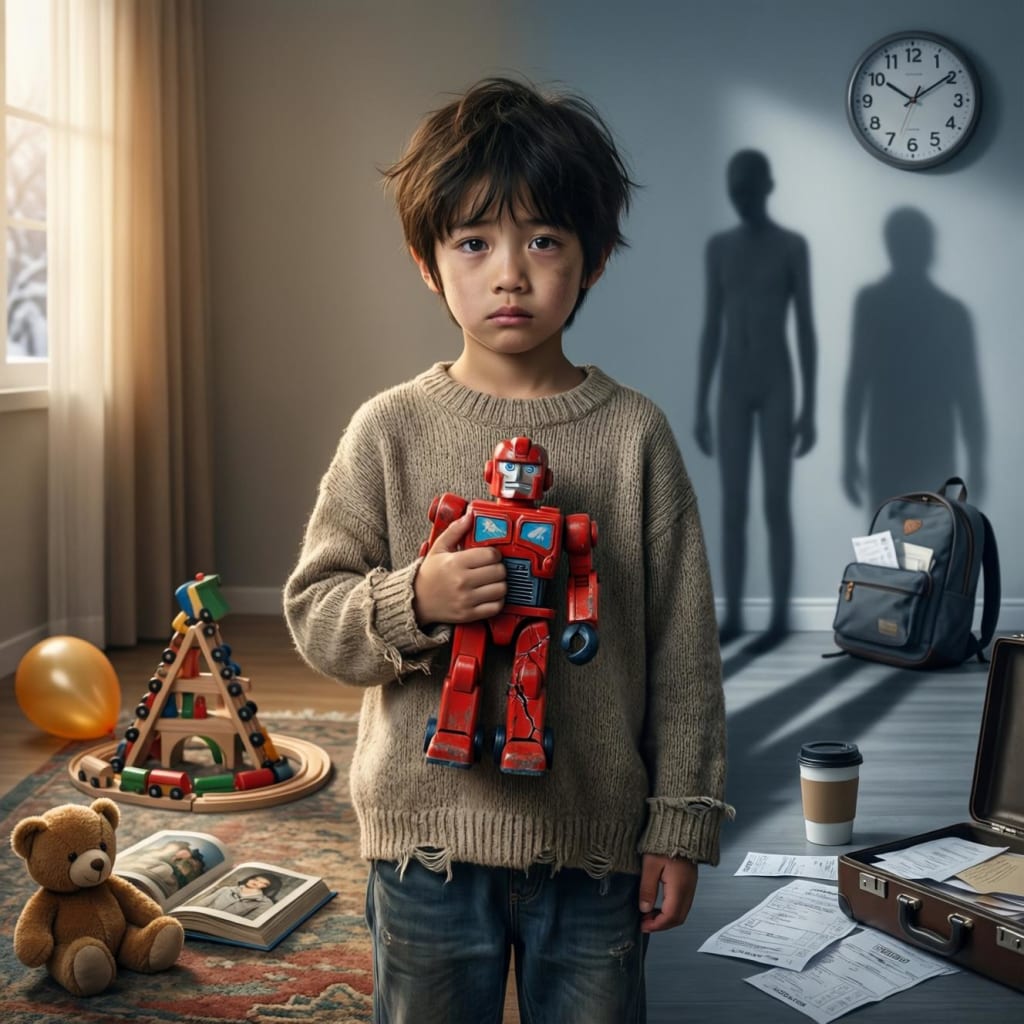
We like to say children grow up too fast, as if time itself is to blame. As if childhood simply slips away on its own—quietly, naturally, without resistance. But that isn’t the truth. Children don’t grow up. They’re pushed.
They’re pushed by circumstances they never chose.
Pushed by expectations they don’t fully understand.
Pushed by silence when they needed protection most.
A child doesn’t wake up one morning wanting to be “mature.” They don’t ask to be strong, responsible, or resilient. They become those things because no one else steps in. Because someone has to hold the weight, and too often, that someone is them.
You can see it in the way a child learns to read the room before they speak. How they watch adults closely, adjusting their tone, their needs, their emotions. They learn when it’s safe to talk and when it’s better to disappear. That isn’t growth. That’s survival.
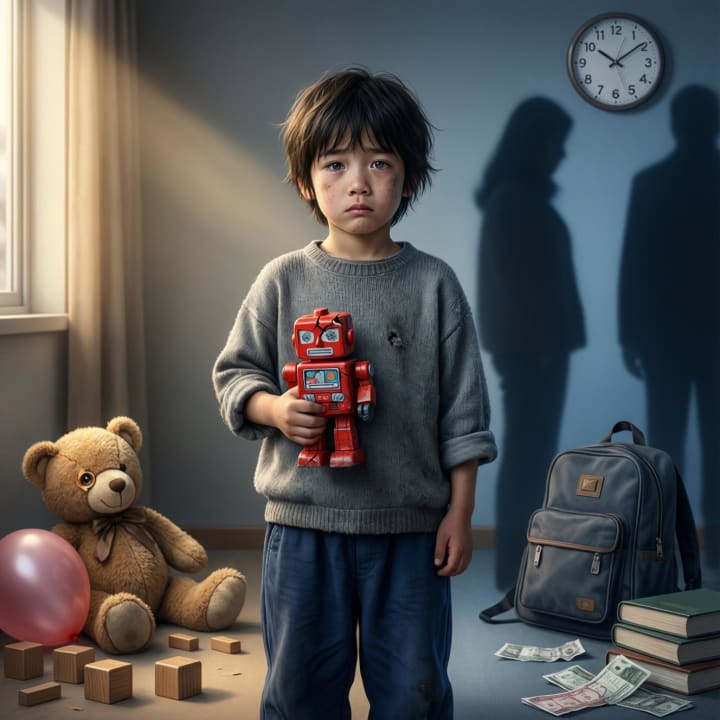
Some children are pushed by responsibility. They become the “strong one” when parents are exhausted, absent, or breaking. They learn to cook before they learn to play. They learn to comfort adults before anyone ever asks how they’re doing. Praise follows them—you’re so mature, you’re wise beyond your years—but no one asks what it cost them to get there.
Others are pushed by loss. The kind that rearranges a household overnight. A death. A divorce. A sudden poverty. Childhood doesn’t fade gently in those moments—it shatters. And the child learns quickly that crying won’t bring anything back, so they stop. They pack their grief away and carry on because that’s what’s expected.
Some are pushed by fear. Growing up in homes where voices are raised, doors slam, or love feels conditional. These children become experts at disappearing. Quiet becomes their armor. Good behavior becomes their shield. They don’t grow up—they harden.
And then there are the children pushed by the world itself. By systems that demand resilience instead of offering protection. By schools that value performance over wellbeing. By cultures that tell boys not to feel and girls to endure. They’re told life is hard, so they’d better toughen up early.
We call these children mature.
But maturity born from pain isn’t maturity—it’s adaptation.
What we often fail to notice is what didn’t get to exist.
The questions never asked.
The messes never made.
The softness never allowed.
These children grow into adults who struggle to rest without guilt. Adults who feel uncomfortable being cared for. Adults who don’t know how to ask for help because help never arrived when it mattered most. They learn how to function—but not always how to feel.
And the saddest part is how often we reward it. We admire the child who doesn’t cause trouble. We praise the one who “handles things well.” We mistake silence for strength and compliance for peace.
But children aren’t meant to handle everything.
They’re meant to be handled with care.
Growing up should be slow. It should be layered with safety, mistakes, and forgiveness. It should include scraped knees, loud laughter, and someone else carrying the weight when things get heavy.
When children are pushed instead of guided, something essential is lost. Not always visibly. Not immediately. But quietly. Deeply.
Healing often begins when that child—now grown—finally understands the truth:
There was nothing wrong with me. I was just asked to carry too much, too soon.
Maybe that realization is where we start doing better. By listening more closely. By protecting longer. By allowing children to remain children, even when life feels inconvenient.
Because children don’t need to grow up faster.
They need space to grow up safely.
And that is something only adults can give.
About the Creator
Imran Ali Shah
🌍 Vical Midea | Imran
🎥 Turning ideas into viral content
✨ Watch • Share • Enjoy
Reader insights
Nice work
Very well written. Keep up the good work!
Top insights
Easy to read and follow
Well-structured & engaging content
Expert insights and opinions
Arguments were carefully researched and presented
Eye opening
Niche topic & fresh perspectives
Heartfelt and relatable
The story invoked strong personal emotions
On-point and relevant
Writing reflected the title & theme
Keep reading
More stories from Imran Ali Shah and writers in Motivation and other communities.
I Learned to Laugh So No One Would Ask Questions
I didn’t always laugh because something was funny. Sometimes, I laughed because silence felt dangerous. It started subtly. A smile here. A chuckle there. A light joke to smooth an uncomfortable moment. Laughter became my reflex, my shield, my way of steering conversations away from places I wasn’t ready to explore. People like laughter. It reassures them. It tells them everything is fine—even when it isn’t.
By Imran Ali Shah9 days ago in Motivation
From Daydreaming to Doing: How to Turn Desire Into Action
Daydreaming is easy. Action is not. You can sit for hours imagining a better life, the work you want to do, the habits you wish you had, the confidence you hope to feel, the version of yourself you’d love to become. You can picture it in detail, feel the excitement of it, even get a rush of inspiration.
By Stacy Faulkabout 22 hours ago in Motivation




Comments (1)
Been that child....but growing is a process and adults don't always have the answers....when we grow up we come to the conclusions that they had to keep from us....you're writing is deep...keep going