
Boost Your Brain Health
How A Healthy Gut Leads To A Smarter You

It is often said that the way to a man’s heart is through his stomach. Well, researchers now assert that the way to a healthy brain is also through the stomach. Incorporating millets into our diet can significantly reduce the decline in cognitive functions, primarily memory loss, mental agility, and even Alzheimer's and dementia.
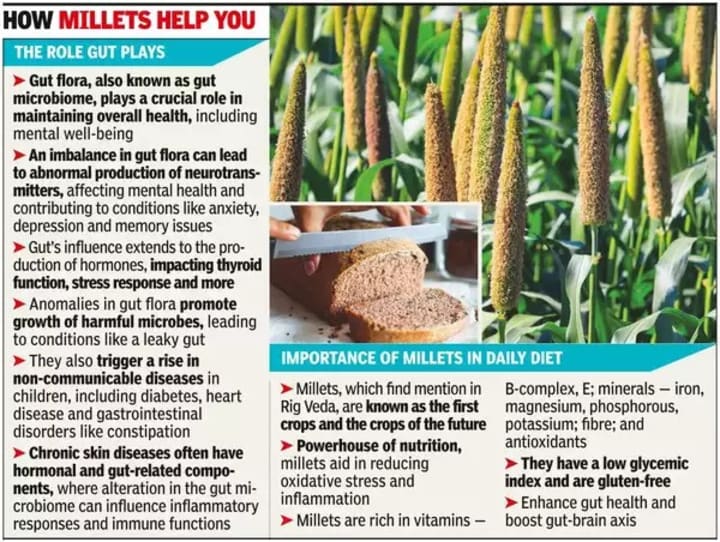
Millets, ancient grains that have been cultivated for thousands of years, are making a strong comeback in modern diets due to their incredible health benefits. These tiny powerhouses are rich in nutrients, including fiber, protein, vitamins, and minerals, making them an excellent addition to anyone's diet. They have been shown to support various aspects of health, but recent research highlights their remarkable impact on cognitive functions.
This vital information applies to all meal preparers, especially women, who, if encouraged and educated about the benefits of millets, can include them in their families’ diet. This was a central theme highlighted at a seminar on “Gut, Microbiome, and Millets,” which emphasized the critical role of gut health in addressing nutritional inadequacies and chronic illnesses.
Organized by the Celiac Society of India and the Indian Coalition for the Control of Iodine Deficiency Disorders, in partnership with Illness to Wellness, the seminar underscored the importance of promoting millet consumption through awareness and education. Dr. Vinod Kumar Paul, a member of NITI Aayog—the policy planning body of the Indian government—stressed the need to incorporate more nutritious foods, such as millets, into our diets while reducing our consumption of processed foods.
Dr. Paul elaborated on the growing body of evidence that links gut health with brain health. "By making conscious choices to include healthier options like millets in our meals, we can positively impact not only our physical well-being but also our mental and emotional state," Dr. Paul emphasized. He reinforced the long-standing belief held by our ancestors regarding the link between food and overall behavior, urging a return to natural, whole foods to combat modern health challenges.
Ishi Khosla, a clinical nutritionist and researcher, further highlighted that millets are indeed a "grain changer" and a "game changer." She pointed out that modern humans have become disconnected from their gut health. However, recent scientific advancements validate the importance of millets in maintaining a healthy gut microbiome. A healthy gut microbiome, the collection of beneficial bacteria in the digestive system, is crucial for overall health, including brain function.
Khosla explained that the gut and brain communicate through the gut-brain axis, a complex network of pathways involving neural, hormonal, and immune signals. By nourishing the gut with fiber-rich foods like millets, we can support this communication and enhance cognitive functions. "Millets provide the essential nutrients and prebiotics that feed beneficial gut bacteria, promoting a balanced microbiome," Khosla said. This balance is essential for reducing inflammation, a common factor in cognitive decline and mental health disorders.
Dr. Meena Mishra, chairperson of the Brain Behaviour Research Foundation of India, elaborated on the impact of millet on various life stages, particularly concerning cognitive health during aging. She noted that as people age, they often experience a decline in cognitive functions, manifesting as memory loss and reduced mental agility. "Millets, rich in antioxidants and anti-inflammatory compounds, can help reduce the risk of neurodegenerative diseases like Alzheimer's and dementia," Dr. Mishra stressed.
She further emphasized that millets can be beneficial as a preventive measure or an intervention for those already experiencing cognitive decline. Research indicates a connection between diets that include millets and a decreased occurrence of cognitive decline among the elderly. Dr. Mishra cited studies showing that antioxidants in millets combat oxidative stress, a key factor in brain aging and neurodegeneration. Additionally, the anti-inflammatory properties of millets can help protect brain cells from damage.
The seminar also discussed practical ways to incorporate millets into everyday meals. Traditional recipes, such as millet porridge, salads, and baked goods, can be easily adapted to include these nutritious grains. For example, replacing refined grains with millet in recipes can enhance the nutritional profile of dishes without compromising taste. Experimenting with different types of millets, such as finger millet, pearl millet, and foxtail millet, can add variety to the diet and provide a range of health benefits.
The main assertion of most speakers during the seminar was clear: "If your food is good, it is itself a medicine." This powerful statement encapsulates the idea that by choosing natural, nutrient-rich foods like millets, we can prevent and manage many health issues, including cognitive decline. It calls for a shift in mindset towards food as a means of nourishment and healing, rather than merely a source of calories.
In conclusion, the seminar on “Gut, Microbiome, and Millets” highlighted the profound connection between diet, gut health, and brain function. By incorporating millets into our diets, we can support our cognitive health, reduce the risk of neurodegenerative diseases, and enhance our overall well-being. Educating meal preparers, particularly women, about the benefits of millets is crucial for promoting healthier eating habits within families. Embracing millets as a staple in our diets not only honors ancient wisdom but also aligns with modern scientific discoveries, proving that the way to a healthy brain is indeed through the stomach.
About the Creator
Keep reading
More stories from Binay Srivastava and writers in Motivation and other communities.
Lose Weight Naturally Without Medicines
Losing weight naturally without the aid of medicines is not only achievable but can also lead to lasting health benefits and a sense of accomplishment. Embracing a holistic approach, such as incorporating a balanced diet, regular exercise, and mindful lifestyle changes, can significantly impact your weight loss journey.
By Binay Srivastava2 years ago in Motivation
Stop Planning for Survival, Start Planning for Success
Many people plan their lives around survival. They plan how to get through the week, how to pay the next bill, how to manage the next responsibility, or how to avoid falling further behind. Their energy goes toward reacting to immediate problems rather than building toward long-term possibilities.
By Stacy Valentineabout an hour ago in Motivation
A Transparent Look at Vocal Challenges and Top Stories
Almost three years ago, we shared a resource article that served as a place for people to suggest new challenge prompts. We thought it would be a good idea to refresh that thread, and take the opportunity to answer a few common questions about top stories, how challenges are judged and how submissions are reviewed.
By Vocal Curation Team4 days ago in Resources




Comments (2)
Hi Sarby, I hope you are keeping well. Do you consume millet products? It is a popular grain that is converted into various consumable/edible items in western part of India, at least.
Well, researchers now assert that the way to a healthy brain is also through the stomach. A Readers Digest, fantastic read, thank you for sharing this.