
Beneath the Mask
Unveiling the Truth Hidden in Plain Sight
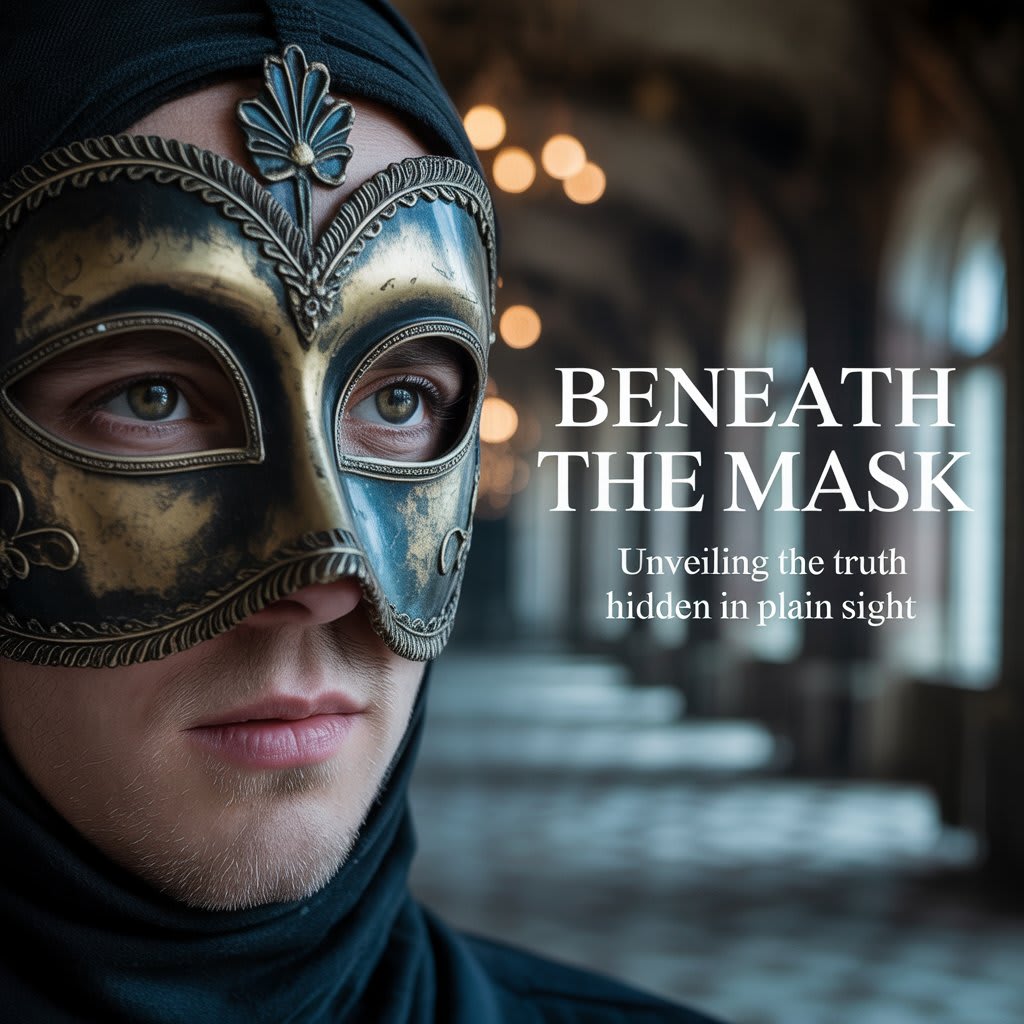
Every morning, Mira pressed it against her face—not the elaborate kind worn at masquerade balls, but a quieter mask crafted from careful smiles and practiced words. To the outside world, she was composed, successful, untouchable. A rising star in the city’s bustling art scene, her paintings hung in galleries and whispered stories only the fortunate few understood. Yet behind the facade, beneath the painted smiles, lay a heart burdened with memories she dared not speak aloud.
Tonight was different.
She stood in front of the cracked mirror in her dimly lit apartment, the only source of light a small desk lamp casting a warm glow over scattered brushes and half-finished canvases. Her reflection stared back—not the confident artist the world admired, but a woman fractured by a past she had spent years trying to bury.
A single tear traced a silent path down her cheek, quickly wiped away. No one could know. Not yet.
The silence in the room felt suffocating, like the weight of years pressing down on her chest. She thought of the nights when she had run away from the chaos of her childhood, running toward the quiet corners of the world where she could paint and dream. But dreams, she learned, had a way of unraveling, especially when the truth refused to stay hidden.
Her phone buzzed on the cluttered table—a message from her gallery manager. The exhibition is in two days. Are you ready? The question felt like a thousand needles piercing her heart. How could she be ready when she was still living beneath the mask?
Mira closed her eyes and took a deep breath. The mask was a lie, a fragile illusion she clung to, but it was all she had to survive.
Years ago, before the art, before the smiles, there was silence. The silence that filled the rooms where she should have felt safe, but didn’t. The silence that spoke louder than any scream.
She remembered the faces, the shadows that crept through her memories. Her mother’s forced smiles hiding pain, her father’s cold stares that never warmed. And the nights when Mira was left alone, her tiny hands clutching at the darkness, waiting for a love that never came.
She had learned early how to hide—how to wear the mask so well that no one ever saw the cracks beneath.
But sometimes, the cracks became too wide to hide.
Last week, a letter arrived. No signature, just words scrawled in shaky ink: The truth will find you. No mask can protect you forever.
Her hands had trembled as she read it. Who could have sent it? Was it someone from her past? Someone who knew the secrets she fought so hard to bury?
Since then, Mira had felt watched—like shadows were closing in, waiting for her to falter.
That night, as the city hummed with distant sirens and laughter from nearby streets, Mira packed a small bag. She couldn’t face the exhibition like this—not until she knew who was reaching into her past.
She slipped out into the cool night air, the mask still firmly in place but her heart pounding with fear and hope.
Her journey took her to forgotten places—the old neighborhood where cracked sidewalks told stories of broken families and lost dreams. She walked past empty houses, each window like a hollow eye staring back at her.
At the edge of the neighborhood stood a dilapidated building—the place she had run from years ago. The place she had promised herself she would never return to.
Yet here she was, standing in front of it, the shadows deepening around her.
The door creaked open before she could knock.
An old woman appeared, eyes sharp and knowing, like she had been waiting all along.
“You came,” the woman said softly.
Mira nodded, unable to speak.
“Some masks protect us,” the woman continued, “but some keep us trapped. It’s time to let go.”
Inside, the room was filled with faded photographs, old letters, and memories Mira thought she had forgotten.
The woman handed her a bundle of letters—letters from her mother, never sent, filled with apologies, regrets, and love.
Tears flowed freely now, breaking the dam of years. Mira realized the mask she had worn wasn’t just a shield—it was a prison.
That night, beneath the dim light, she cried for the little girl who had never felt safe, for the mother who had loved in silence, and for the woman she was becoming.
When dawn broke, Mira felt lighter. The mask was still there, but now it was hers to wear—not a barrier but a choice.
Back at her apartment, she looked in the mirror again. This time, the woman staring back was still fragile but stronger, ready to face the world.
About the Creator
Keep reading
More stories from Muhammad Salman and writers in Motivation and other communities.
The Patience of the Prophet
The early years of Islam were marked by hardship and unwavering faith. When the Prophet Muhammad (peace be upon him) began to preach the message of monotheism in Mecca, he was met with hostility from many powerful leaders of the Quraysh tribe. His call to abandon idol worship and injustice threatened the established social and economic order. As a result, he and his followers faced relentless persecution, yet the Prophet’s patience and mercy remained unshaken.
By Muhammad Salman6 months ago in Motivation
We Don’t Talk About the Good Days After Trauma
We talk a lot about trauma itself—the pain, the breaking point, the moment everything fell apart. We talk about survival like it’s a finish line. We talk about the scars, the before and after, the damage that never fully leaves.
By Imran Ali Shah7 days ago in Motivation


Comments
There are no comments for this story
Be the first to respond and start the conversation.