
An Introduction To Counted Thread Fabrics And Canvases
If you are a beginner or are completely new to the world of needlework, you might have been wondering which fabric to use for your hand embroidery project.

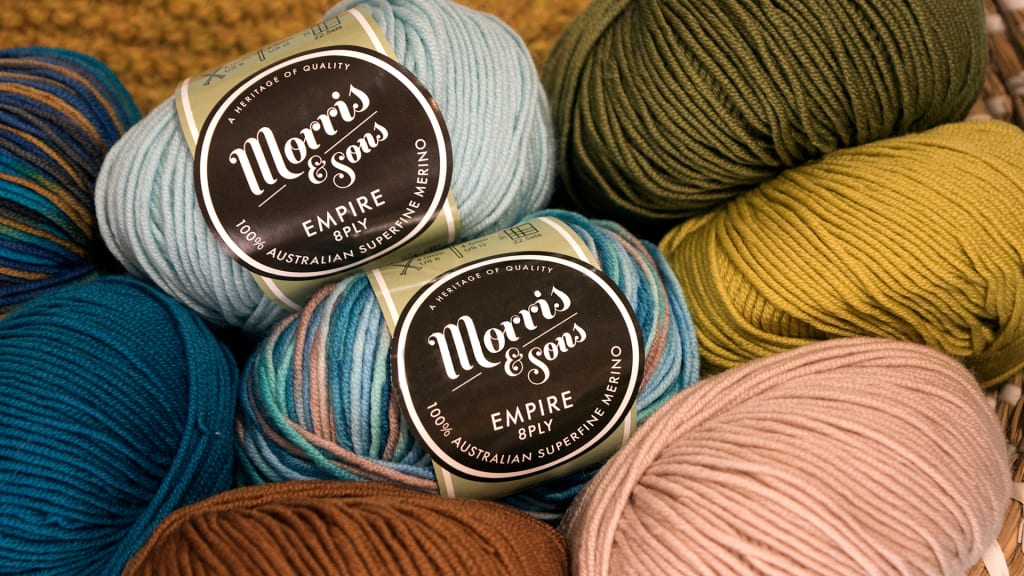
Be it hand or machine embroidery, figuring out which is the best fabric to use is quite a task. While it is difficult to tell which fabric is suitable for a specific embroidery project, many suitable fabrics are available today. Everyone who has tried their hands on it has a favourite fabric. Which one is your favourite?
Whether you have just started embroidering for the first time or an active embroiderer, the choice of fabric can either make or break the experience of embroidery.
Before stepping into the types of embroidery fabrics that we at Morris and Sons are proud to have, let us find out what fabric is.
What is Fabric?
Fabric is a generic term used for the material made from yarn, a continuous strand of textile fibres or filaments. Fabrics are usually a subdivision of textiles. A "textile" refers to a flexible material consisting of a natural or synthetic fibres network known as thread or yarn. Textiles are created by knitting, knotting, weaving, crocheting, or pressing fibres together.
"Fabric" is the material created by knitting, weaving, crocheting, or bonding.
It is essential to be familiar with the weaving process before looking at the different types of embroidery fabrics. Two distinctive sets of threads are interlaced to create the fabric, the weft, and the warp.
Wrap and Weft: Tip for Beginners
Warp and weft are the two very essential components used in weaving to swap the thread or yarn into fabric. The longitudinal warp yarns are first held stationary on a frame or loom stiffly. At the same time, the transverse weft (sometimes woof) is drawn through and inserted over and under the warp. After that, a single thread of the weft crosses the warp, called a pick. Each of the warp threads in a fabric is called a warp end or end. The weft thread runs back and forth from side to side of the fabric. On the other hand, the warp threads run up and down the fabric's length.
On weaving looms, warp threads are set up carefully, and then weave the weft thread over and under the warp threads. Depending on the pattern, you can get different types of weaves. The balanced weave enables the warp and weft threads to show up. For example, tapestry and rug weaving patterns are often weft-faced weaves where the weft threads hide the warp threads. If the warp threads hide the weft threads, it is considered a warp-faced weave.
Understanding Counted Threadwork
Counted-thread embroidery is usually any embroidery in which the embroiderer counts the fabric threads before inserting the needle into the fabric. Even-weave fabric is generally used; it produces a symmetrical image as both warp and weft fabric threads are evenly spaced.
Different Types of Fabrics and Embroidery Canvases
Fabric is the key material for an embroidery project, which heavily influences the finished result. Hence, it is pretty obvious that you strive for the best option. However, the market is flooded with abundant possibilities, making you spoilt for choice. This is why we have created a run-down list of different fabrics types for embroidery that we take pride in at our store too.
Embroidery fabrics need to be woven to hold the stitches of the embroidery. Fabrics suitable for both hand and machine embroidery include Evenweave, Aida, Canvas, Linen.
The different fabrics have different fibre contents, square counts. What fabric you choose to use will solely depend on the project you are undertaking and the thread you are using.
AIDA
AIDA (https://morrisandsons.com.au/collections/aida) is a 100% cotton fabric with an even weave with multiple threads (usually three or four) between each hole. AIDA is stiff and comes in several counts. It was invented by Zweigart back in 1908 and was designed solely for counted thread embroidery, including counted cross stitch, Swedish weaving, and Hardanger. The most significant feature of Zweigart fabrics for needlework is its outstanding countability, which is achieved by high-precision weaving. This is especially essential for cross-stitch motifs.
For cross-stitch, you need to stitch over one. This is a good fabric for beginners or someone with visibility issues yet very passionate about embroidery because the holes are much easier to gauge. We at Morris and Sons offer the following counts:
Eight counts
11 counts
14 counts
16 counts
CANVAS
Canvas fabric is an open even weave fabric. It is made from several materials such as cotton, silk and polyester. This fabric is also stiff. As soon as the canvas is manufactured, it goes through a process to add "sizing" to the threads. This is to ensure the fabric is strong enough for canvas or rug work. Canvas comes in three different types, including Interlock, Mono, and Penelope.
You may want to check out our 10ct Penelope Canvas, 10ct Interlock Mono Canvas, and 14ct Duo Canvas, suitable for your needlework projects.
EVEN WEAVE
Evenweave fabrics refer to woven fabrics (ranging from rayon, polyester, silk, cotton, wool, linen, acrylic or combinations of these and other fibres) with the same number of threads per inch.
Even weave fabric has threads with the same thickness. They are soft, smooth with a refined surface with a higher thread count.
Check out our 18ct Anne Cloth and 25ct Floba, and 25ct Lugana fabrics.
LINEN
Any plain and even weave fabric is linen. The look of this fabric is classy. However, the fabric has an uneven nubby surface. The rough surface of linen is because of the thick and thin threads used in its weaving. Check out our 100% linen 18ct Aida Linen fabric. It is an elegant fabric with a slightly irregular structure of flax fibre. This one is suitable for most embroidery techniques.
We hope this informative guide makes your needlework a little easier and more fun. Check out Morris and Sons' website if you are excited to start your embroidery project with the best fabric. You can easily discover an extensive range of counted threadwork fabrics on our online yarn store and make your next embroidery project a real showstopper!
About the Creator
Joseph Morris
The Morrises provided their framing service to a needlecraft store in Double Bay, carefully stretching and framing exquisite pieces of stitching.
Keep reading
More stories from writers in Motivation and other communities.
A Dart at Dusk
Seconds ago, the sullen sun set on the two of us… my exuberant furry companion and me. A fresh breeze embraces us, delivering welcome relief from the day’s oppressive heat. His typical stumbling and staggering along — apace with a sloth — has turned into trip-trapping, high-stepping, almost skipping along.
By Angie the Archivist 📚🪶7 days ago in Petlife


Comments
There are no comments for this story
Be the first to respond and start the conversation.