
Al-Nur City
A fairy tale of a future Muslim civilization

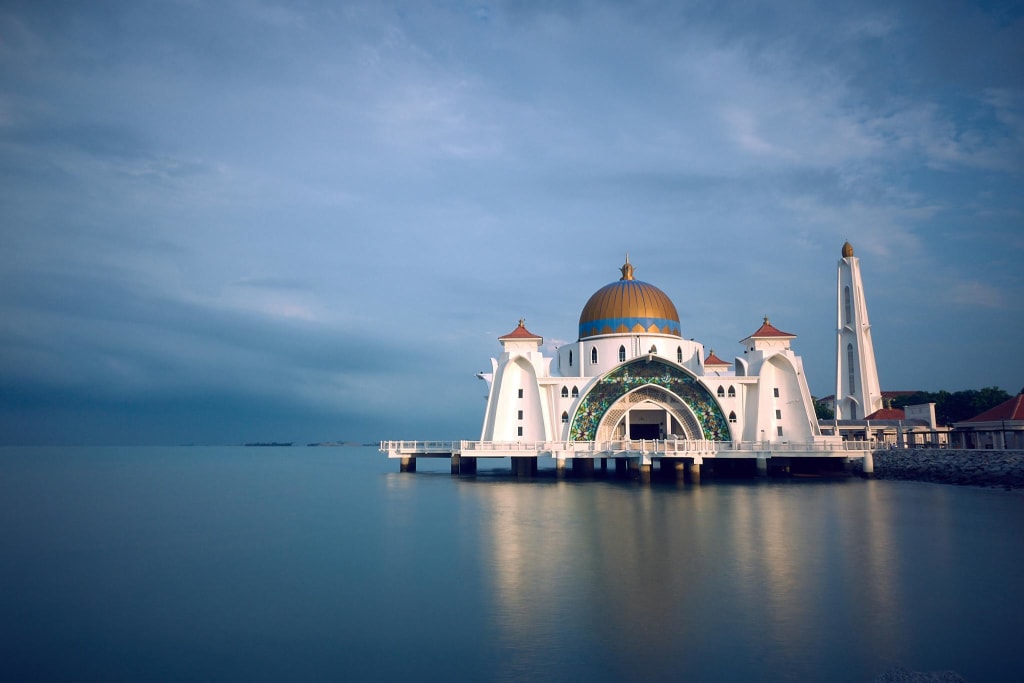
The year is 2147. The world is no longer the same. The impact of climate change has swallowed up the coasts, many cities have been wiped off the map. Western hegemony has collapsed into internal civil war and economic bankruptcy. The old era of the United Nations, the World Bank, or the American dollar is only in the pages of history. But at that time, a new civilization has emerged in the heart of the desert—the city of Al-Nur.
The city was founded in the abandoned desert of the Hijaz, 500 kilometers away from the Kaaba, where before there were only rocky mountains and sand dunes. A group of young Muslim scientists, philosophers, and Mujahid scholars came together and built a new society there. They not only built modern technology, but also an exceptional civilization combining knowledge, justice, and spirituality in the light of the Quran.
The city of Al-Nur has no parliament, no president, and no political party. The decision-making center here is the “Majlis al-Hikmah”—a consultative council, whose members are elected based on scholarship, character, and service. Under their leadership, the city is run according to the verse of Surah Shura—“Their affairs are by mutual consultation” (42:38).
But the most amazing aspect of this city was its intellectual pursuits. Like ancient Muslim civilizations, it had created “Bayt al-Hikmah 2.0”—a vast center of knowledge, where the research of al-Biruni, Ibn Sina, and Ibn Haytham was being newly translated and reinterpreted. But this message was no longer just for men—women were equally important. Professor Aisha bint Amir, the city’s best astronomer, sent a robotic observatory to the moon, called “Ikhlas.”
The city had mosques and laboratories side by side. The Friday sermons discussed proof of Allah’s creativity in quantum physics. Every child was taught mathematics, philosophy and genetics alongside the Quran. They believed that true knowledge always strengthens Islam, never weakens it.
This civilization had withstood attacks more than once. First came Western corporations—with their AI-controlled drones and attempts to suppress it through data theft. Then came the real China, who wanted to take control of this knowledge-based society. But the city of Al-Nur was prepared to defend itself—its defense units were funded by zakat and waqf, and were led by mujahideen, who were built on knowledge, sacrifice and a strong faith in Allah.
Once there was a famous battle—“Ghazwa at-Tanazul”—where they defended themselves by using electromagnetic waves to neutralize enemy weapons, even without any loss of life. That day, the eyes of the world were opened, and many scientists, philosophers, and ordinary people voluntarily took refuge in the city of Al-Nur.
Al-Nur was not just a city, it was an idea—that Muslims could lead not only in the past but also in the future. This city was a garden where a teenager named Fatima built the world's first helium fusion reactor with her own hands, where a 17-year-old boy named Muaz invented a new coding language—“Du’a Script”—that incorporated Islamic values into information technology.
In this city, there were no billboards, no obscenity in the name of entertainment. But there was music—tied to the poetry of Ibn Rushd, filled with the melody of the recitation of the Quran. In this city, children played and made travelogues, some inspired by the biography of Haidar Ali, some by the military tactics of Saladin.
An old teacher in the city once said, “We did not want leadership, we wanted knowledge, justice, and the pleasure of Allah. When the world understood that this is true success, then leadership came by itself.”
Today, a new chapter is being written in the pages of history—where Muslims have descended not only in self-defense, but also in guidance. This story is not real, but it is not unrealistic either. Because with a combination of faith, prayer, and effort, any imagination can be transformed into reality—this has been proven time and again by our ancestors.
About the Creator
Keep reading
More stories from Abdul Barik and writers in Motivation and other communities.
Tamanna
There were no stars in the sky of Baghdad that night. There was no hope in the air, only the smell of smoke and gunpowder. The war drums were far away, but the sound reverberated like waves through the streets of the city. The sound of Surah Yasin floated from the dome of the mosque, and nearby stood some shadowy figures holding guns. Among those shadows was one—the girl—whose name no one knew, no one uttered, but secretly everyone led in prayer. Her name was Tamanna.
By Abdul Barik8 months ago in Motivation
Why the Hardest Battles Are Fought Inside Your Mind
Every human being is fighting a battle that the world cannot see. We wake up, smile, go to work, scroll through social media, and pretend everything is fine—while inside, our mind is questioning our worth, our direction, and our purpose. This silent war within is the most exhausting conflict of all, because there are no visible wounds, yet the damage can be lifelong.
By Irfan Aliabout 3 hours ago in Motivation



Comments
There are no comments for this story
Be the first to respond and start the conversation.