
A. P. J. Abdul Kalam: Scientist, President, and Inspirational Figure
Explore the life, contributions, and legacy of A. P. J. Abdul Kalam, a prominent Indian scientist and politician who served as the 11th President of India and was known for his commitment to education, innovation, and national unity.

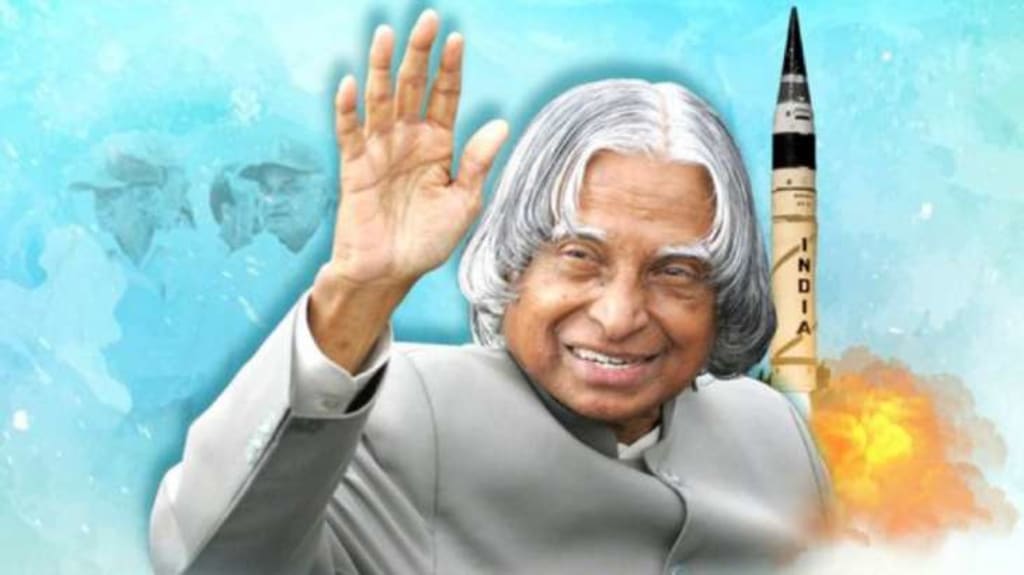
A. P. J. Abdul Kalam was an Indian scientist and politician who served as the 11th President of India from 2002 to 2007. Born on October 15, 1931, in Rameswaram, Tamil Nadu, Kalam studied aerospace engineering and worked as a scientist at the Indian Space Research Organisation (ISRO) and Defence Research and Development Organisation (DRDO) for many years.
Kalam played a key role in India's civilian space program and military missile development efforts, including the successful test of the Agni ballistic missile in 1989. He was also involved in India's nuclear weapons program.
In addition to his scientific achievements, Kalam was known for his humility and commitment to education. He was a popular figure among young people in India, and he often spoke to school and college students to inspire them to pursue their dreams.
After serving as President of India from 2002 to 2007, Kalam returned to his role as a scientist and continued to inspire young people until his death on July 27, 2015, while delivering a lecture at the Indian Institute of Management Shillong. He was posthumously awarded the Bharat Ratna, India's highest civilian award, in 2015.
Kalam's contributions to the field of science and technology are widely recognized in India and around the world. He played a key role in the development of the Polar Satellite Launch Vehicle (PSLV), which has become a reliable and cost-effective means of launching satellites into orbit. Kalam was also involved in the development of the country's first satellite launch vehicle, SLV-III, which successfully launched the Rohini satellite into orbit in 1983.
Kalam was a strong advocate for technology and innovation as a means of promoting economic growth and improving the lives of people in India. He was a proponent of "technology democracy," which called for technology to be made accessible to all people, regardless of their economic status.
In addition to his work in science and technology, Kalam was an accomplished author and poet. He wrote several books, including Wings of Fire, an autobiography that chronicled his early life and career in science. He also wrote several books aimed at inspiring young people to pursue careers in science and technology.
Kalam's legacy continues to inspire young people in India and around the world. His dedication to education, science, and innovation serves as a powerful example of what can be achieved through hard work and perseverance.
Kalam was not only a scientist and a writer but also a renowned public figure in India. He was widely regarded as the People's President due to his approachable nature and his willingness to engage with the public. Kalam often visited schools and universities to speak with students and share his experiences, inspiring many young people to pursue their dreams.
Kalam was also a strong advocate for national unity and the importance of maintaining peace and harmony in India. He believed that technology could play a crucial role in achieving these goals, and he worked tirelessly to promote scientific research and innovation as a means of improving the lives of people in India and around the world.
In recognition of his contributions to science, technology, and public life, Kalam received numerous awards and honors during his lifetime. In addition to the Bharat Ratna, he was also awarded the Padma Bhushan in 1981 and the Padma Vibhushan in 1990, two of India's highest civilian honors.
Kalam's life and work continue to be celebrated in India and around the world. His vision of a technologically advanced and united India remains an inspiration to many, and his legacy serves as a reminder of the power of determination and hard work to overcome adversity and achieve great things.
One of Kalam's most enduring legacies is his commitment to education and his belief in the transformative power of knowledge. He believed that education was the key to unlocking the potential of young people and that it was essential for the development of a strong and prosperous India.
Kalam was passionate about promoting science education in particular, and he worked to encourage young people to pursue careers in science and technology. He believed that India had the potential to become a global leader in science and technology, and that investing in education was the key to achieving this goal.
To this end, Kalam established the PURA (Providing Urban Amenities in Rural Areas) program, which aimed to improve the infrastructure and economic opportunities in rural areas through the use of technology and innovation. The program focused on providing basic amenities such as clean water, electricity, and healthcare, as well as education and vocational training.
Kalam's commitment to education and innovation has continued to inspire young people in India and around the world. Many schools and colleges in India have been named after him, and his books continue to be widely read and studied by students and scholars alike.
In summary, A. P. J. Abdul Kalam was a visionary leader who made significant contributions to science, technology, education, and public life in India. His life and work continue to inspire people around the world, and his legacy serves as a powerful reminder of the potential for individuals to make a positive impact on society through their dedication and hard work.
About the Creator
Keep reading
More stories from NATARAJAN and writers in Motivation and other communities.
Elon Musk
Elon Musk is a South African-born entrepreneur and business magnate who is best known for his work in the fields of electric vehicles, space exploration, and renewable energy. He is the CEO of SpaceX, Tesla, Neuralink, and The Boring Company, and has played a significant role in advancing the technology and sustainability of these industries.
By NATARAJAN3 years ago in Motivation
So You Decided To Become a Nurse Practitioner:
So you decided to become an "Advanced Practice" nurse. Congratulations!... is what I would say if this was a good idea. Grad school? In this economy? What were you thinking? Likely it was something along the lines of either 1) “I've seen these other chucklefucks do it— Why can't I?” or even 2) “I've got a nice career, I should shake it up. I miss feeling like I have no clue what I'm doing.”
By Sandor Szabo4 days ago in Fiction


Comments
There are no comments for this story
Be the first to respond and start the conversation.