
3 Ways to Seriously Improve Your Gratitude Practice
If your gratitude practice stops at the "giving thanks" part, you need more JUICE.

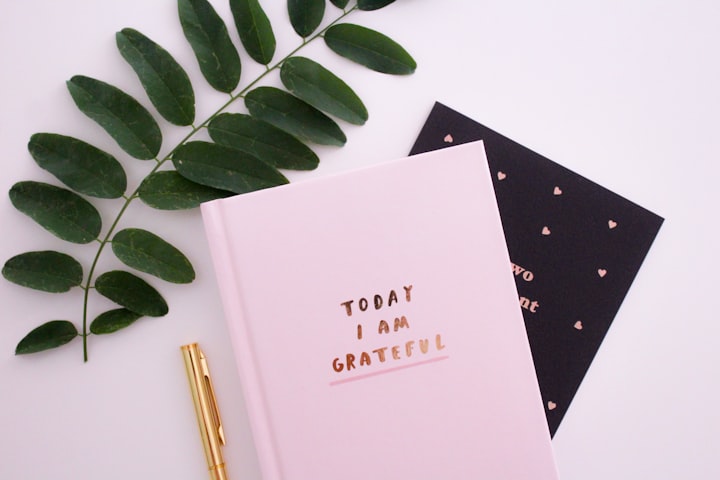
If gratitude and I had a relationship status, it would simply be "It's Complicated."
Here's why.
When's the last time you were feeling lost, or down, and someone told you to look at the bright side? Maybe they said "Hey, could be worse, right?" How did that make you feel? Stop and think about it for a minute.
~
I honestly can't stand when someone tells me to be grateful. It's always had a pretty negative connotation for me for some reason. I've observed myself getting all defensive,
"Oh, you think I'm not grateful? I am, there are good things, there are always good things, but right now, that's simply not enough and something must be done."
It's been a long time coming, but I finally figured out why I don't like it.
If I'm in an abusive relationship and someone tells me to be grateful for the roof over my head, I might tell them to fuck off (sorry, kinda), BECAUSE:
When we're feeling off about something, there's a reason for it. Our emotions are guides, and we can use them to determine how our path needs to change to better align with what we're here for (whatever that might be).
Practicing gratitude during times of distress can be challenging because, as good as the "good stuff" in life is, sometimes it can shield the really hard shit that needs addressing. Sometimes, the "good stuff" isn't what should be at the forefront of your mind.
When practiced correctly, gratitude can propel you forward, up and out of complicated, scary, or dangerous situations; or it can simply help you get through something challenging.
BUT, when used incorrectly, gratitude can serve as a longer-term escape from the really hard sh*t that we need to be facing head on, and that just won't do.
While the suggestion to practice being grateful is generally well intended, gratitude isn't a solution, and it never will be.
Hear me out.
Life is complicated, and being a human isn't always fun or easy. Sometimes, we find ourselves in predicaments that need fixing. When we can open up and listen to the emotions that are less-than-comfortable, we can see what those predicaments are, and give them the fixing they need.
I know I'm coming off as repetitive here - that's just because I really hope you get it, that's all.
In other words, feeling things other than gratitude is a really useful tool for us - an arrow to point us in a direction of a better aligned life. We just need to remain open, and understand that we don't always have to be happy to live fulfilling lives.
Sometimes, the fulfilling part happens when you're really going through it and you need to incite change. You can't do that if you're using all the good stuff as an excuse to stay stagnant.
So, while gratitude might be a useful tool to turn inward, reflect, and be thankful for the blessings we are given every day, your practice shouldn't become a practice of habit or complacency.
Your gratitude practice shouldn't just be a checked-box off your to-do list; because if you allow your practice to only be putting pen to paper - if you allow it to cease after the "giving thanks" part - it can hinder your ability to move forward.
Three ways that I love to take gratitude just a step further, so it helps me instead of placing me into a place of false-contentment, are these:
1. Take a look at your life and decide what you want.
The quality of our lives is greatly dependent on the quality of our relationships, so maybe that's an area you want to start at.
What do you want out of your relationships - platonic and romantic? How are you already receiving what you want, and who from - and are you grateful ?Do you feel supported by those you care about, and do they support you? How do you get away from the toxic relationships, and what steps can you take towards finding the relationships you deserve? Do you have a healthy relationship with yourself, do you think? How can you improve upon that?
There are so many questions you can ask yourself about your life, your mindset, and what you want, but the key takeaways are to reflect on the past and be grateful for how far you've already come, and look at the things you want and see how you're already living them out. How are you participating in those things, no matter how small the scale? That's something to be grateful for, and putting these down can help you push the envelope in those areas you wish to see more goodness come out of.
You can do this with anything - it doesn't have to be relationships. Maybe you want to travel - how are you already doing that, even in the smallest scale? How can you do it more? How can you expand?
2. Take a look at your day and see what you enjoyed.
This is the classic approach! Let's write down all the things you really dug about the day, and think about them a little bit.
There are the givens: the roof over your head, the food you ate, the ability to breathe and be cognizant of the world around you, the people you love, etc...
But what else?
In the morning, make the resolution to write these things down at the end of the day. That way, while you're going about your business, you'll be more apt to be mindful of all the really good stuff going on right underneath your nose - that way you don't miss anything.
Mindfulness has long been used to help with anxious and depressive tendencies - because anxiety lives in the future, depression lives in the past, and mindfulness forces you into the present, where none of those things exist.
3. Conversely, take a look at your day and see what you didn't enjoy. Analyze this a little bit - these experiences, although they may have been unpleasant, might offer you insight if you look a little deeper. Don't think of these experiences as negative ones, necessarily. Lose the affiliation with the connotation, and start asking questions:
What can you gain from the less-than-pleasant experiences of the day? Is there any self reflection to be done, or understanding to be manifested about the way a person behaved? Maybe they were just having a bad day, and it has nothing to do with you. Maybe they feel self conscious about themselves and are projecting that onto you, and it has nothing to do with you. Maybe it simply has nothing to do with you because you're not the center of everyone's world and you should just shrug it off instead of letting it get to you.
Or, maybe you did something you're not proud of. What was it, and why did you do it? Why? Why? Why? You can dive deeply into this and use it as a tool to reflect upon your behavior and your unconscious beliefs.
How, then, can you turn these experiences into knowledge? How can you use this to help you in the future?
Are these unpleasant things so bad after all? If they really are, and they're not serving you anymore, pay attention. If you find there's a pattern here, again, pay attention.
What are you gonna do about it?
Ultimately, guys, don't get stuck in the trap that gratitude can put you in. Use it wisely - and please, don't stop at the "giving thanks" part.
With love,
Chloe
About the Creator
Keep reading
More stories from Chloe Drvanna and writers in Motivation and other communities.


Comments
There are no comments for this story
Be the first to respond and start the conversation.