
Why Women Feel Pain During Sex: Understanding the Causes and Solutions
"Exploring the Physical, Emotional, and Medical Reasons Behind Painful Intercourse and How Women Can Find Relief"


Why Women Feel Pain During Sex: Understanding the Causes and Solutions
Sex is often thought of as a source of pleasure and intimacy, but for many women, it can also be a source of physical discomfort or even pain. Pain during sex—also known as dyspareunia—is more common than many people realize. Research suggests that nearly three out of four women experience pain during intercourse at some point in their lives. Understanding the causes of this pain is essential not only for physical health but also for emotional well-being and relationship satisfaction.
Common Causes of Pain During Sex
1. Lack of Lubrication
One of the most common causes of painful sex is vaginal dryness. This can be due to insufficient foreplay, hormonal changes, or certain medications. For example, women going through menopause, breastfeeding, or using hormonal birth control may experience a drop in estrogen levels, leading to reduced natural lubrication. Medications such as antihistamines and antidepressants can also contribute to dryness.
2. Infections and Medical Conditions
Urinary tract infections (UTIs), yeast infections, or sexually transmitted infections (STIs) can cause irritation and inflammation, making sex painful. Other medical conditions like endometriosis, pelvic inflammatory disease (PID), or interstitial cystitis may also lead to discomfort during intercourse. In some cases, pain may be a symptom of a deeper issue that requires medical attention.
3. Vaginismus
Vaginismus is a condition where the muscles around the vagina involuntarily tighten during sex, making penetration painful or even impossible. This can be caused by anxiety, past trauma, or fear of pain. Vaginismus is both a physical and psychological condition and often requires a multifaceted approach to treatment.
4. Emotional and Psychological Factors
Stress, anxiety, depression, and past trauma can all impact how the body responds to sexual activity. When a woman feels emotionally disconnected, unsafe, or pressured, her body may respond with tension or pain. The mind and body are deeply interconnected, and mental health plays a critical role in sexual experiences.
5. Anatomical Issues
Some women may have anatomical variations such as a tilted uterus, vaginal septum, or tight pelvic floor muscles that make sex uncomfortable. Childbirth or surgeries can also lead to scar tissue or muscle tension that affects sexual comfort.
When to See a Doctor
Pain during sex should not be ignored, especially if it is persistent or severe. A gynecologist can help identify the underlying cause through a physical examination, medical history, and possibly additional tests. Early diagnosis can prevent complications and help find effective treatments sooner.
Treatment Options
1. Lubricants and Moisturizers
Over-the-counter lubricants can make sex more comfortable by reducing friction. Water-based lubricants are a safe choice for most people, especially when using condoms or sex toys. Vaginal moisturizers can also be used regularly to maintain hydration.
2. Hormonal Treatments
For women experiencing pain due to hormonal changes, especially during menopause, estrogen therapy (in the form of creams, tablets, or rings) can help restore vaginal elasticity and lubrication.
3. Pelvic Floor Therapy
Working with a pelvic floor physical therapist can help women with muscle-related pain. These therapists use exercises, stretches, and other techniques to relax and strengthen the pelvic floor muscles.
4. Counseling and Therapy
For women whose pain is related to trauma, stress, or anxiety, talking to a therapist—especially one who specializes in sexual health—can be immensely beneficial. Cognitive-behavioral therapy (CBT), sex therapy, and trauma-informed counseling can help address emotional and psychological barriers to pleasure.
5. Communication and Patience
Partners play a key role in creating a safe and supportive environment. Open communication, patience, and mutual understanding can help reduce pressure and make intimacy more comfortable. Taking time with foreplay and exploring non-penetrative forms of intimacy can also increase comfort and connection.
Final Thoughts
Pain during sex is not something women should have to “just deal with.” It's a valid medical and emotional concern that deserves attention and care. Whether the cause is physical, emotional, or both, there are effective treatments available. Addressing the issue openly—with healthcare providers and partners—can lead to improved sexual health, stronger relationships, and greater overall well-being.
About the Creator
Hot News
I am Doctor Ai Welcome To My Page . I Write The Most Important Article On Womens And men's Life And their Sexual, lifestyle , and their relationship problems. These Articles are very helpful For you so read it it will help you more .
Day 4 of Quitting
If this is how sobriety feels, maybe it’s better to go through life a little buzzed… this, along with other hits like, I want to kill myself, I wish I was dead, and I’m going to throw myself off a bridge have been the only thoughts on rotation these past few days. I promise myself that if, in a month, I still feel like this (‘this’ meaning despondent, full of rage, and simultaneously numb) I can go back to smoking. Until mid-February though? Nicotine is off the table.
By sleepy drafts10 days ago in Longevity
The Return of the Aircraft Carrier Truman Is Being Seen as a Snub to the Navy in the War of the Future
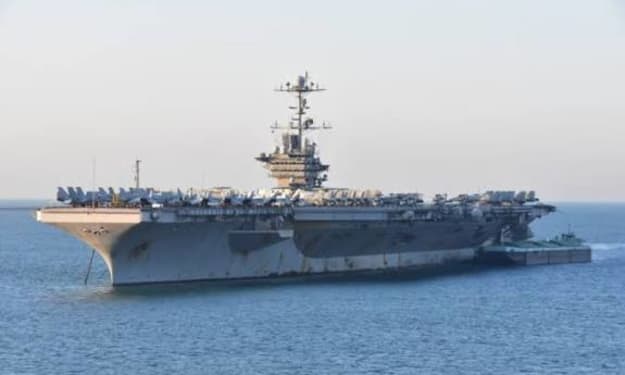
The return of the U.S. aircraft carrier USS Harry S. Truman to active deployment has sparked debate far beyond naval circles. While some see it as a show of enduring American naval power, others interpret the move as a symbolic snub—particularly in the context of how modern warfare is rapidly evolving. In an era dominated by drones, cyber warfare, hypersonic missiles, and artificial intelligence, the decision to once again lean heavily on a traditional aircraft carrier has raised uncomfortable questions about whether the Navy is preparing for the wars of tomorrow or clinging to the strategies of yesterday. A Floating Symbol of 20th-Century Power For decades, aircraft carriers have been the ultimate symbol of U.S. military dominance. These massive floating airbases project power thousands of miles from American shores and allow the U.S. to strike almost anywhere in the world. The Truman, like other Nimitz-class carriers, represents this legacy—housing nearly 5,000 sailors, dozens of fighter jets, and unmatched logistical capability. However, critics argue that what once made carriers indispensable now makes them vulnerable. Their sheer size, cost, and visibility turn them into high-value targets in a battlefield increasingly defined by precision strikes and long-range weapons. The “War of the Future” Looks Very Different Modern conflict is no longer limited to sea, land, and air. Cyber attacks can cripple infrastructure without a single shot fired. Drones can swarm targets at a fraction of the cost of traditional aircraft. Hypersonic missiles can reach targets faster than current defenses can respond. In this context, sending a massive carrier strike group into contested waters can appear less like a strategic necessity and more like a risky gamble. Critics argue that the return of the Truman reflects an outdated mindset—one that prioritizes visible force projection over adaptability and technological evolution. A Snub to Naval Innovation? Many analysts and serving officers believe the Navy’s future lies in distributed lethality—smaller, more agile platforms networked together, harder to detect and cheaper to replace. Unmanned surface vessels, autonomous submarines, and land-based missile systems are increasingly viewed as the backbone of next-generation naval warfare. Against this backdrop, recommitting to a traditional carrier is seen by some as sidelining innovation. It sends a message that, despite years of discussion about transformation, the Navy still defaults to familiar tools when tensions rise. This perception has led to frustration among those advocating for faster modernization. They argue that resources devoted to maintaining and protecting carriers like the Truman could instead accelerate investment in emerging technologies that are more relevant to future conflicts. The Strategic Signal to Allies and Rivals Supporters of the decision counter that the Truman’s return is not about nostalgia—it’s about deterrence. Aircraft carriers remain powerful political tools. Their presence reassures allies, signals commitment, and demonstrates readiness in a way few other assets can. Yet even here, the message is mixed. To technologically advanced rivals, the deployment may signal predictability rather than strength. Adversaries have spent years developing strategies specifically designed to neutralize carriers, including anti-ship ballistic missiles and advanced surveillance systems. Cost Versus Capability The financial reality cannot be ignored. A single carrier strike group costs billions of dollars to build, maintain, and operate. In contrast, drone fleets and missile systems can be produced and deployed at a much lower cost, often with greater strategic flexibility. Critics argue that continuing to rely on carriers drains resources from areas where the Navy needs to grow most urgently. In a future conflict defined by speed, dispersion, and digital dominance, the cost-benefit equation of aircraft carriers looks increasingly questionable. Why the Carrier Still Matters—For Now Despite the criticism, aircraft carriers are not obsolete—yet. They remain unmatched in their ability to sustain prolonged air operations without relying on foreign bases. In regions where access is limited or politically sensitive, carriers still provide options no other platform can. The real issue, many experts say, is not the existence of carriers like the Truman, but over-reliance on them. Using them as one component of a broader, more flexible strategy may still make sense. Treating them as the centerpiece of future war planning may not. A Turning Point for Naval Strategy The return of the USS Harry S. Truman highlights a deeper tension within modern military thinking. It represents a crossroads between tradition and transformation, between proven power and emerging threats. Whether history views this moment as a wise assertion of strength or a missed opportunity for innovation will depend on what comes next. If the Navy pairs legacy platforms with bold technological change, the carrier’s return may be justified. If not, it risks becoming a powerful symbol—not of dominance, but of reluctance to adapt in a rapidly changing world.
By Fiaz Ahmed Brohi5 days ago in Longevity
Miss Persephone's Manual to a Seemingly Ordinary Life
Miss Persephone was found at the dining table, her blue eyes swollen, her tears arriving and retreating like the tides of the ocean. Earlier that day, her family had visited her in the retirement home where she had lived for eight years. It was her eightieth birthday.
By Imola Tóth2 days ago in Fiction


Comments
There are no comments for this story
Be the first to respond and start the conversation.