
Why Life Gets Better After 50
The Surprising Psychology of Post-50 Contentment
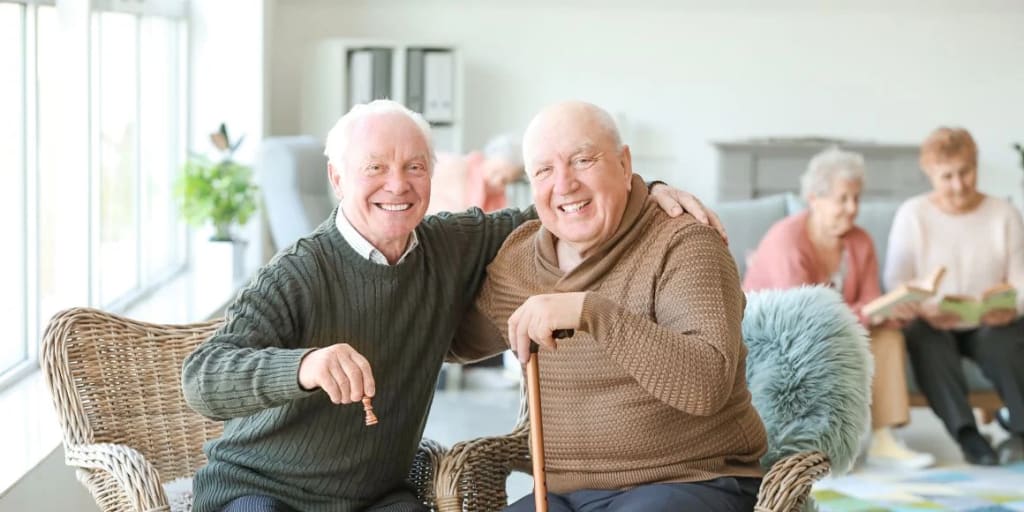
If you think about life as a picture of how happy people are we have always thought it looks like a hill that goes up and then comes down. You start out when you are young and things get better and better you reach the top when you are in the middle of your life. Then it starts to get worse and worse as you get older.. What if we have been looking at this picture the wrong way? Some new research about how people think and feel is showing us that it is actually shaped like a U. When people are in the middle of their life they are often very busy and stressed out and they are not as happy as they used to be. But then something unexpected happens people start to get happier after they turn 50 and they just keep getting happier and happier. Life is, like a U shape happiness goes down. Then it comes back up again and that is what the research is showing us about life and happiness. This isn’t about denying the very real challenges of aging, but about uncovering the profound psychological shifts that make this chapter uniquely satisfying. Here’s the science and soul behind why contentment so often blooms in later life.
The Great Unburdening: Letting Go of the Performance
Psychologists call it role overload, the exhausting decades where we juggle the simultaneous scripts of professional, parent, partner, and social achiever. By our 50s, many of these demands naturally ease. The career ladder either culminates or loses its gravitational pull. The intensive, daily parenting phase transitions. What emerges is space.
This is not a space but a free space. This is where the strong change in our minds called socioemotional selectivity happens. Laura Carstensen, a psychologist started this idea. The idea of selectivity says that when we think we do not have a lot of time we know what is really important. We stop trying to have a lot of friends and a lot of people who like us. Instead we try to have relationships with people who make us happy. We spend time with people who're good, for us and we stop spending time with people who make us feel bad. Socioemotional selectivity is an idea that helps us focus on what really matters. We trade the anxiety of FOMO for the profound joy of JOMO—the Joy of Missing Out—content in our own curated, meaningful world.
The Amygdala Gets Chill: The Neurological Peace
This contentment isn’t just philosophical; it’s biological. Neuroscience reveals that the aging brain undergoes a positive transformation in how it processes emotion. The amygdala, our brain’s alarm bell for threat and negative stimuli, becomes less reactive. Meanwhile, the connections between the amygdala and the prefrontal cortex, the region responsible for reasoning and emotional regulation, strengthen.
In practical terms? You’re less likely to fly off the handle in traffic. A critical comment from a colleague doesn’t ruin your week. You’ve essentially spent decades building a world-class psychological immune system. You’ve survived setbacks, heartbreaks, and failures, and your brain now knows, We can handle this. This neural smoothing of emotional extremes creates a baseline of calm that is a cornerstone of post-50 well-being.
The "Time-Tested Self": Confidence Born of Evidence
In your 20s and 30s, confidence is often aspirational, a suit you put on hoping to fit into it. After 50, confidence is evidence-based. You have a half-century of data on yourself. You know what you are good at, what you truly dislike, how you handle stress, and what love really requires. This crystallized knowledge ends the exhausting internal debate.
This is why the "F*-It 50s"** are a real psychological phenomenon. It’s not about becoming rude or apathetic. It’s the quiet confidence to decline an invitation without a fabricated excuse, to spend a Saturday reading instead of networking, to prioritize comfort over fashion. The need for external validation plummets, and the peace of self-validation soars. You are no longer auditioning for your own life.
The Alchemy of Experience: Turning Regret into Wisdom
A younger mind often sees regret as a haunting failure. A mature mind learns to see it as processed experience. Psychologists find that older adults are better at using integrative thinking, weaving positive and negative life events into a coherent, meaningful narrative. That failed business venture isn’t just a loss; it’s the lesson that freed you to become a teacher. The heartbreak wasn’t just pain; it clarified what you needed in a partner.
This narrative wisdom allows you to see your life as a whole, complex, and ultimately valuable story. This sense of ego integrity, a term from Erik Erikson’s stages of development, is the acceptance of one’s only life cycle as something that had to be. It is the opposite of despair, and it is a profound source of late-life contentment.
The Purpose Pivot: From Achievement to Contribution
The driving motivation shifts. The hunger for personal achievement (promotions, accolades, acquisitions) often mellows into a desire for generativity, a need to nurture, guide, and contribute to the next generation. This can manifest as mentoring, volunteering, grandparenting, or community activism. The focus moves from What can I get? to What can I give?
This shift is psychologically potent. Studies consistently link generativity to higher life satisfaction, better mental health, and a stronger sense of purpose. It connects you to the future, combating any sense of irrelevance and embedding your hard-won experience into the world in a meaningful way.
The U-Curve of happiness isn’t a guarantee; it’s an invitation. It flourishes with intentionality—choosing connection, curiosity, and contribution. But the psychological architecture is there, built by a lifetime of experience. After 50, you are not fading. You are, perhaps for the first time, fully coming into focus-less polished, but more real. Less frantic, but more alive. And in that clarity, contentment finds its home.
What would your 'post-50 contentment' look like with the right support? Explore how www.livepeaceseniors.ca can help
About the Creator
Keep reading
More stories from Live Peace and writers in Longevity and other communities.
When Parents Feel Alone and Adult Kids Feel Overwhelmed
Being an adult these days is really busy. Our jobs take up a lot of time we spend a lot of time traveling to and from work. We have other things we do on the side that take up our weekends. On top of all that we have a lot of family things to take care of. Aging parents are often very lonely even if we do not forget about them. The thing is, we just do not have a lot of time for aging parents anymore. Time is very scarce, for everyone, including our aging parents.
By Live Peace3 days ago in Longevity
Day 4 of Quitting
If this is how sobriety feels, maybe it’s better to go through life a little buzzed… this, along with other hits like, I want to kill myself, I wish I was dead, and I’m going to throw myself off a bridge have been the only thoughts on rotation these past few days. I promise myself that if, in a month, I still feel like this (‘this’ meaning despondent, full of rage, and simultaneously numb) I can go back to smoking. Until mid-February though? Nicotine is off the table.
By sleepy drafts27 days ago in Longevity



Comments
There are no comments for this story
Be the first to respond and start the conversation.