
Visualization Techniques That Make Meditation Easier
How imagery can quiet your thoughts and deepen your practice

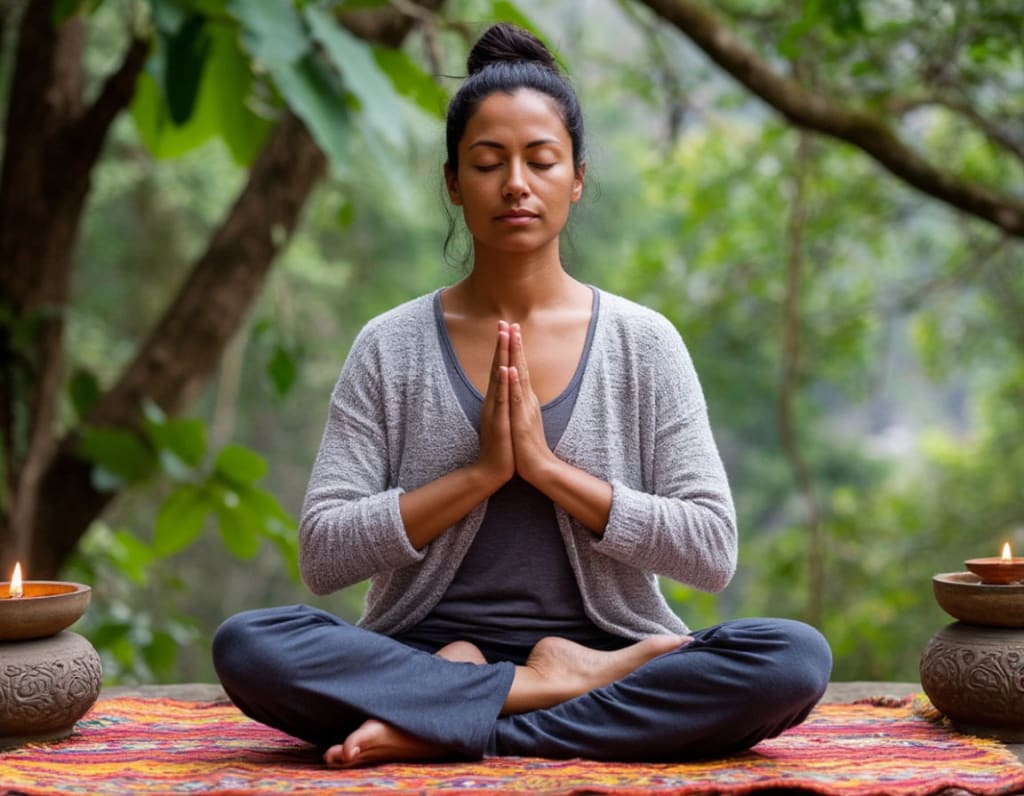
If you've ever tried to meditate, you know the challenge: your body sits still, but your mind runs marathons. Thoughts come rushing in, distractions multiply, and the whole experience feels more like mental chaos than calm clarity.
Enter visualization—a powerful tool that helps bridge the gap between intention and presence.
Unlike traditional breath-focused meditation, visualization gives your mind something to do. It engages the imagination and nervous system in a gentle, focused way, making meditation feel more accessible—especially for beginners or overthinkers.
Let’s explore why visualization works, and discover techniques that can support your practice right away.
Why Visualization Works in Meditation
Your brain doesn’t fully distinguish between imagined experiences and real ones. That’s why visualizing a peaceful beach can actually slow your heart rate, deepen your breath, and shift your mood.
When used in meditation, visualization:
Redirects racing thoughts
Creates a clear internal focal point
Activates the parasympathetic nervous system (rest & digest)
Encourages emotional regulation through imagery
Enhances consistency by making practice more enjoyable
In other words, it’s a shortcut to stillness—without the pressure to “empty your mind.”
1. The Safe Space Visualization
This technique helps establish an inner refuge—a mental place you can return to during stress or anxiety.
How to practice:
Sit or lie down comfortably and close your eyes.
Imagine a place where you feel completely safe, calm, and supported.
It could be a real location (like a forest or beach) or something entirely imagined.
Add sensory details:
What do you see, hear, smell?
How does the air feel on your skin?
Spend 5–10 minutes resting in this space.
Repeat a phrase like: “I am safe here.”
This visualization can become your emotional anchor anytime you need grounding.
2. The Light Body Scan
Instead of simply noticing body sensations, this visualization involves imagining a gentle light traveling through your body, relaxing each area as it moves.
How to practice:
Close your eyes and picture a soft, warm light at the top of your head.
With each inhale and exhale, imagine the light slowly moving down—relaxing your forehead, jaw, neck, shoulders… all the way to your toes.
Let any tension melt as the light passes through.
This technique is ideal for winding down at the end of the day or calming nervous energy.
3. The Candle Flame Focus
Perfect for those who struggle with internal imagery, this technique starts with a real candle.
How to practice:
Sit comfortably in a dim room and light a candle a few feet in front of you.
Gaze softly at the flame for 1–2 minutes, focusing on its movement, color, and glow.
Then close your eyes and try to visualize the flame in your mind’s eye.
When your mind wanders, return to the image of the flame.
This practice enhances concentration, and over time, it helps you build stronger mental focus even without visual aids.
4. The Healing River Technique
For emotional processing, the flowing river visualization offers a symbolic release.
How to practice:
Picture yourself sitting beside a gently flowing stream.
Imagine placing a thought, feeling, or worry into a leaf or stone, and gently releasing it into the current.
Watch as it drifts away—no judgment, no effort.
Repeat with each new thought or emotion.
This technique reinforces non-attachment and helps you observe emotions without being swept away.
Visualization Is Just One Door In
Meditation doesn’t have to be silent or abstract. If focusing on the breath feels impossible, let imagery become your doorway into presence.
You might begin with visualization and one day shift toward stillness. Or, visualization might always be your anchor—and that’s perfectly valid.
If you’re curious to explore more gentle, creative approaches to meditation, you’ll find a wealth of practical tools. The site offers resources for beginners, overthinkers, and anyone seeking a sustainable practice.
Final Thought: See Your Way to Stillness
You don’t have to force quiet. You can imagine your way into it.
Visualization isn’t an escape—it’s a bridge between your scattered attention and your inner sanctuary. And with practice, the images you create can begin to shape the calm you carry.
About the Creator
Keep reading
More stories from Marina Gomez and writers in Longevity and other communities.
Day 4 of Quitting
If this is how sobriety feels, maybe it’s better to go through life a little buzzed… this, along with other hits like, I want to kill myself, I wish I was dead, and I’m going to throw myself off a bridge have been the only thoughts on rotation these past few days. I promise myself that if, in a month, I still feel like this (‘this’ meaning despondent, full of rage, and simultaneously numb) I can go back to smoking. Until mid-February though? Nicotine is off the table.
By sleepy drafts4 days ago in Longevity
Chilly Robins in the Garden? Put This Out Today and They’ll Start Coming Back Every Single Morning
As winter tightens its grip and frost coats the edges of your garden, you might notice that the familiar chirps of robins have become far less frequent. These charming, bright-breasted birds, often symbols of the festive season, are not disappearing; they are simply seeking food and warmth elsewhere. Yet, with a few thoughtful steps, you can turn your garden into a welcoming haven that keeps these delightful visitors returning day after day.
By Fiazahmedbrohi 3 days ago in Longevity
Bruce Lee and The God of War: Kuan Ti
It starts with love.. The Power to the God Of War and Wealth Walk into a Chinese restaurant (even in Oklahoma, USA), a Chinese police station, a kung fu martial arts studio or even a Chinese temple and you often see a red faced warrior holding a heavy quan-do (spear like weapon).
By WILD WAYNE : The Dragon King4 days ago in Chapters


Comments
There are no comments for this story
Be the first to respond and start the conversation.