
United States Personalized Medicine Market Size and Forecast 2025–2033
How Genomics, AI, and Patient-Centric Care Are Reshaping the Future of Healthcare in America

Introduction
The United States healthcare system is undergoing a profound transformation as personalized medicine steadily replaces traditional treatment approaches. Instead of relying on generalized therapies, healthcare providers are increasingly tailoring treatments to an individual’s genetic makeup, lifestyle, and environmental factors. This paradigm shift is redefining disease prevention, diagnosis, and treatment, positioning personalized medicine as one of the most influential segments of the modern healthcare ecosystem.
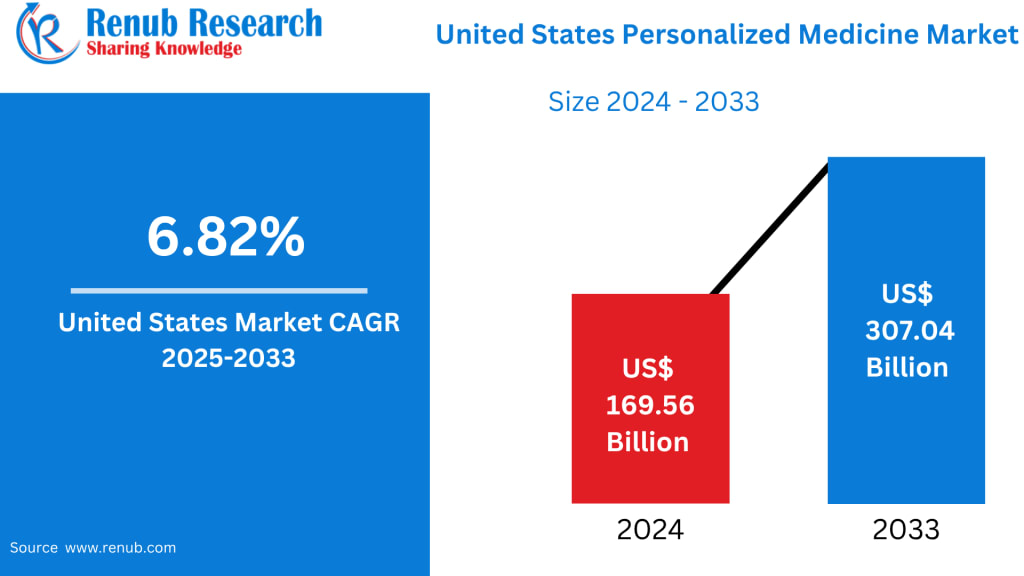
According to Renub Research, the United States Personalized Medicine Market was valued at US$ 169.56 billion in 2024 and is expected to reach US$ 307.04 billion by 2033, growing at a compound annual growth rate (CAGR) of 6.82% from 2025 to 2033. This remarkable growth reflects rapid technological advancements, increased patient awareness, rising chronic disease prevalence, and strong government and private-sector support.
As innovations in genomics, biotechnology, artificial intelligence, and digital health converge, the United States continues to lead the global personalized medicine revolution.
United States Personalized Medicine Market Overview
Personalized medicine—often referred to as precision medicine—represents a shift away from the traditional “one-size-fits-all” healthcare model. Instead, it focuses on delivering targeted therapies based on a patient’s unique genetic profile, molecular markers, and lifestyle characteristics. This approach enhances treatment efficacy while minimizing adverse effects, ultimately improving patient outcomes and reducing long-term healthcare costs.
The United States has emerged as a global leader in this field due to its advanced healthcare infrastructure, strong biotechnology ecosystem, and robust research capabilities. Pharmaceutical companies, academic institutions, and healthcare providers are collaborating to integrate genomics, bioinformatics, and real-world patient data into routine clinical practice.
The integration of next-generation sequencing (NGS), artificial intelligence (AI), and machine learning (ML) has significantly accelerated biomarker discovery and drug development. These technologies enable clinicians to identify disease susceptibility earlier, select optimal therapies, and predict patient responses with greater accuracy.
Moreover, rising patient expectations for customized treatments and proactive disease management are pushing healthcare systems toward more personalized and data-driven care models.
Market Size and Forecast: 2025–2033
Renub Research projects strong and sustained growth for the U.S. personalized medicine market over the forecast period. The market’s expansion is supported by:
Continuous advancements in genomic technologies
Rising investment in biotechnology and digital health
Increasing prevalence of cancer, cardiovascular diseases, and neurological disorders
Favorable regulatory frameworks encouraging precision therapies
By 2033, personalized medicine is expected to become an integral component of mainstream healthcare delivery, influencing drug development pipelines, diagnostics, preventive care, and patient engagement strategies.
Key Factors Driving Market Growth
Advancements in Genomic and Molecular Technologies
Technological progress in genomics and molecular diagnostics remains one of the strongest growth drivers of the personalized medicine market. The declining cost of genome sequencing, combined with improvements in data analytics and bioinformatics, has made genetic testing more accessible than ever before.
Next-generation sequencing technologies allow researchers and clinicians to identify genetic mutations, biomarkers, and molecular pathways associated with specific diseases. This has been particularly transformative in oncology, where targeted therapies and companion diagnostics are now standard components of cancer treatment protocols.
As these technologies continue to evolve, they are expanding beyond specialized research centers into routine clinical practice, further accelerating market adoption.
Rising Demand for Targeted and Precision Therapies
Patients and healthcare providers are increasingly favoring targeted therapies over conventional treatments due to improved efficacy and reduced side effects. Personalized medicine enables clinicians to predict how individual patients will respond to specific drugs, reducing trial-and-error prescribing and improving treatment success rates.
Chronic diseases such as cancer, cardiovascular disorders, diabetes, and neurological conditions are major contributors to this demand. Pharmaceutical companies are responding by developing biologics, gene therapies, and precision drugs supported by companion diagnostics.
This shift toward targeted therapies is reshaping drug development strategies and reinforcing the long-term growth potential of the personalized medicine market.
Supportive Government Policies and Regulatory Frameworks
The U.S. government plays a crucial role in fostering personalized medicine adoption. Initiatives such as national genomics programs, precision medicine research funding, and public-private collaborations have strengthened the country’s innovation ecosystem.
The U.S. Food and Drug Administration (FDA) has also introduced regulatory pathways that support the approval of precision therapies and companion diagnostics. These frameworks help accelerate innovation while maintaining patient safety standards.
In addition, gradual improvements in reimbursement models and value-based care initiatives are making personalized treatments more financially viable, encouraging wider adoption across healthcare systems.
Challenges in the United States Personalized Medicine Market
High Development and Treatment Costs
Despite its benefits, personalized medicine faces significant cost-related challenges. Developing targeted therapies often requires extensive genetic research, clinical trials, and regulatory approvals, all of which demand substantial investment.
Advanced diagnostic tests, biologics, and gene therapies can be prohibitively expensive for many patients, particularly when insurance coverage is limited. These high costs can restrict access and slow market penetration, especially in smaller healthcare facilities.
Until more cost-effective and scalable solutions are introduced, affordability will remain a key barrier to widespread adoption.
Limited Standardization and Clinical Integration
Another major challenge is the lack of standardized protocols for integrating genomic data into routine clinical workflows. Many healthcare providers lack the training and infrastructure required to interpret complex genetic information effectively.
Electronic health record (EHR) systems often struggle to incorporate genomic data, limiting its usability in everyday clinical decision-making. Additionally, there is a shortage of skilled professionals such as genetic counselors and precision medicine specialists.
Addressing these gaps through standardized guidelines, workforce training, and improved data integration will be essential for unlocking the full potential of personalized medicine.
Market Segmentation Analysis
By Product
Personalized Medicine Therapeutics
Personalized Medicine Diagnostics
Personalized Medical Care
Personalized Nutrition and Wellness
Therapeutics and diagnostics currently dominate the market, driven by rising demand for targeted drugs and genetic testing solutions.
By Application
Oncology
Infectious Disease
Neurology or Psychiatry
Cardiovascular
Others
Oncology remains the leading application segment, accounting for a significant share of market revenue due to extensive use of biomarkers and targeted cancer therapies.
By End User
Hospitals
Diagnostic Centers
Research & Academic Institutes
Others
Hospitals and diagnostic centers are the primary adopters of personalized medicine solutions, supported by advanced infrastructure and multidisciplinary care models.
Competitive Landscape and Company Analysis
The U.S. personalized medicine market is highly competitive, with global pharmaceutical and biotechnology companies investing heavily in innovation and strategic collaborations.
Key Companies Covered
Abbott Laboratories
GE Healthcare, Inc.
Aadi Bioscience, Inc.
Illumina, Inc.
QIAGEN
Eli Lilly and Company
Takeda Pharmaceutical Company Ltd
AbbVie Inc.
F. Hoffmann-La Roche Ltd.
Company Overview Includes
Corporate and product overview
Key executives and leadership
Recent developments and strategic initiatives
Revenue analysis and market positioning
These companies are driving innovation through advanced diagnostics, genomics platforms, targeted therapies, and digital health integration.
Future Outlook
Looking ahead, the United States personalized medicine market is expected to witness continued expansion as technology adoption accelerates and healthcare systems prioritize patient-centric care. Advances in artificial intelligence, real-world data analytics, and gene editing technologies are likely to further enhance treatment precision and accessibility.
As regulatory frameworks mature and costs gradually decline, personalized medicine will become increasingly integrated into mainstream healthcare, benefiting patients, providers, and payers alike.
Final Thoughts
The United States Personalized Medicine Market is at the forefront of a healthcare revolution that prioritizes precision, prevention, and personalization. With a projected value of US$ 307.04 billion by 2033, the market reflects a strong commitment to innovation, improved patient outcomes, and sustainable healthcare delivery.
While challenges related to cost, standardization, and accessibility remain, ongoing collaboration among policymakers, healthcare providers, and industry leaders is paving the way for a more personalized and effective future of medicine in the United States.
About the Creator
Janine Root
Janine Root is a skilled content writer with a passion for creating engaging, informative, and SEO-optimized content. She excels in crafting compelling narratives that resonate with audiences and drive results.
Keep reading
More stories from Janine Root and writers in Longevity and other communities.
United States Breast Reconstruction Market Size and Forecast 2025–2033
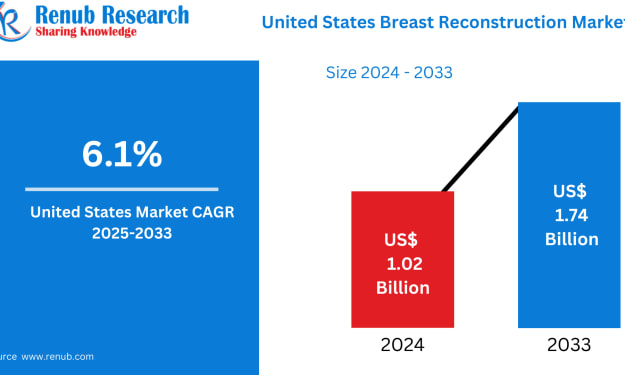
United States Breast Reconstruction Market Overview The United States Breast Reconstruction Market is undergoing steady and meaningful growth, driven by rising breast cancer prevalence, increasing post-mastectomy reconstruction rates, and favorable reimbursement frameworks. According to Renub Research, the market is projected to expand from US$ 1.02 billion in 2024 to US$ 1.74 billion by 2033, registering a compound annual growth rate (CAGR) of 6.1% from 2025 to 2033.
By Janine Root 24 days ago in Longevity
Day 4 of Quitting
If this is how sobriety feels, maybe it’s better to go through life a little buzzed… this, along with other hits like, I want to kill myself, I wish I was dead, and I’m going to throw myself off a bridge have been the only thoughts on rotation these past few days. I promise myself that if, in a month, I still feel like this (‘this’ meaning despondent, full of rage, and simultaneously numb) I can go back to smoking. Until mid-February though? Nicotine is off the table.
By sleepy drafts5 days ago in Longevity
Many Schools Don’t Think Students Can Read Full Novels Anymore — And That’s a Tragedy
In classrooms across the world, a quiet but troubling shift is taking place. Many schools are scaling back or completely abandoning the teaching of full-length novels, replacing them with excerpts, summaries, or short-form texts. The reasoning often sounds practical: students lack the attention span, reading stamina, or motivation to finish long books. But this growing assumption carries a deeper cost. The decline of novel reading in schools is not just an educational adjustment — it is a cultural and intellectual tragedy. The Shrinking Role of the Novel For generations, novels have been central to education. They taught students empathy, critical thinking, moral reasoning, and the patience required to follow complex ideas over time. From classic literature to modern fiction, full novels allowed young readers to live inside other lives and perspectives. Today, however, many educators report that students struggle to complete even a few chapters. Digital distractions, social media, and fast-paced content have reshaped how young people consume information. In response, schools increasingly favor bite-sized reading materials that align with standardized testing and reduced classroom time. While this may appear efficient, it risks sacrificing depth for convenience. Why Reading Full Novels Still Matters Reading a novel is fundamentally different from reading short texts. A novel demands sustained attention, emotional investment, and intellectual endurance. These are not outdated skills — they are essential ones. When students read a full novel, they learn how to track themes across hundreds of pages, understand character development, and recognize cause-and-effect relationships in complex narratives. These abilities translate directly into real-world skills such as problem-solving, patience, and long-term focus. More importantly, novels cultivate empathy. Living inside a character’s thoughts over time helps students understand perspectives vastly different from their own. In an increasingly polarized world, this emotional literacy is invaluable. Lowering Expectations, Lowering Outcomes One of the most concerning aspects of abandoning novels is the message it sends to students: we don’t think you’re capable. When schools assume students cannot handle long-form reading, expectations are quietly lowered. History shows that when expectations drop, outcomes often follow. Students rise to challenges when given the tools and encouragement to do so. If reading stamina is weak, the solution should not be avoidance but gradual rebuilding — just as physical strength improves with practice. Removing novels from curricula denies students the chance to develop this crucial skill. The Role of Technology and Attention It is undeniable that digital culture has reshaped attention spans. Constant notifications, short videos, and algorithm-driven content train the brain to crave immediacy. But schools should act as a counterbalance to this trend, not surrender to it. Education has always required effort that goes against the grain of comfort. Learning mathematics is difficult. Writing essays is demanding. Reading novels is no different. Shielding students from difficulty does not prepare them for adulthood — it weakens their resilience. Engagement, Not Elimination The problem is not novels themselves, but how they are taught. Too often, novels are presented as rigid academic tasks rather than living stories. Educators who connect books to students’ lives, encourage discussion, and allow space for interpretation often see higher engagement. Modern novels, diverse voices, and relevant themes can reignite interest. Pairing reading with creative projects, debates, or multimedia exploration can make novels feel alive rather than burdensome. The answer is innovation in teaching, not retreat from literature. Equity and Cultural Loss There is also an equity issue at stake. Students from book-rich homes may continue reading novels independently, while those without access rely entirely on schools for literary exposure. Removing novels from classrooms widens the cultural gap, depriving many students of the shared experience of literature. Novels are not just educational tools — they are cultural touchstones. They shape language, values, and identity. Losing them from schools means losing a common intellectual heritage. What We Stand to Lose If students grow up believing they cannot read novels, the consequences extend far beyond school. Long-form reading strengthens concentration, memory, and analytical thinking — skills essential for higher education, professional life, and informed citizenship. A society that abandons deep reading risks becoming more reactive, less reflective, and more vulnerable to misinformation. The ability to sit with complexity, ambiguity, and nuance begins with reading books that do not offer instant gratification. Conclusion The belief that students can no longer read full novels is not just pessimistic — it is dangerous. It reflects a failure of imagination and resolve rather than a failure of students themselves. Young people are capable of far more than we often assume, especially when challenged with purpose and support. Abandoning novels may seem like a practical response to modern realities, but it comes at a steep cost. Preserving long-form reading in schools is not about nostalgia; it is about protecting the intellectual and emotional development of future generations. If schools give up on novels, we give up on depth, empathy, and sustained thought. That is not progress. That is a tragedy.
By Fiazahmedbrohi 5 days ago in Longevity
A Failed Artist, A Disillusioned Poet, An Underpaid Game Show Host
I took my son and niece to Gori, a small town in Georgia where Joseph Stalin was born. They talked me into visiting the Stalin's Museum, the largest in the post-Soviet space. I had resisted going there because I just can't stand the monster and know enough about him, or so I thought.
By Lana V Lynx6 days ago in FYI


Comments
There are no comments for this story
Be the first to respond and start the conversation.