
United States Medical Gas Market Size and Forecast 2025–2033
A Growing Lifeline: How Medical Gases Are Powering America’s Healthcare Future


The United States Medical Gas Market is projected to reach US$ 8.01 billion by 2033, rising from US$ 4.34 billion in 2024, according to Renub Research. This strong growth—at a CAGR of 7.05% from 2025 to 2033—highlights the increasing reliance on medical gases across hospitals, home healthcare, pharmaceuticals, diagnostics, and biotechnology innovation. From oxygen supplies that sustain critical care patients to ultra-high purity gases used in drug development, the importance of medical gases in modern healthcare is expanding rapidly.
At the core of this surge is a confluence of factors: rising chronic respiratory illnesses, growing surgical volumes, improved hospital infrastructure, advancements in critical care services, and the expanding footprint of pharmaceutical and biotechnology companies across the United States.
United States Medical Gas Industry Overview
Medical gases are indispensable in healthcare settings—from routine patient care to high-end research. These include oxygen, nitrogen, nitrous oxide, carbon dioxide, medical air, and gas mixtures, each serving specialized therapeutic, respiratory, diagnostic, and laboratory needs.
Hospitals, clinics, ambulatory surgical centers, and emergency departments heavily depend on these gases for patient stabilization, ventilation, anesthesia, imaging, and surgical procedures. Beyond clinical settings, pharmaceutical and biotechnology companies use gases in sterilization, drug production, cryopreservation, and quality assurance.
Why Demand is Rising:
33+ million U.S. inpatient admissions in 2022 increased oxygen and anesthesia gas use.
15 million Americans currently require respiratory care, according to the National Institute on Aging.
Home healthcare adoption is accelerating, driven by portable oxygen concentrators and remote care models.
Major companies—including Air Liquide, Linde PLC, Air Products, and Atlas Copco—are strengthening distribution networks, investing in sustainable refill technologies, and deploying advanced cylinder tracking systems.
Yet, despite its growth momentum, the market faces challenges in regulatory compliance, supply-chain resilience, and infrastructure modernization.
Key Factors Driving U.S. Medical Gas Market Growth
1. Rising Demand for Respiratory & Critical Care
Chronic respiratory diseases such as COPD, asthma, and pulmonary fibrosis continue to rise in the U.S. These conditions require long-term oxygen therapy, driving strong demand for medical gases in both hospitals and home-care settings.
Critical care units and emergency rooms rely heavily on medical gases to operate:
Ventilators require medical oxygen
ICUs use compressed air and nitric oxide systems
Operating rooms utilize nitrous oxide and anesthetic gases
Emergency responders depend on portable gas cylinders
An aging population—particularly vulnerable to respiratory issues—is further intensifying demand.
2. Expansion of U.S. Healthcare Infrastructure
The modernization of hospitals and surgical centers is a key growth catalyst. Investments are flowing into:
Central gas pipeline distribution systems
On-site oxygen generation plants
Automated gas monitoring and leak detection systems
High-capacity storage solutions
Home healthcare is also booming, driven by rising insurance coverage for respiratory therapies and the increasing preference for home-based recovery.
Pharmaceutical and biotech companies are expanding their use of medical gases in:
Cell culture and fermentation
Cryogenic storage
Drug packaging and inerting
Precision diagnostic applications
As biotech companies increasingly focus on cell & gene therapy, ultra-high-purity gases are in greater demand than ever.
3. Expanding Role of Medical Gases in Pharmaceuticals & Research
Gases like nitrogen and carbon dioxide are central to drug research and manufacturing. Biotechnology labs use cryogenic nitrogen for storing biological samples and CO₂ incubators for cell growth.
Growth of advanced therapies—CAR-T, gene editing, and biologics—requires sterile, controlled environments maintained by specialized gases.
Research collaborations with universities, hospitals, and private labs are increasing the consumption of medical air, oxygen, nitrogen, and mixtures for drug discovery and diagnostic testing.
Challenges Restraining Market Growth
1. Strict Regulatory Compliance Requirements
The medical gas industry is heavily regulated. Agencies such as:
FDA (production & labeling)
OSHA (workplace safety)
NFPA (storage & pipeline standards)
These regulations ensure patient safety but create hurdles for smaller suppliers due to high costs of certification, monitoring, facility upgrades, and documentation.
2. Supply Chain & Distribution Limitations
Transporting medical gases requires specialized cylinders, cryogenic systems, and trained professionals. Supply chain disruptions—whether due to equipment shortages, labor issues, or distribution delays—can impact critical care delivery.
Rural healthcare centers particularly struggle with consistent, cost-effective access to medical gases.
Global raw material fluctuations and rising operational costs contribute to potential shortages and pricing pressures.
State-Wise Market Overview
California Medical Gas Market
California leads the nation in medical gas consumption due to its:
Large population
Advanced hospitals and research institutes
Major biotech hubs in San Diego and the Bay Area
The state extensively uses gases in clinical care, drug development, and innovative research. Home healthcare adoption is also high, boosting demand for portable cylinders and concentrators.
Texas Medical Gas Market
Texas is among the fastest-growing markets, driven by massive healthcare institutions in Houston, Dallas, and Austin. Its flourishing life sciences sector intensifies demand for nitrogen, carbon dioxide, and medical air.
Affordable operational costs make Texas a prime distribution hub for suppliers.
Pennsylvania Medical Gas Market
Pennsylvania stands out with its strong hospital networks and pharmaceutical manufacturing base. Companies rely on high-purity gases for R&D, packaging, and drug development processes.
Strategic location enhances statewide distribution efficiency.
Washington Medical Gas Market
Washington’s medical gas demand is rising with investments in healthcare and life sciences research. Seattle’s major hospitals and biotech companies require large volumes of gases for ICU care, anesthesia, and drug testing.
The state also emphasizes sustainability, driving adoption of advanced gas pipeline systems.
Market Segmentation
By Product
Pure Gases
Gas Mixtures
By Application
Therapeutics
Diagnostics
Others
By End Use
Hospitals
Pharmaceutical & Biotechnology Companies
Ambulatory Surgical Centers
Diagnostic & Research Laboratories
Academic & Research Institutes
Home Healthcare
By States
California, Texas, New York, Florida, Illinois, Pennsylvania, Ohio, Georgia, New Jersey, Washington, North Carolina, Massachusetts, Virginia, Michigan, Maryland, Colorado, Tennessee, Indiana, Arizona, Minnesota, Wisconsin, Missouri, Connecticut, South Carolina, Oregon, Louisiana, Alabama, Kentucky, Rest of U.S.
Key Players Covered
Air Liquide
Linde PLC
Atlas Copco Group
INOX-Air Products Inc.
TAIYO NIPPON SANSO CORPORATION
MATHESON TRI-GAS, INC.
HORIBA Group
SOL India Private Limited
Company Analysis
1. Air Liquide
Overview: A global leader in gases, technologies, and services for industry and healthcare.
Key Person: François Jackow, CEO
Recent Developments: Expanded U.S. healthcare cylinders tracking systems and added on-site oxygen generation units for hospitals.
SWOT:
Strengths: Strong distribution network
Weaknesses: High regulatory compliance burden
Opportunities: Growth in home healthcare gases
Threats: Supply chain volatility
2. Linde PLC
Overview: Leading supplier of bulk gases, medical cylinders, and gas pipeline systems.
Key Person: Sanjiv Lamba, CEO
Recent Developments: Launched sustainable cylinder recycling programs; upgraded cryogenic gas plants.
SWOT:
Strengths: Global R&D capabilities
Weaknesses: High operational costs
Opportunities: Hospital pipeline modernization
Threats: Competitive pricing pressures
3. Atlas Copco Group
Overview: Supplies compressed air systems, vacuum pumps, and medical gas generators.
Key Person: Mats Rahmström, President & CEO
Recent Developments: Development of energy-efficient vacuum solutions for hospitals.
SWOT:
Strength: Strong technological innovation
Weakness: Limited medical-specific product portfolio
Opportunity: Expansion in hospital pipeline integration
Threat: Industry consolidation
4. INOX-Air Products Inc.
Overview: Significant player in the U.S. and global medical oxygen supply chain.
Key Person: Siddharth Jain, Director
Recent Developments: Expanded liquid oxygen production capacity.
SWOT:
Strength: Large-scale production
Weakness: Regional distribution constraints
Opportunity: Home healthcare expansion
Threat: Raw material price fluctuations
5. Taiyo Nippon Sanso Corporation
Overview: Specializes in medical and industrial gases with advanced R&D.
Key Person: Toshihiko Hamada, President
SWOT:
Strength: Strong cryogenic technology
Weakness: High cost structure
Opportunity: Drug manufacturing expansion
Threat: Market competition
6. Matheson Tri-Gas
Overview: Well-established medical gas provider with a strong U.S. footprint.
Key Person: Scott Kallman, CEO
Recent Developments: Broadened specialty gas offerings for biotech applications.
7. HORIBA Group
Overview: Known for diagnostic systems requiring precision gases.
Key Person: Atsushi Horiba, Chairman & CEO
8. SOL India Pvt. Ltd.
Overview: Expanding its medical gas operations in the U.S.
Strength: High purity gas technology
Final Thoughts
The U.S. medical gas market is undergoing a transformative phase as modern healthcare increasingly relies on advanced respiratory support, surgical precision, pharmaceutical innovation, and life-saving emergency medical services. With healthcare infrastructure expanding nationwide and biotechnology evolving rapidly, medical gases are poised to play an even more critical role in ensuring high-quality patient care.
From California’s cutting-edge research centers to Texas’s booming medical districts, and from Pennsylvania’s pharmaceutical giants to Washington’s innovative biotech hubs, the demand for medical gases is set to rise robustly through 2033.
Driven by strong investments, technological advancements, and rising clinical needs, the United States Medical Gas Market stands firmly on a path of sustained growth—making it one of the most vital, yet often overlooked, pillars of the healthcare ecosystem.
About the Creator
Keep reading
More stories from Aaina Oberoi and writers in Longevity and other communities.
Japan Handheld X-rays Market Size and Forecast 2025–2033
The Japan Handheld X-rays Market is poised for a significant transformation over the next decade, driven by an urgent shift toward compact, mobile, and digitally enabled diagnostic imaging tools. According to Renub Research, the market is projected to reach US$ 77.43 million by 2033, rising from US$ 35.3 million in 2024, with a compelling CAGR of 9.12% from 2025 to 2033.
By Aaina Oberoi2 months ago in Longevity
Day 4 of Quitting
If this is how sobriety feels, maybe it’s better to go through life a little buzzed… this, along with other hits like, I want to kill myself, I wish I was dead, and I’m going to throw myself off a bridge have been the only thoughts on rotation these past few days. I promise myself that if, in a month, I still feel like this (‘this’ meaning despondent, full of rage, and simultaneously numb) I can go back to smoking. Until mid-February though? Nicotine is off the table.
By sleepy drafts11 days ago in Longevity
Saudi Arabia Generic Drugs Market Size and Forecast 2025–2033
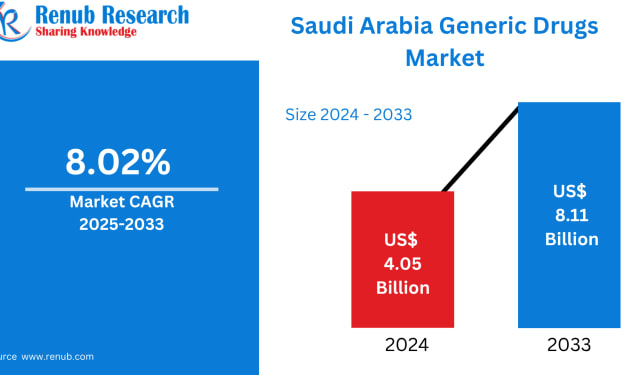
Saudi Arabia Generic Drugs Market Outlook The Saudi Arabia Generic Drugs Market is anticipated to grow to US$ 8.11 billion by 2033 from US$ 4.05 billion in 2024, expanding at a CAGR of 8.02% during 2025–2033. This growth is attributed to rising healthcare needs, proactive government efforts to curb pharmaceutical expenditure, and increasing awareness of cost-effective medication alternatives. Expanding domestic pharmaceutical manufacturing and regulatory support for generics are further strengthening the market’s long-term outlook.
By Marthan Sir4 days ago in Longevity



Comments
There are no comments for this story
Be the first to respond and start the conversation.