
The Immortalis Protocol: A New Dawn or the End of Humanity?
How the Quest for Eternal Life Redefined What It Means to Be Human

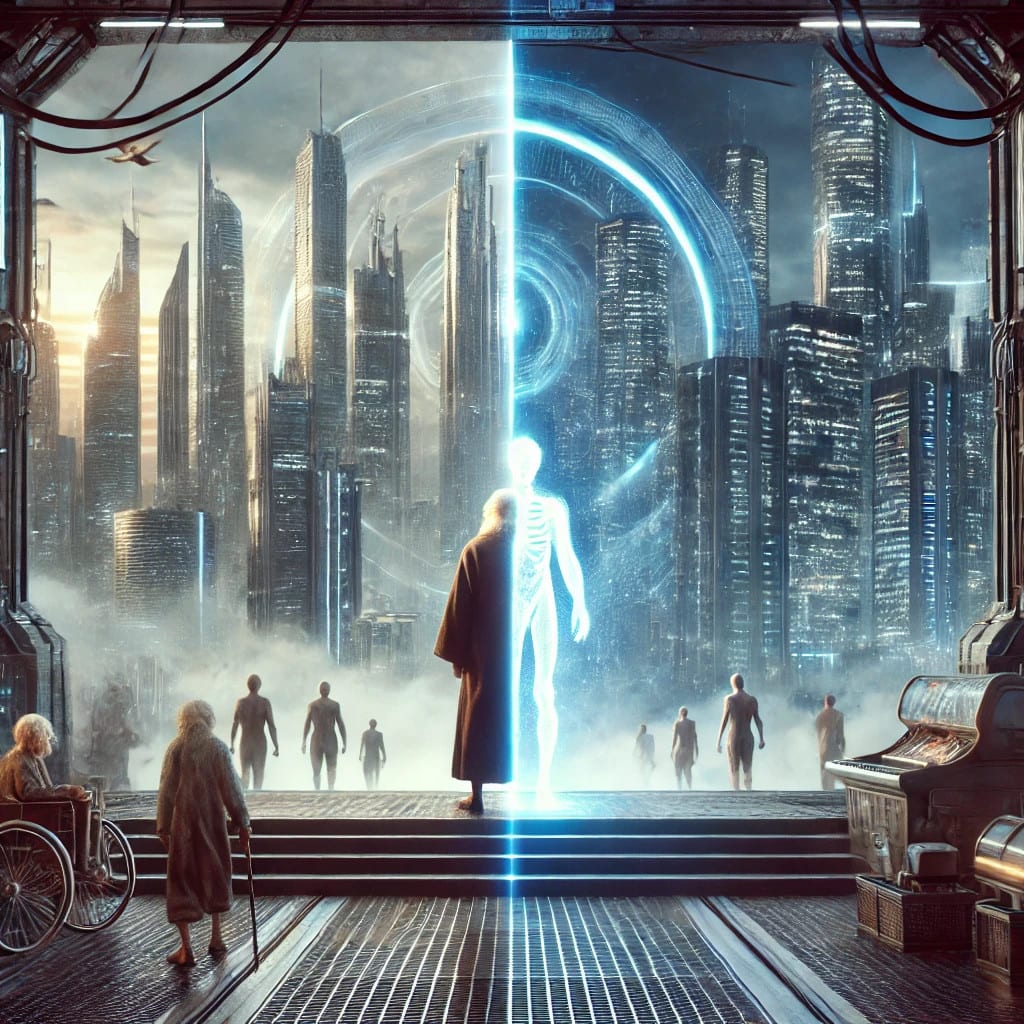
The Birth of Immortality: A Promise Fulfilled?
In the year 2045, the world stood on the precipice of a new era. A team of scientists at HelixCorp had unveiled what was, without doubt, the most groundbreaking discovery in human history: the Immortalis Protocol. A fusion of advanced nanotechnology and genetic reprogramming, the protocol not only halted aging but reversed cellular degradation. For the first time, death by natural causes was no longer inevitable. Humanity had cracked the code of mortality.
The invention, initially met with widespread euphoria, quickly transformed into a philosophical and ethical battleground. Governments, religious institutions, and bioethicists debated fiercely: Was eternal life a gift or a curse? Could the fabric of human society withstand such a radical shift?
At first, the general public viewed the protocol as the ultimate achievement of human progress. People imagined limitless time to perfect their skills, see the world, and be with their loved ones. Yet, as history had always proven, every great breakthrough came with a cost.
The Science Behind Immortalis: A Double-Edged Sword
The Mechanics of Eternal Youth
The Immortalis Protocol operated on two fundamental breakthroughs: self-replicating nanobots and a revolutionary CRISPR-based genetic rewriting system. The nanobots, smaller than a blood cell, patrolled the bloodstream, identifying and repairing cellular damage, eliminating senescent cells, and maintaining optimal organ function. Meanwhile, the CRISPR system continuously rewrote DNA, preventing genetic mutations associated with aging.
A Treatment for the Elite
Initially, the treatment was prohibitively expensive, available only to the ultra-wealthy. Celebrities, billionaires, and world leaders were the first to undergo the transformation, emerging months later with an otherworldly glow—ageless, resilient, seemingly invincible. Demand surged, creating a vast black market for unregulated, dangerous variants of the protocol. The world was splitting into two factions: the Immortals and the Ephemerals.
The disparity in access to immortality became a pressing concern. While wealthy individuals secured eternal youth, the rest of the population remained bound to their fragile mortality. As the global economy adjusted to this unprecedented shift, the implications of an immortal elite began to unfold.
A New Hierarchy of Humanity: The Rise of the Immortal Elite
The Fall of Traditional Power Structures
With physical decay no longer a factor, society saw its power dynamics shift dramatically. Wealth became secondary to longevity. The traditional structures of governance faltered as immortal leaders refused to relinquish control. Career ladders became meaningless when positions were held indefinitely. In time, unrest grew among the Ephemerals, those who could not afford or access the treatment. They saw their relevance fading, their ambitions rendered obsolete in a world where time had lost its urgency.
Economic and Social Consequences
Cracks began to appear in the utopian dream. Birth rates plummeted as immortals, unwilling to divide their resources, chose to forego reproduction. Global economies reeled from the lack of generational turnover. The very essence of human motivation—our drive to achieve, to leave a legacy—began to erode. What was the point of striving if one had an eternity to accomplish everything?
Over time, a rigid class system solidified. The Immortals lived in fortified enclaves, untouched by disease, war, or economic hardship. The Ephemerals, meanwhile, struggled with shorter lifespans, limited opportunities, and a sense of growing irrelevance.
As tensions between the two groups escalated, so too did the questions of justice and equality. Was immortality a right or a privilege? Did those who lived forever still retain their humanity?
The Unintended Consequences: The Curse of Eternal Life
The Psychological Toll
While the body remained pristine, the mind struggled with the weight of endless existence. Depression, apathy, and existential crises skyrocketed among the immortals. Some voluntarily ended their lives, while others, seeking stimulation, engaged in increasingly extreme and reckless behaviors. The human psyche, designed for a finite existence, had never been tested under such conditions.
The Overload Syndrome
Then came the unforeseen disaster: The Overload Syndrome. The human brain, never designed for unlimited memory storage, began to exhibit catastrophic failures. Neurological breakdowns, insanity, and violent psychosis became rampant. As memories compounded over centuries, individuals lost their grip on reality, haunted by their own endless pasts.
Faced with the unraveling of their perfect creation, the scientists at HelixCorp proposed a radical solution: The Reset Program. Every 200 years, an immortal would undergo a controlled erasure of memories, preserving only the fundamental skills and knowledge needed to function. But was a person without their memories still the same individual?
What began as a life-extending miracle now carried the eerie undertone of forced amnesia. The promise of infinite wisdom had been replaced by an enforced cycle of forgetting.
The Final Reckoning: Revolution and Collapse
The Revolt of the Ephemerals
By 2100, the world had split irrevocably. The Ephemerals, realizing they were doomed to a subjugated existence, launched a desperate revolt. Cities burned, governments collapsed, and the once-glorious promise of immortality became a dystopian nightmare.
With immortal elites clinging to power and mortal populations demanding retribution, warfare escalated. Terrorist groups targeted research facilities, seeking to destroy the technology that had divided humanity. For the first time in decades, the Immortals faced the prospect of mortality—not from aging, but from violence.
The End of Immortality?
The question remained: Had humanity conquered death, or had it merely postponed the inevitable self-destruction of its own civilization?
As the last records of the Immortalis Protocol faded into history, one truth endured—perhaps mortality was never a flaw, but a necessity, the very foundation of what it meant to be human.
Epilogue: A Future Reclaimed?
A New Beginning?
In the ruins of once-great cities, remnants of humanity sought a different path. Scientists debated whether a controlled version of Immortalis could exist—one that granted longevity without societal collapse. Philosophers pondered whether a natural lifespan was, after all, the secret to human purpose.
With the downfall of the old world, a new civilization emerged, learning from past mistakes. Strict regulations were proposed: limited lifespan extensions, ethical considerations for population control, and a renewed respect for the natural cycle of life.
Would this balance succeed where the first attempt had failed? Could humanity handle the power of life extension responsibly? The future remained uncertain, but one lesson was clear: absolute immortality carried a price too heavy to bear.
One thing was certain: the balance between progress and peril would forever define humanity’s reach for the eternal.
About the Creator
Alain SUPPINI
I’m Alain — a French critical care anesthesiologist who writes to keep memory alive. Between past and present, medicine and words, I search for what endures.
Keep reading
More stories from Alain SUPPINI and writers in Longevity and other communities.
Mastering French Without Losing Your Sanity: A Realistic Guide for Beginners
Learning French can feel like solving a Rubik’s Cube blindfolded. The tricky pronunciation, the never-ending grammar rules, and the surprising exceptions make it seem impossible. But don’t worry—equipping yourself with key expressions and effective strategies can turn frustration into fluency. Let’s simplify French and make learning enjoyable.
By Alain SUPPINIExclusive • about a year ago
Best Workouts for Fat Loss
If you’ve ever tried to lose weight, you’ve probably wondered which workouts actually help burn fat the fastest. Many people start exercising with excitement but soon get confused by the endless options—cardio, strength training, HIIT, yoga, and more. The truth is that not every workout burns fat in the same way.
By Veronica Bennett7 days ago in Longevity
6 Things to Avoid After 5 P.M. for Better Blood Sugar Control, According to Dietitians
Do you wind down at night by doom-scrolling on the couch with a glass of wine? Do you stay up way too late or eat a large dinner before bed? These seemingly harmless evening habits could be sabotaging your blood sugar more than you realize.
By Good health to everyone7 days ago in Longevity


Comments
There are no comments for this story
Be the first to respond and start the conversation.