science
The science of staying young, healthy, and in-shape.
The Problem With Excess Sugar Consumption In Our Lives
We face an endless barrage of sugar at every turn. Those doughnuts look great, don't they? What about the sugar in ice cream? Other cakes and pastries? Chocolate bars? Fruits? Cereals? Juices and soft drinks?
By Dr Joel Yong5 years ago in Longevity
Knock-knock, it's CoV-2
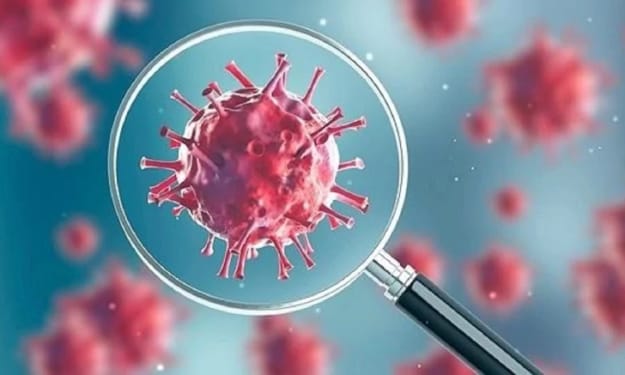
We’re living in truly unprecedented times – brought to our knees by an imp of a virus, with seemingly no way out. And while there’s a ton of news (and fake news) flying around, one of the most heartening trends has been the global research community’s rapid response to this situation. Indeed, torrents of papers are being released at whirlwind speed, as research teams race to unearth the mysteries of the latest menace, the COVID-19, caused by the SARS-Coronavirus-2 (referred to as CoV-2 henceforth).
By Sreepadmanabh M6 years ago in Longevity
How this common disease triggers immune amnesia
The danger of measles infection is not limited to its observable symptoms or the fact that it's highly contagious, it's something way beyond this. One of the most priceless commodity of our body is the immune system and the memory it has acquired after being exposed to various pathogens over a period of time. Now, measles virus is especially dangerous because it has the ability to destroy the immune memory from previous infections.
By Utkarsh Sinha6 years ago in Longevity
The Object That Weighs Less Than A Pound, That You Wouldn’t Be Alive Today Without
The Human Heart. Possibly one of the least appreciated things in Human History. The Average Human Heart clocks in at around 11 ounces. Yet for a small organ, it sure does a lot. It single handedly pumps blood, all throughout our bodies, providing oxygen, nutrients and so much more to every cell in our body. And what do we do? Some of us choose to eat absolute garbage, and clog up our arteries making its job, of keeping you and me alive, even harder than it already is. But we appreciate and acknowledge our heart right? After all, we did name a shape after it, that doesn’t even resemble it. The normal human heart is an abstract shape, but more resembles an oval, not the “heart” that we created in honor of it. You may think that you’re life is hard. Wether you’re a student, or an employee, or a boss, some of you must be working off of 6 hours of sleep? And then complaining about it the next morning. Well your and my heart can’t just take a break. While you’re sleeping, it’s still hard at work. It can’t just take a break, not even for 1 minute, or else neither you nor I would be able to wake up to complain the next morning about the crazy little amount of sleep we got.
By Aron Frishberg6 years ago in Longevity
How to Use BCAA's to Get Maximum Results?
BCAAs or Branched Chain Amino Acids are all the rage today. The benefits of BCAAs are widely known by many bodybuilders and fitness enthusiasts. BCAA helps in enhancing energy levels and decreases fatigue. It also helps with muscle growth and boosts fat loss.
By Mukul Singhal6 years ago in Longevity
The Lymphatic System
Hello everyone, today we are going to discuss what exactly the Lymphatic system is and why it is so essential to take care of. I know a lot of people do not understand what the lymphatic system does so I hope to clear that up today along with providing information on to keep it healthy.
By Abby Verigin6 years ago in Longevity
The Science Behind ASMR
What is ASMR? The ASMR phenomenon is said to have originated back in 2010, when a woman by the name of Jennifer Allen coined the term in an ASMR Facebook group. However, it has gained even more momentum over the past couple of years, and is only growing.
By Abigail Ann6 years ago in Longevity
An 'Infection Weather Report'
COVID-19 is changing how we live our lives. It's done so in an extreme way. But we should always be concerned about the threat of infections that surround us. Unfortunately, to this day, there is no reasonable general purpose reporting system in place to help us make decisions to avoid these threats. Why not? Does it make sense that in an era of data availability that the population must remain generally ignorant about the level of risk from infectious diseases?
By Daniel Goldman6 years ago in Longevity