science
The science of staying young, healthy, and in-shape.
What Happens to Your Body When You Skip Meals Regularly
“I’ll eat later.” “I’m not that hungry.” “I’m too busy.” For many university students, skipping meals feels normal. But when student irregular eating becomes a habit, your body starts responding in ways you might not immediately notice.
By Being Inquisitive3 days ago in Longevity
When Does Spring Start? Understanding the Seasonal Shift. AI-Generated.
Spring is often associated with warmer temperatures, blooming flowers, and longer days — a welcome transition from winter’s cold grip. But the exact date when spring begins depends on how it is defined. There are two main ways scientists and meteorologists mark the start of spring: astronomical spring and meteorological spring. These definitions can differ by several weeks, leading to some confusion about when the season truly begins. Astronomical Spring: Guided by the Sun Astronomical spring begins with the vernal equinox, the moment when the Sun crosses the celestial equator and day and night are nearly equal in length. In the Northern Hemisphere, this usually occurs on March 19, 20, or 21, depending on the year. In 2026, for example, the equinox falls on March 20. This definition is rooted in Earth’s position in its orbit around the Sun. From the equinox onward, days grow longer and nights shorter, symbolizing the return of light and warmth. Cultures across the world have long celebrated the vernal equinox as a sign of renewal and rebirth, with festivals tied to agriculture, planting, and fertility. In contrast, astronomical spring in the Southern Hemisphere begins around September 22 or 23, when their own vernal equinox occurs, marking the shift from winter into spring below the equator. Meteorological Spring: Based on Weather Patterns Meteorologists use a different system that divides the year into four equal three-month seasons based on temperature cycles. Under this method, meteorological spring begins on March 1 and ends on May 31 in the Northern Hemisphere. This approach is preferred for climate tracking and statistical analysis because it aligns more closely with annual temperature patterns and makes comparing weather data easier from year to year. For example, snowfall totals, rainfall averages, and temperature records are often grouped by meteorological seasons rather than astronomical ones. For everyday life, this definition can feel more intuitive. By early March, many regions already experience milder weather, budding plants, and increased daylight, even if winter technically still exists on the astronomical calendar. Regional Differences Matter Although calendars provide official start dates, spring’s arrival varies greatly depending on location. In warmer regions, signs of spring can appear as early as February, while colder climates may not see consistent spring conditions until April or even May. In United States, southern states such as Texas and Florida often experience spring-like temperatures weeks before northern states like Minnesota or Maine. Europe shows similar variation, with Mediterranean countries warming earlier than Scandinavia. Climate change has also influenced seasonal patterns. Scientists have observed that spring is arriving earlier in many parts of the world, with plants blooming sooner and migratory birds returning ahead of historical averages. These shifts can disrupt ecosystems, affecting pollinators, crops, and wildlife that depend on predictable seasonal cycles. Cultural and Emotional Meaning of Spring Beyond scientific definitions, spring carries deep symbolic meaning. It represents renewal, growth, and fresh beginnings. Many cultures associate spring with holidays and festivals celebrating life and fertility, from Easter to Nowruz and other traditional observances. For individuals, spring often brings emotional relief after months of darkness and cold. Increased sunlight has been linked to improved mood and energy levels, helping reduce symptoms of seasonal affective disorder (SAD). The season encourages people to spend more time outdoors, exercise, and reconnect with nature. So, When Does Spring Really Start? The answer depends on perspective: Astronomical spring: Begins around March 20 (vernal equinox). Meteorological spring: Begins on March 1. Practical spring: Begins when local weather feels warm enough to signal change. All three definitions are valid. Astronomical spring is tied to Earth’s movement around the Sun, meteorological spring to climate patterns, and practical spring to human experience. A Season of Transition Spring is not a single moment but a gradual transformation. Snow melts, rivers swell, flowers bloom, and days lengthen bit by bit. Whether marked by the equinox or by rising temperatures, spring reminds us that change is constant and renewal is possible. As winter fades, spring’s arrival — however defined — continues to inspire hope, growth, and a sense of beginning anew.
By Fiaz Ahmed 4 days ago in Longevity
Sightings of One of the UK’s Rarest Insects Triple. AI-Generated.
A remarkable increase in sightings of one of the United Kingdom’s rarest insects has delighted conservationists and nature lovers across the country, offering a rare piece of good news in an era of widespread insect declines. The insect in question, the green forest hoverfly (Caliprobola speciosa), has seen recorded observations treble in recent years, prompting hope that dedicated conservation work and habitat protection measures may be paying off. The green forest hoverfly is a striking species, known for its metallic green and golden body adorned with bright orange wings and legs. It is extremely uncommon and has historically only been reliably recorded in two parts of southern England: the New Forest in Hampshire and Windsor Great Park in Berkshire. Soaring Sightings: What the Data Shows According to a four‑year study supported by Forestry England, sightings of the green forest hoverfly have increased from around 150 recorded observations before 2022 to more than 450 in recent counts — a threefold jump in documented appearances. Volunteers dedicated thousands of hours to data collection, using standardized survey methods to track individual hoverflies across the hoverfly’s short spring flight period. The insect emerges for only a few weeks each spring and is highly dependent on specific habitat features. Ancient beech trees and decaying stumps provide essential breeding sites where females lay their eggs, and the larvae develop in the decomposing wood. These microhabitats are increasingly rare across much of the UK due to forest fragmentation and historical woodland management practices that removed deadwood from managed forests. Despite its rarity, the species has long fascinated naturalists because of its striking appearance and elusive behaviour. Its distinctive green sheen makes it unmistakable to trained observers, but its overall scarcity has made population trends difficult to monitor consistently until volunteer survey efforts were established. Conservation in Action The rise in sightings has not happened by accident. Conservation groups have been working for years to protect and manage suitable habitats, particularly in the New Forest — one of the UK’s most biodiverse woodland landscapes. Forestry England has used data from hoverfly surveys to adjust habitat management plans, including removing excessive holly and undergrowth that can shade out deadwood resources and disrupt the fine ecological balance required by these insects. Leanne Sargeant, a senior ecologist with Forestry England, described the New Forest as a “haven for nature,” emphasizing that the recent findings illustrate how targeted conservation and community involvement can make a difference for even the most cryptic species. Sargeant said the survey results have helped improve understanding of the hoverfly’s distribution and habitat needs, allowing managers to fine‑tune practices that encourage biodiversity rather than suppress it. For example, some areas previously cleared for visitor access or aesthetic reasons are now being managed to retain deadwood and older trees, which are vital for insect life cycles. Volunteers and Citizen Science Play a Key Role The surge in sightings would not have been possible without the dedication of volunteer naturalists. These citizen scientists conducted more than 2,700 hours of field observations, recording not only green forest hoverflies but also a range of other rare and scarce insects that benefit from improved woodland habitats. Their observations contribute to long‑term species databases used by conservation bodies across the UK. One survey volunteer, Andy Murdock, noted that the renewed understanding of the hoverfly’s presence has helped highlight the importance of protecting ancient woodland features that many casual visitors might overlook. “With the right habitat, this species can continue to thrive,” he said, reflecting the optimism among enthusiasts. AOL Why It Matters The green forest hoverfly’s rebound is particularly significant in the context of broader declines in insect populations worldwide. Recent global studies have shown that insect abundance and diversity are under threat due to habitat loss, climate change, pesticides, and land‑use change — making any sign of recovery noteworthy. For the UK, where many insect species are in long‑term decline, the hoverfly’s success demonstrates that focused conservation action, supported by scientific data and public involvement, can yield measurable improvements. It also serves as a reminder that protecting biodiversity requires preserving the natural processes and habitats that underpin complex ecological webs. Looking Ahead Researchers and volunteers plan to continue monitoring the green forest hoverfly in coming years to determine whether the upward trend is sustained. They also hope that similar efforts in other parts of the UK can shed light on the status of other rare insects, helping to ensure that these small but vital species are not lost to future generations.
By Fiaz Ahmed 7 days ago in Longevity
The Great Olympic Lie: Untold Story of Winter Games’ Huge Environmental Impact. AI-Generated.
The Winter Olympics have long been celebrated as a pinnacle of athletic achievement, a showcase of human skill, and a stage for international unity. But behind the dazzling ceremonies and world-class competitions lies a rarely discussed truth: the environmental cost of hosting the Games is staggering, often leaving lasting damage long after the medals are awarded. Experts in environmental science and sustainability have raised concerns over the carbon footprint, water usage, and ecological disruption associated with Winter Olympic venues. From artificially frozen ski slopes to massive construction projects for stadiums, hotels, and transport infrastructure, the Games often come with hidden consequences that the public rarely sees. Carbon Footprint and Energy Usage One of the most significant impacts is the carbon emissions generated by hosting the Games. Building new infrastructure in mountainous or remote areas requires heavy machinery, transport of materials, and large amounts of concrete and steel — all of which contribute to greenhouse gas emissions. Additionally, keeping ski slopes and ice rinks frozen requires immense energy, often derived from fossil fuels. In the most recent Winter Games, organizers reported electricity usage sufficient to power several medium-sized cities for months. Despite pledges to offset emissions through renewable energy projects and carbon credits, independent analyses suggest that these offsets often fall short of counterbalancing the environmental toll. Water Usage and Scarcity Water consumption is another hidden cost. Artificial snow production, necessary to guarantee competitive ski and snowboarding conditions, uses millions of liters of water. In regions already facing water scarcity, this can strain local supplies, disrupt natural ecosystems, and impact local communities. “Artificial snow is incredibly water-intensive,” says Dr. Claire Montagne, an environmental scientist studying alpine ecosystems. “It alters soil composition, affects native plant life, and can even disrupt downstream water availability for towns and wildlife.” Deforestation and Habitat Disruption Construction of ski runs, gondolas, hotels, and road networks often involves deforestation and habitat destruction. Trees are cleared to make way for slopes and infrastructure, displacing wildlife and contributing to erosion. Even temporary structures can leave long-lasting scars on sensitive alpine ecosystems. Studies show that some areas take decades to recover, if they recover at all. Local wildlife is particularly affected. Species adapted to high-altitude environments face disruption in feeding, breeding, and migration patterns. “The impact on fauna is subtle but significant,” Dr. Montagne adds. “It’s not always visible immediately, but it accumulates over time.” The Myth of ‘Sustainable Games’ Olympic organizers often promote the idea of sustainability, highlighting energy-efficient buildings, green transportation initiatives, or carbon offset programs. While well-intentioned, critics argue that these efforts do not address the structural environmental costs of hosting a massive, temporary event. New venues often remain underused after the Games, becoming so-called “white elephants,” while old venues are abandoned or demolished, creating additional waste and environmental degradation. For example, several past Winter Games have left entire ski resorts or ice arenas largely unused, despite the ecological destruction required to build them. Even cities with ambitious “green” plans often struggle to make a tangible difference once the Games’ logistics and infrastructure demands are accounted for. The Call for Transparency Environmentalists are urging Olympic committees and host cities to publish detailed impact assessments before bidding and to prioritize retrofitting existing venues rather than constructing new ones. Some propose rotating the Games among pre-approved locations with minimal ecological disruption, reducing the need for large-scale construction projects each cycle. “The world needs the Winter Olympics, but it shouldn’t come at the cost of fragile ecosystems,” says Dr. Montagne. “Transparency, planning, and sustainable practices are critical if we want these events to truly celebrate both sport and the planet.” As global awareness of climate change grows, the Olympic movement faces a pivotal choice: continue pursuing spectacle at environmental expense or embrace a new model that values ecological stewardship as highly as gold medals.
By Fiaz Ahmed 7 days ago in Longevity
Last chance for Australians to send message to the universe on Voyager project’s 50th anniversary. AI-Generated.
Australians have a unique opportunity this week to contribute to a once-in-a-lifetime event marking the 50th anniversary of NASA’s Voyager 1 and Voyager 2 missions — an initiative inspired by the iconic Golden Record project and designed to let ordinary people send messages to the cosmos. The deadline to participate is fast approaching, and organizers are urging citizens to submit their brief messages via a dedicated online platform before the window closes. The commemorative project — backed by international space partners — aims to honor the legacy of the Voyager probes while celebrating humanity’s curiosity, creativity, and desire to connect across the stars. A Milestone Mission Launched in 1977, the twin Voyager spacecraft have become two of the most enduring icons in space exploration. Both probes, equipped with instruments to measure cosmic rays, magnetic fields, and planetary environments, provided groundbreaking data about the outer planets — including Jupiter, Saturn, Uranus, and Neptune. Decades later, Voyager 1 entered interstellar space in 2012, becoming the farthest-flung human-made object in existence. In addition to their scientific payloads, the Voyagers carry the Golden Records — phonograph discs containing sounds and images selected to portray the diversity of life and culture on Earth. The message capsules were intended as a cosmic handshake, aimed at any intelligent life that might one day encounter them. This anniversary initiative taps into that spirit of cosmic communication, inviting people around the world to submit short texts reflecting “our hopes, stories, and reflections for the universe.” Australia’s Role in Space Australia plays a critical role in the continuing operation of the Voyager missions. The **CSIRO’s Deep Space Communication Complex near Canberra has long been part of NASA’s Deep Space Network, providing vital tracking, telemetry and command support for deep-space missions. The Canberra station, alongside sister installations in California and Spain, helps maintain communication with Voyager 1 and 2 across billions of miles. Australian engineers and scientists have tracked the probes’ faint radio signals and relayed commands for decades — a contribution that underscores the nation’s importance in global space efforts. Given this deep connection, space advocates in Australia have embraced the anniversary initiative with enthusiasm, organizing community events, educational talks, and media campaigns encouraging participation in the global message project. What Participants Are Saying The response from Australians has been enthusiastic. Teachers are bringing message workshops into classrooms, families are crafting messages together, and social media campaigns have encouraged submissions ranging from poetic expressions to heartfelt messages of hope. “I wrote something about unity and the beauty of our shared home,” said one participant from Sydney. “It’s amazing to think that in some far-off future, someone — or something — might read it.” Others have used the opportunity to highlight pressing global issues, such as climate change, sustainability, and peace. Organizers have placed no restrictions on the message content aside from a character limit, encouraging creativity while keeping messages concise. The Submission Process Interested Australians must visit the official anniversary platform, create a brief message (a few hundred characters at most), and submit it before the deadline. The message will then be curated as part of an international repository — a symbolic digital archive that celebrates humanity’s collective voice on this milestone. While the messages won’t be physically launched aboard spacecraft, organizers say the archive will be preserved and shared through digital channels, space museums, and public exhibits around the world. “It’s a symbolic tribute to one of humanity’s greatest technological achievements,” said a representative from the organizing committee. “Everyone gets a chance to contribute to this intergenerational conversation.” Looking Ahead As the Voyager probes continue their journey into the depths of interstellar space — powered by diminishing but enduring nuclear energy sources — they carry not only instruments of science but also human imagination. Their longevity continues to defy expectations, and their data provides scientists with unprecedented insights into the space beyond our solar system. For Australians and global citizens alike, the anniversary is both a celebration and a reminder: humanity’s reach extends far beyond our planet, and even the smallest message can be part of something much larger. With just days left to submit contributions, organizers are urging last-minute participation — a final chance to add personal reflections to a global tribute to one of the most remarkable achievements in the history of exploration.
By Fiaz Ahmed 7 days ago in Longevity
InformNapalm: Ukrainian Hackers Discover How Russian Drone Operators Use Belarus. AI-Generated.
A team of Ukrainian cyber researchers affiliated with the volunteer intelligence organization InformNapalm has published findings revealing how Russian military drone operators are reportedly using Belarusian territory to conduct reconnaissance and logistical support missions. The revelations add another layer of complexity to the ongoing conflict in Ukraine and highlight the role of Belarus in facilitating Russian military operations. According to the report released by InformNapalm, Ukrainian hackers were able to access internal communications, flight logs, and operational manuals detailing how Russian drone units coordinate their flights from Belarusian airspace. The leaked data allegedly shows that drone operators use Belarusian regions as staging points to conduct intelligence-gathering, monitor troop movements, and assist in artillery targeting within northern Ukraine. Strategic Use of Belarusian Territory The report claims that Belarus, under President Alexander Lukashenko, has allowed Russian forces to use its territory not only for launching drones but also for storing spare parts, refueling, and crew rotations. Some leaked documents suggest that Russian drones often cross the Ukrainian border in the early hours, minimizing detection risks, and transmit real-time data to command centers deep inside Russian territory. “Belarus is effectively a staging ground for Russian unmanned operations,” the InformNapalm briefing states. “The use of Belarusian soil allows the Russian military to expand its intelligence reach without immediately exposing assets to Ukrainian countermeasures.” Cyber Discovery and Analysis InformNapalm’s report emphasizes that its team did not physically infiltrate Belarusian or Russian military bases. Instead, the findings are based on a combination of intercepted communications, metadata analysis, and OSINT (open-source intelligence) techniques. The group claims to have cross-checked locations, flight patterns, and drone types with satellite imagery and local sources to verify the data. One portion of the analysis focused on small, tactical drones reportedly used to identify Ukrainian positions for artillery strikes. These drones are said to operate under short-range guidance protocols but rely on Belarusian relay stations to extend their operational range, allowing Russian units to target positions hundreds of kilometers inside Ukraine. Implications for Ukraine and International Observers Ukrainian military analysts have described the findings as a potential game-changer in understanding the cross-border logistics of Russian operations. The use of Belarusian territory could explain patterns in artillery accuracy and drone surveillance reported in northern regions of Ukraine, particularly near the border with Belarus. The report also raises questions about Belarus’ level of involvement and complicity in the conflict. While Minsk has officially maintained that it is not an active participant in hostilities, the revelations could heighten scrutiny from Western governments, particularly those providing military aid to Ukraine. A defense analyst noted, “If the Ukrainian findings are accurate, it would confirm that Belarusian territory is being leveraged for tactical advantage, which could alter how NATO and Ukraine plan countermeasures along that border.” Russian Denials and International Reactions At this stage, neither the Russian Ministry of Defense nor the Belarusian government has formally responded to the InformNapalm report. Previous statements from Moscow and Minsk have denied using Belarusian territory for offensive operations, describing any cross-border activity as routine military exercises or training flights. International observers have cautioned that the claims, while detailed, are difficult to independently verify without physical inspections or corroboration from neutral third parties. Nevertheless, the use of cyber intelligence in modern warfare has become increasingly influential, giving Ukraine a strategic advantage in countering drone and artillery operations. Cyber Warfare as a Strategic Tool InformNapalm’s findings illustrate the growing role of cyber warfare in modern conflicts. Ukrainian hackers and OSINT communities are increasingly able to access sensitive operational data, exposing tactics, supply lines, and vulnerabilities in real time. Analysts note that such capabilities may act as a deterrent or provide actionable intelligence for battlefield decisions. “This is a clear example of asymmetric advantage,” said one security expert. “Even small groups, using cyber and open-source intelligence, can reveal critical details about a larger adversary’s operations.” Looking Ahead If confirmed, the report could have diplomatic ramifications for Belarus, particularly regarding its relationships with NATO countries and the European Union. Ukrainian officials have not yet indicated whether the data will be used in formal diplomatic channels, but military planners are reportedly analyzing the information to adjust border security and air defense strategies. For now, InformNapalm’s disclosures provide a rare glimpse into the operational mechanics of Russian drone deployments, highlighting the interconnectedness of cyber intelligence, territorial logistics, and modern aerial warfare in the ongoing conflict.
By Fiaz Ahmed 7 days ago in Longevity
The Protection-of-Innocence Reciprocity Doctrine. AI-Generated.
Core Moral Premise The highest duty of any legitimate social order is the protection of innocent life. Innocent life has absolute moral primacy. Any system that systematically insulates predators, tolerates predatory asymmetry, rewards hypocrisy, or allows aggressors to retain insulation has inverted its purpose and forfeited legitimacy. Truth, justice, reciprocity, humility, mercy, forgiveness, and vertical accountability are structural necessities rather than optional virtues. Vertical accountability means recognition of and submission to a moral law higher than oneself. Authority must flow toward those who most consistently demonstrate sustained competence in moral and epistemic discipline. This competence is shown through observable conduct and trajectory over time, not through doctrinal label, tribal identity, credential alone, or self-profession.
By Peter Thwing - Host of the FST Podcast8 days ago in Longevity
When Thinking Feels Like Action
There is a particular satisfaction that comes from understanding something clearly after wrestling with it for a long time. The mind settles. Tension releases. Pieces line up. In that moment, it can feel as though real movement has occurred, as though something meaningful has been accomplished. That feeling is not imagined. Cognitive resolution is a real event. The danger appears when that internal resolution is quietly mistaken for external change, and thinking begins to substitute for action rather than prepare the way for it.
By Peter Thwing - Host of the FST Podcast8 days ago in Longevity
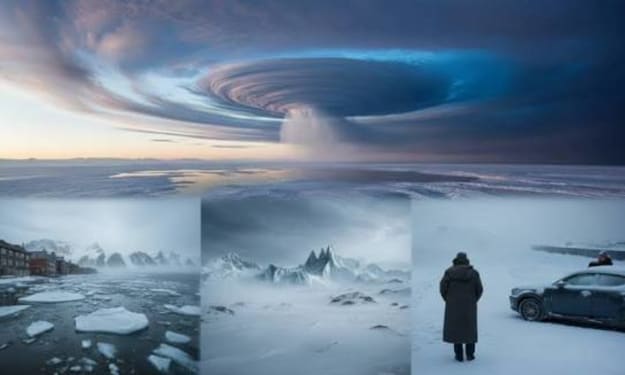
Meteorologists Warn Early February Could Mark the Beginning of an Arctic Destabilization Event. AI-Generated.
Meteorologists and climate researchers are raising concerns that early February could signal the onset of a significant Arctic destabilization event, a phenomenon that may trigger widespread weather disruptions across the Northern Hemisphere. While scientists caution that forecasting long-term atmospheric shifts remains complex, recent temperature anomalies and unusual circulation patterns are intensifying fears of a major breakdown in Arctic stability. Over the past several weeks, satellite data has shown abnormally high temperatures across parts of the Arctic region, with some areas recording readings far above seasonal averages. These temperature spikes, combined with weakening polar wind systems, are being closely monitored for signs of a potential collapse or disruption of the polar vortex, a massive ring of cold air that typically keeps frigid conditions confined to the far north. Warning Signs Emerging Meteorologists say the current atmospheric setup resembles conditions seen before previous Arctic destabilization episodes. Such events are often linked to sudden stratospheric warming, where temperatures high above the Earth’s surface rapidly rise, weakening the polar vortex and allowing Arctic air masses to spill southward into Europe, North America, and parts of Asia. Early February is considered a critical window because solar radiation patterns, ocean temperature gradients, and jet stream behavior tend to converge during this period. According to climate analysts, even small disruptions at this stage can cascade into large-scale weather anomalies weeks later. Recent modeling suggests that warm air intrusions from the Atlantic and Pacific Oceans are pushing deeper into the Arctic than usual. This intrusion is compressing the cold air dome and altering the jet stream’s trajectory, potentially causing it to wobble or split. When this happens, cold air that normally remains trapped over the Arctic can descend into lower latitudes, triggering extreme winter weather. Potential Global Impacts If an Arctic destabilization event occurs, its effects could be felt far beyond the polar region. Europe could experience prolonged cold spells, heavy snowfall, and transport disruptions. In North America, meteorologists warn of sharp temperature drops and increased risk of winter storms affecting major population centers. Asia may also see shifts in monsoon and winter wind patterns, leading to colder-than-normal conditions in northern regions and unpredictable precipitation in others. These disruptions could strain energy systems, agriculture, and emergency services. Experts emphasize that the destabilization does not necessarily mean continuous cold everywhere. Instead, it may cause weather extremes, with some areas experiencing severe cold while others see unusually warm or wet conditions. This uneven distribution is one of the hallmarks of polar vortex disruptions. Climate Change Connection Scientists point to climate change as a contributing factor in the Arctic’s growing instability. The Arctic is warming nearly four times faster than the global average, a process known as Arctic amplification. As sea ice retreats and ocean surfaces absorb more heat, temperature differences between the Arctic and lower latitudes weaken. This reduced temperature gradient affects the jet stream, making it slower and more prone to large swings. A sluggish jet stream can lock weather systems in place, increasing the likelihood of extended heatwaves, cold snaps, or heavy rainfall. While researchers caution against attributing a single event solely to climate change, they agree that a warmer Arctic increases the probability and intensity of destabilization episodes. The frequency of unusual winter patterns in recent years has added urgency to ongoing monitoring efforts. Preparedness and Monitoring Meteorological agencies across the Northern Hemisphere are intensifying surveillance of stratospheric temperatures and wind speeds. Advanced forecasting models are being updated daily to track any sudden shifts that could confirm the start of a destabilization event. Emergency planners are also being advised to prepare for possible cold surges, particularly in regions that have experienced relatively mild winters so far. Utility providers are reviewing contingency plans for spikes in heating demand, while transportation authorities are preparing for potential snow and ice disruptions. Public communication remains a priority. Weather experts stress the importance of avoiding panic while encouraging communities to remain alert. Even if a full destabilization does not occur, the atmospheric patterns suggest a higher risk of volatile weather in the weeks ahead. Looking Ahead The coming days will be crucial in determining whether early February becomes a turning point for Arctic stability. Scientists say that while uncertainty remains, the signals currently observed warrant serious attention. If confirmed, this event could become another example of how interconnected the planet’s climate systems are — and how changes in the far north can ripple across continents. For now, meteorologists urge close observation and preparedness, noting that the Arctic’s behavior in the next few weeks may shape the remainder of the winter season for much of the world.
By Fiaz Ahmed 8 days ago in Longevity