
Grail’s Cancer Detection Test Fails in Major Study — What It Means for the Future of Early Cancer Screening
A Major Setback for Multi-Cancer Early Detection — But Not the End of the Story
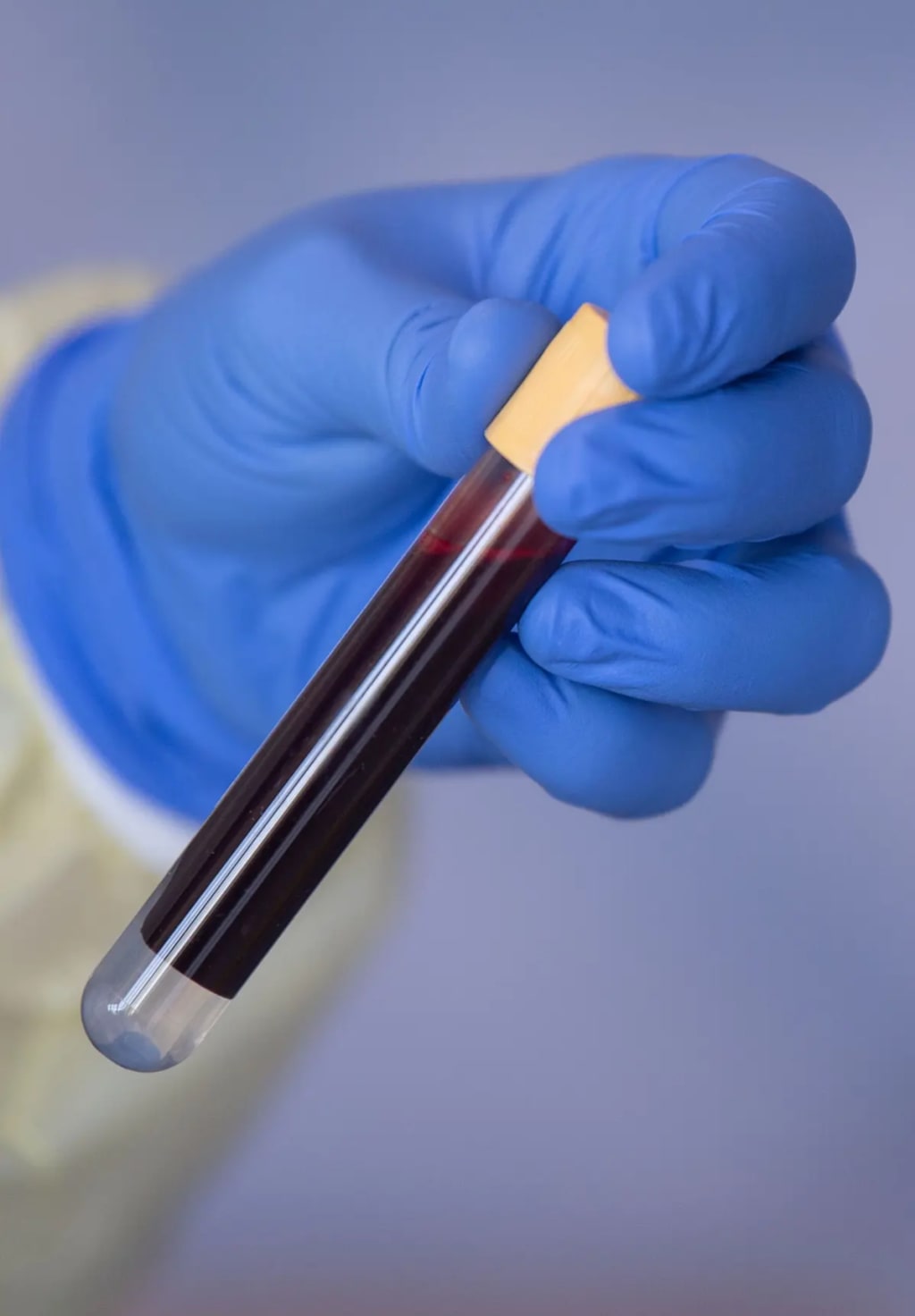
The Promise That Sparked Global Attention
For years, the biotechnology company Grail promoted a powerful idea: one simple blood test capable of detecting more than 50 types of cancer before symptoms appear.
The test, known as Galleri, was designed to analyze fragments of tumor DNA circulating in the bloodstream. The vision was groundbreaking — detect cancer early, treat it earlier, and ultimately save more lives.
Early detection has always been one of medicine’s strongest tools. When cancer is found in Stage I or II, survival rates are significantly higher compared to Stage III or IV. That’s why traditional screenings — like mammograms and colonoscopies — are so important.
Grail aimed to expand that model dramatically.
Instead of one cancer at a time, Galleri promised a multi-cancer screening revolution.
🏥 The Largest Real-World Test
To test whether Galleri truly worked in real-world conditions, researchers partnered with the National Health Service in England.
The clinical trial included over 140,000 adults between the ages of 50 and 77 who had no cancer symptoms. Participants were split into two groups:
One group received standard cancer screenings.
The other group received standard screenings plus the Galleri blood test.
The primary goal was very clear:
👉 Would adding the Galleri test reduce the number of late-stage cancer diagnoses?
Late-stage cancers (Stage III and IV) are harder to treat and more likely to result in death. If Galleri significantly reduced these cases, it would have been considered a major breakthrough.
📊 The Results: A Missed Primary Endpoint
When the data was released in early 2026, the results were disappointing.
The trial did not show a statistically significant reduction in late-stage cancers across the overall population studied.
In clinical research, meeting the “primary endpoint” is crucial. It determines whether a test achieves its intended purpose. Because Galleri did not meet this benchmark, researchers could not declare it successful as a population-wide screening tool.
There were some encouraging trends — especially reductions in certain very advanced cancers — but overall, the evidence wasn’t strong enough to confirm broad benefit.
In science, “almost” is not enough.
⚖️ Why This Matters for Regulators
Health authorities like the U.S. Food and Drug Administration require strong clinical proof before recommending widespread screening programs.
Screening millions of people carries risks:
False positives may lead to unnecessary tests and anxiety.
False negatives may create false reassurance.
Overdiagnosis can increase medical costs without improving survival.
Because Galleri didn’t meet its main goal, regulators will likely proceed cautiously.
Approval decisions, insurance coverage, and national screening recommendations may be delayed until stronger data emerges.
💰 Market Reaction and Industry Impact
Following the announcement, investor confidence dropped sharply. Grail’s stock price fell significantly as markets reacted to the setback.
Biotechnology companies often depend heavily on a single breakthrough product. When that product struggles in clinical trials, financial consequences can be immediate.
However, experts emphasize that one failed endpoint does not erase years of research progress. It simply means more refinement and additional studies are needed.
🧠 The Science Behind the Challenge
Cancer is not one disease — it’s hundreds of biologically different diseases.
Each type behaves differently. Some cancers shed large amounts of detectable DNA into the bloodstream. Others release very little in early stages, making detection extremely difficult.
The concept of “liquid biopsy” — analyzing cancer signals through blood — is still evolving. While promising, it faces complex biological hurdles.
Detecting dozens of cancers with high accuracy and low error rates is scientifically demanding.
This trial highlights just how challenging that mission truly is.
🌍 Hope vs. Evidence
Public excitement around Galleri was understandable. The idea of one blood test replacing multiple screening procedures sounded transformative.
But medicine must balance hope with proof.
Large clinical trials are designed to test whether early promise holds up under real-world conditions. Sometimes, promising technologies don’t immediately deliver the expected results.
That doesn’t mean the science is useless. It means it needs refinement.
Many medical breakthroughs today were built on earlier setbacks.
🔄 What Happens Next?
Grail has indicated it will continue analyzing trial data and possibly extend follow-up periods. Sometimes, longer-term results reveal clearer patterns.
Researchers may also explore:
Targeting high-risk populations
Refining detection algorithms
Combining blood tests with imaging tools
Narrowing focus to specific cancer types
The future of multi-cancer early detection is not closed — but it is more complex than originally hoped.
🩺 The Bigger Lesson for Healthcare
This moment serves as a reminder that medical innovation is rarely straightforward.
Every new diagnostic tool must answer one key question:
Does it meaningfully improve patient outcomes?
Finding cancer earlier is valuable — but only if it leads to better survival, safer treatments, and improved quality of life.
Evidence remains the foundation of responsible healthcare policy.
🏁 Final Thoughts
Grail’s Galleri test failing to meet its primary endpoint in a major study is undoubtedly a setback.
But it is not the end of the journey toward better cancer detection.
Scientific progress often moves through stages of testing, learning, adjusting, and improving. Even disappointing trial results contribute valuable knowledge.
The dream of earlier, simpler cancer detection remains alive — but it must be built carefully, backed by strong evidence, and guided by patient safety.
In the world of medicine, breakthroughs are earned — not assumed.
About the Creator
The No-Exercise Cholesterol Hack: How I Ate My Way Out of a Medical Mess
I’ve spent most of my life as an athlete and a soldier, which means I’m used to treating my body like a machine. In that world, you don’t ask how the engine feels; you just put the fuel in and demand results. But hit fifty, throw in a few major surgeries, and suddenly that machine starts looking more like a rusty tractor.
By Feliks Karić7 days ago in Longevity




Comments
There are no comments for this story
Be the first to respond and start the conversation.