science
The science of staying young, healthy, and in-shape.
The Protection-of-Innocence Reciprocity Doctrine. AI-Generated.
Core Moral Premise The highest duty of any legitimate social order is the protection of innocent life. Innocent life has absolute moral primacy. Any system that systematically insulates predators, tolerates predatory asymmetry, rewards hypocrisy, or allows aggressors to retain insulation has inverted its purpose and forfeited legitimacy. Truth, justice, reciprocity, humility, mercy, forgiveness, and vertical accountability are structural necessities rather than optional virtues. Vertical accountability means recognition of and submission to a moral law higher than oneself. Authority must flow toward those who most consistently demonstrate sustained competence in moral and epistemic discipline. This competence is shown through observable conduct and trajectory over time, not through doctrinal label, tribal identity, credential alone, or self-profession.
By Peter Thwing - Host of the FST Podcast9 days ago in Longevity
When Thinking Feels Like Action
There is a particular satisfaction that comes from understanding something clearly after wrestling with it for a long time. The mind settles. Tension releases. Pieces line up. In that moment, it can feel as though real movement has occurred, as though something meaningful has been accomplished. That feeling is not imagined. Cognitive resolution is a real event. The danger appears when that internal resolution is quietly mistaken for external change, and thinking begins to substitute for action rather than prepare the way for it.
By Peter Thwing - Host of the FST Podcast9 days ago in Longevity
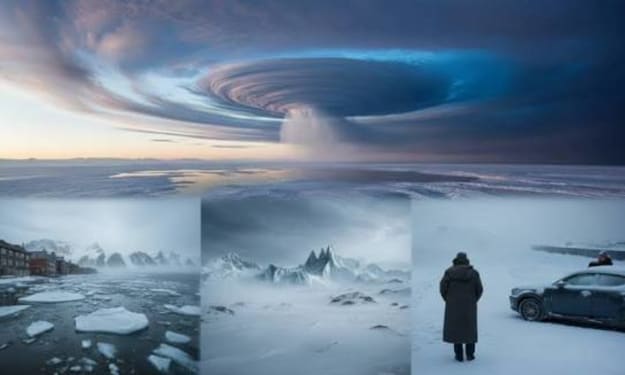
Meteorologists Warn Early February Could Mark the Beginning of an Arctic Destabilization Event. AI-Generated.
Meteorologists and climate researchers are raising concerns that early February could signal the onset of a significant Arctic destabilization event, a phenomenon that may trigger widespread weather disruptions across the Northern Hemisphere. While scientists caution that forecasting long-term atmospheric shifts remains complex, recent temperature anomalies and unusual circulation patterns are intensifying fears of a major breakdown in Arctic stability. Over the past several weeks, satellite data has shown abnormally high temperatures across parts of the Arctic region, with some areas recording readings far above seasonal averages. These temperature spikes, combined with weakening polar wind systems, are being closely monitored for signs of a potential collapse or disruption of the polar vortex, a massive ring of cold air that typically keeps frigid conditions confined to the far north. Warning Signs Emerging Meteorologists say the current atmospheric setup resembles conditions seen before previous Arctic destabilization episodes. Such events are often linked to sudden stratospheric warming, where temperatures high above the Earth’s surface rapidly rise, weakening the polar vortex and allowing Arctic air masses to spill southward into Europe, North America, and parts of Asia. Early February is considered a critical window because solar radiation patterns, ocean temperature gradients, and jet stream behavior tend to converge during this period. According to climate analysts, even small disruptions at this stage can cascade into large-scale weather anomalies weeks later. Recent modeling suggests that warm air intrusions from the Atlantic and Pacific Oceans are pushing deeper into the Arctic than usual. This intrusion is compressing the cold air dome and altering the jet stream’s trajectory, potentially causing it to wobble or split. When this happens, cold air that normally remains trapped over the Arctic can descend into lower latitudes, triggering extreme winter weather. Potential Global Impacts If an Arctic destabilization event occurs, its effects could be felt far beyond the polar region. Europe could experience prolonged cold spells, heavy snowfall, and transport disruptions. In North America, meteorologists warn of sharp temperature drops and increased risk of winter storms affecting major population centers. Asia may also see shifts in monsoon and winter wind patterns, leading to colder-than-normal conditions in northern regions and unpredictable precipitation in others. These disruptions could strain energy systems, agriculture, and emergency services. Experts emphasize that the destabilization does not necessarily mean continuous cold everywhere. Instead, it may cause weather extremes, with some areas experiencing severe cold while others see unusually warm or wet conditions. This uneven distribution is one of the hallmarks of polar vortex disruptions. Climate Change Connection Scientists point to climate change as a contributing factor in the Arctic’s growing instability. The Arctic is warming nearly four times faster than the global average, a process known as Arctic amplification. As sea ice retreats and ocean surfaces absorb more heat, temperature differences between the Arctic and lower latitudes weaken. This reduced temperature gradient affects the jet stream, making it slower and more prone to large swings. A sluggish jet stream can lock weather systems in place, increasing the likelihood of extended heatwaves, cold snaps, or heavy rainfall. While researchers caution against attributing a single event solely to climate change, they agree that a warmer Arctic increases the probability and intensity of destabilization episodes. The frequency of unusual winter patterns in recent years has added urgency to ongoing monitoring efforts. Preparedness and Monitoring Meteorological agencies across the Northern Hemisphere are intensifying surveillance of stratospheric temperatures and wind speeds. Advanced forecasting models are being updated daily to track any sudden shifts that could confirm the start of a destabilization event. Emergency planners are also being advised to prepare for possible cold surges, particularly in regions that have experienced relatively mild winters so far. Utility providers are reviewing contingency plans for spikes in heating demand, while transportation authorities are preparing for potential snow and ice disruptions. Public communication remains a priority. Weather experts stress the importance of avoiding panic while encouraging communities to remain alert. Even if a full destabilization does not occur, the atmospheric patterns suggest a higher risk of volatile weather in the weeks ahead. Looking Ahead The coming days will be crucial in determining whether early February becomes a turning point for Arctic stability. Scientists say that while uncertainty remains, the signals currently observed warrant serious attention. If confirmed, this event could become another example of how interconnected the planet’s climate systems are — and how changes in the far north can ripple across continents. For now, meteorologists urge close observation and preparedness, noting that the Arctic’s behavior in the next few weeks may shape the remainder of the winter season for much of the world.
By Fiaz Ahmed 9 days ago in Longevity
Mystery Donor Gives Japanese City $3.6 Million in Gold Bars to Fix Water System. AI-Generated.
In an extraordinary act of generosity, a Japanese city has received a donation of $3.6 million in gold bars from an anonymous benefactor to repair and upgrade its aging water infrastructure. Officials described the donation as “unprecedented” and said the windfall would allow the city to address urgent maintenance issues that had long been deferred due to budget constraints. The city of Tottori, located along the Sea of Japan, confirmed that the donation arrived last week in the form of gold bars weighing nearly 90 kilograms. The contribution was intended specifically to fund the replacement of old water pipelines, upgrade filtration systems, and strengthen the city’s emergency water supply network. A Mysterious Benefactor City authorities have not disclosed the identity of the donor, who reportedly contacted the municipal government through a private intermediary. The benefactor left no personal details but included a note indicating that the donation was made to ensure safe and reliable water access for residents. Mayor Shinji Sato said the gift was “both astonishing and humbling.” “We are deeply grateful to this unknown benefactor,” he said in a press briefing. “This generosity allows us to carry out critical water projects that have been on hold for years, and it reminds us of the power of civic responsibility and care.” City engineers have already begun planning the allocation of the funds. Key priorities include replacing corroded steel pipelines, modernizing pumping stations, and expanding the capacity of water storage facilities to meet the needs of a growing population. Officials also noted that part of the funding would be reserved for routine maintenance to prevent future infrastructure failures. Addressing Long-Standing Water Challenges Tottori, like many regional cities in Japan, has faced ongoing challenges with its water supply network. Aging infrastructure and limited municipal budgets have sometimes caused minor disruptions and water quality concerns. Experts say that without significant investment, the network could face serious reliability issues in the coming decades. “This donation effectively provides a generational fix,” said a regional civil engineering consultant. “With $3.6 million, the city can tackle both immediate repairs and long-term improvements, ensuring residents have access to clean and safe water for years to come.” The city’s water department has emphasized that all funds will be used exclusively for infrastructure projects and will undergo full auditing to ensure transparency. “We take our responsibility very seriously,” a department spokesperson said. “Every yen will be accounted for in service of the community.” Public Reaction and Social Impact News of the donation has sparked a wave of excitement and curiosity among residents. Local media reported that citizens were astonished by the scale of the contribution, and many praised the donor for choosing a practical cause with lasting impact. Community groups have suggested that the donation could inspire additional philanthropic efforts aimed at public infrastructure, particularly in smaller cities where government budgets are often constrained. “It sets a powerful example,” said one civic advocate. “Investing in water security benefits everyone and touches every household.” Security and Logistical Measures The delivery and storage of the gold bars were carefully coordinated with local authorities and financial institutions to ensure security. Officials confirmed that the bars are now held in a municipal vault while arrangements are made to liquidate them in a controlled manner, with proceeds earmarked directly for the water projects. A Rare Gesture While charitable donations are not uncommon in Japan, contributions of this magnitude in the form of physical gold are virtually unprecedented. Analysts suggest that such gifts reflect both a desire for anonymity and a creative approach to philanthropy, enabling donors to provide immediate and tangible impact on public services. Mayor Sato expressed hope that the donor’s identity might one day be revealed but said that, regardless, the city will honor the gift through tangible improvements that benefit every resident. “This act of generosity will be remembered not for who gave it, but for how it transformed our city,” he said. Looking Forward Tottori’s municipal government plans to begin water system upgrades in the coming months, using the donation to address the city’s most critical infrastructure needs. Residents and officials alike hope that the mysterious benefactor’s unprecedented gesture will inspire similar contributions and underscore the importance of safe, reliable, and sustainable water access in communities worldwide.
By Fiaz Ahmed 10 days ago in Longevity
In Breakthrough, Israeli Scientists Use Deep-Brain Stimulation to Counter Schizophrenia. AI-Generated.
Israeli researchers have announced a medical breakthrough that could transform the treatment of schizophrenia, using deep-brain stimulation (DBS) to significantly reduce severe symptoms in patients who had not responded to conventional therapies. The development marks one of the first successful demonstrations of DBS targeting brain circuits linked directly to psychosis rather than movement disorders such as Parkinson’s disease. The study, conducted by neuroscientists at Hebrew University of Jerusalem in collaboration with clinicians from Hadassah Medical Center, involved a small group of patients suffering from treatment-resistant schizophrenia. Researchers implanted ultra-thin electrodes into precise areas of the brain associated with hallucinations, disorganized thinking, and emotional regulation. Targeting the Roots of Psychosis Deep-brain stimulation works by delivering controlled electrical impulses to specific neural circuits, helping rebalance abnormal brain activity. While DBS has been widely used for years in neurological disorders such as Parkinson’s disease and epilepsy, its application in psychiatric illnesses has remained experimental. According to the research team, patients who received the stimulation showed a marked reduction in auditory hallucinations and paranoia within weeks of activation. Several participants also demonstrated improved cognitive focus and emotional stability, allowing them to resume daily activities that had previously been impossible. “This is the first time we’ve been able to directly modulate the brain networks that drive schizophrenic symptoms,” said the study’s lead neurologist. “Instead of suppressing symptoms chemically, we are correcting faulty electrical signaling at its source.” A New Option for Resistant Cases Schizophrenia affects nearly 24 million people worldwide, according to the World Health Organization, and is commonly treated with antipsychotic medications. While drugs are effective for many patients, about 30 percent suffer from treatment-resistant schizophrenia, experiencing persistent hallucinations and delusions despite multiple medication trials. For these patients, options are limited, often involving long-term hospitalization and heavy sedation. The Israeli team believes DBS could offer a new path for those who have exhausted existing therapies. One patient involved in the trial described the change as “life-altering.” “The voices that controlled my life became quieter,” he said through a hospital statement. “For the first time in years, I felt like myself again.” Safety and Ethical Questions Despite promising results, researchers stress that the technique remains experimental. Implanting electrodes in the brain carries surgical risks, and long-term effects are still unknown. Ethical questions also surround the use of neuromodulation to influence thought patterns and behavior. Medical ethicists have urged caution, emphasizing the need for strict consent protocols and transparent oversight. “This technology touches the very core of identity and autonomy,” said one independent psychiatrist not involved in the study. “We must ensure that patient rights remain central.” The research team has stated that all participants volunteered after extensive psychological evaluation and that stimulation levels were carefully adjusted to avoid personality changes or cognitive impairment. Global Implications If validated in larger clinical trials, the breakthrough could reshape psychiatric medicine worldwide. Experts believe DBS could eventually be customized for different mental disorders, including severe depression, obsessive-compulsive disorder, and post-traumatic stress disorder. International interest in the findings has been swift. Medical institutions in Europe and North America have requested access to the study’s methodology, and discussions are underway for a multinational clinical trial involving dozens of patients. The Israeli government has also expressed support for expanding neuroscience funding, calling the research a milestone for mental health innovation. Looking Ahead The next phase of the project will involve testing DBS on a larger group of patients over longer periods to assess durability, side effects, and overall quality-of-life improvements. Researchers are also exploring non-invasive stimulation techniques that could replicate some of the benefits without surgery. While DBS will not replace medication for most patients, scientists believe it could become a specialized therapy for the most severe and resistant forms of schizophrenia. “This is not a cure,” the lead researcher cautioned, “but it is the strongest evidence yet that schizophrenia can be treated at the level of brain circuitry rather than just symptoms.” For millions living with the disorder and their families, the breakthrough offers new hope that science is moving closer to understanding—and controlling—the biological roots of mental illness.
By Fiaz Ahmed 10 days ago in Longevity
INTERVIEW: China must surrender know‑how for EU access, says critical mineral CEO. AI-Generated.
Brussels – Europe’s vulnerability in the global critical minerals market is laid bare by the CEO of a major mining and processing firm, who tells Euractiv that China must surrender proprietary know‑how as a precondition for accessing the EU market. The stark prescription comes amid mounting tensions over rare earths and other essential inputs for clean technology, defence and advanced manufacturing — sectors where Europe remains heavily dependent on imports from Beijing. “China’s dominance is not just about raw materials — it’s about the technologies and processes that turn those resources into usable products,” the CEO said in an interview. “If Chinese companies want to sell into the EU, they should be required to share that know‑how with European partners as part of joint ventures. Otherwise we are simply feeding the machine that marginalises our industry.” His comments reflect deep frustration inside European industry and government that recent Chinese export controls on critical minerals and processing technologies have given Beijing a veto over European supply chains. In late 2025, Chinese authorities tightened licensing for exports of rare earth elements and other critical inputs, demanding detailed information about products, customers and production processes before approving foreign shipments. The effect has been to give Chinese regulators a strategic window into foreign industrial networks while prolonging Europe’s reliance on Beijing for essential inputs. BusinessMirror Why the concern? Critical minerals — such as lithium, cobalt, gallium, germanium, and rare earth elements (REEs) — are central to Europe’s climate, digital and defence strategies. They feed into electric vehicles, renewable energy infrastructure, semiconductors, and high‑precision military equipment. Yet China currently dominates processing and refining capacity for many of these materials, accounting for roughly 98% of rare earth processing and high shares of other strategic inputs. This imbalance has prompted Brussels to adopt a range of new policies, notably the EU’s Critical Raw Materials Act, which aims to boost domestic extraction, processing and recycling, and reduce reliance on external suppliers by setting milestones for European production by 2030. Despite such measures, European industry insiders often describe the current situation as untenable. One senior executive told Euractiv that licensing requirements imposed by Beijing have forced German firms to divulge commercial data that could be exploited for leverage, effectively revealing vulnerabilities in Europe’s supply chains and defence industrial base. BusinessMirror “It’s one thing to sell raw materials — it’s another to expose your competitive strategies, your customer lists, your future plans,” the executive said. “We are being asked to trade strategic information for a licence. That’s not a market; it’s coercion.” A radical proposal In this context, the CEO argued for market access reciprocity — similar to policies once employed by Beijing itself — whereby foreign firms must enter joint ventures with local companies and share technology as a condition of access. “Europe should require this not just for equity, but for the exchange of technical expertise that raises our own capabilities,” he said. This approach echoes recommendations from European economic analysts who argue that Brussels has historically undervalued its leverage as one of China’s largest export markets. Such commentators contend that attached conditions — including joint ventures with technology transfer provisions — could help balance decades of asymmetrical integration. PubAffairs Bruxelles Critics of the proposal caution that forcing technology sharing may backfire if it drives Chinese investment away or triggers retaliation. “China is unlikely to agree to this voluntarily,” said one European diplomat, speaking on condition of anonymity. “This would effectively mean we are shaping industrial policy on Beijing’s terms, rather than ours.” They argue that multilateral negotiation and diversified sourcing should remain the priority. EU policy responses In recent months, EU policymakers have accelerated efforts to build alternative supply chains. In addition to the Critical Raw Materials Act, Brussels has expanded partnerships with countries such as Canada, Australia and Ukraine to diversify sourcing, while also investing in domestic research and processing capacity. European Commission officials have signalled that a coordinated response to Chinese export curbs is being formulated, although details remain under negotiation. President Ursula von der Leyen has publicly called for “smoother, predictable supply chains” and emphasised the importance of reduced dependencies. Some analysts say the EU should contemplate deeper strategic tools — including using trade defence mechanisms or anti‑coercion instruments — if diplomatic engagement fails to yield results. Others warn that protectionist responses could escalate tensions and disrupt global markets. Industry concerns For European manufacturers, unstable access to critical minerals has tangible consequences. Delays in obtaining REEs or gallium, for example, can stall production of electric motors or semiconductor components, affecting competitiveness in future industries. It also complicates long‑term green and defence planning. “In Europe, we have the demand and the industrial capacities — but we lack secure, affordable access to the materials that enable innovation,” said the CEO. “China has used its dominance to its advantage for too long. We need a level playing field, not one tilted in Beijing’s favour.” As the EU grapples with how to balance engagement with strategic autonomy, the debate over reciprocity and technology sharing is likely to intensify — underscoring the complex geopolitics at the heart of critical mineral supply chains.
By Fiaz Ahmed 11 days ago in Longevity
China’s dancing robots: how worried should we be?. AI-Generated.
China’s cutting-edge humanoid robots captivated global audiences this week when state-backed firms showcased an unprecedented display of synchronized dancing, martial arts and acrobatics on national television — a spectacle that has prompted both awe and serious strategic debate across technology and security circles. The robots took center stage during the 2026 Spring Festival Gala — one of the most-watched television events in the world — where machines developed by leading Chinese robotics companies executed complex choreography, from folk-dance routines to kung-fu-inspired movements. The performance was widely interpreted not merely as entertainment, but as a demonstration of China’s rapid progress in humanoid robotics and artificial intelligence. The Guardian From Showmanship to Strategic Significance In recent years, China has poured resources into advancing its robotics sector, driven in part by national initiatives that aim to make the country a global leader in AI and intelligent manufacturing. The spectacle of dancing robots — able to balance, move in formation and coordinate with precision — reflects progress in mechanical design, perception systems and control algorithms. According to industry leaders, such displays have dual value. For companies like Unitree Robotics, public performances serve as both commercial showcases and real-world research tests for technologies they hope to deploy in industrial and service applications. Executives argue that mastering full-body movement is a prerequisite to practical use cases, from logistics and manufacturing support to care services for aging populations. Yet experts warn against overhyping the stage performances. Despite impressive coordination in controlled environments, many observers contend that today’s humanoid robots still lack the adaptability necessary for complex real-world tasks outside precise, scripted routines. Critics note that mobility and perception remain challenges in unstructured environments — for example, navigating cluttered factory floors or performing unpredictable domestic chores. The Guardian Economic and Industrial Ramifications Robotics is now a strategic priority for China’s government and private sector alike, with the market projected to expand dramatically in the coming decade. Industry forecasts suggest the humanoid robot sector alone could be worth hundreds of billions of yuan by 2030, fueling investment and stimulating growth across related fields such as machine intelligence and sensor technologies. State policy has encouraged the proliferation of robotics firms and R&D initiatives across major Chinese tech hubs. At the same time, some internal warnings have emerged about the risk of an “investment bubble” as capital pours into the humanoid segment without clear, scalable commercial applications. The National Development and Reform Commission has publicly cautioned about the potential oversaturation of the market, highlighting concerns that future returns may lag expectations. The Times of India Security and Geopolitical Dimensions Beyond economics, dancing robots have triggered broader strategic questions. In some Western policy and security circles, China’s advances in robotics are viewed through the lens of technological competition with the United States and its allies. Robots that today dance on a stage could tomorrow play roles in logistics chains, disaster response or autonomous systems in contested domains. There is also unease about vulnerabilities inherent in AI-powered machines. Some analysts warn that widespread deployment of networked humanoid robots could expose critical systems to cyberattacks or surveillance risks, particularly if controls and safeguards lag behind development. Although these concerns are speculative, they underscore the importance of robust governance frameworks as robotics move from laboratories to everyday life. (analyst synthesis) Public Reaction and Cultural Impact Chinese audiences have largely greeted the dance-robot spectacle with enthusiasm and national pride, interpreting it as a sign of technological achievement. Social media platforms were flooded with clips from the gala, and searches for robot technology surged in the days following the broadcast. The Times At the same time, social commentary reflects a wider global conversation about automation’s impact on jobs and society. As robots become more capable, questions are emerging about what tasks they should perform, how they might affect employment, and how humans will adapt to a future shaped by intelligent machines. Conclusion: China’s dancing robots are neither merely toys nor imminent threats. They represent a milestone in a long-term technological trajectory that blends innovation, economicambition and strategic rivalry. For now, the moves may be programmed and performed on stage. But the broader implications — for industry, labor and global competition — merit careful attention from policymakers, engineers and the public alike.
By Fiaz Ahmed 12 days ago in Longevity
The Architecture of Signal
It’s common to think of well-being in terms of addition. Energy becomes fuel for long hours. Stamina grows into a tool against setbacks. Endurance becomes persistence when effort persists. Fresh proof of life shows up in sheer volume produced. Strength reveals itself not through stillness, but in load endured, mileage logged, even when muscles protest. What counts is motion sustained beyond comfort, effort stretched past the point breath gives out.
By Dr Marc Nock, DDS12 days ago in Longevity
Why Are Americans Retiring Abroad?
In the past decade, a notable trend has quietly gained momentum: an increasing number of Americans are choosing to retire outside the United States. Once seen as an unconventional choice, international retirement is now becoming a lifestyle decision backed by economic reasoning, health care considerations, adventure, and a longing for a different pace of life. As retirement landscapes shift globally, the U.S. is witnessing a growing exodus of retirees seeking not just sun and relaxation, but affordability, community, and quality of life abroad.
By AnthonyBTV12 days ago in Longevity
Winter Storm Warning Issued as Up to 72 Inches of Snow Could Disrupt Travel and Bring Major Routes to a Standstill. AI-Generated.
A powerful winter storm sweeping across large parts of the western and central United States has prompted emergency warnings from meteorological authorities, with forecasts predicting snowfall totals of up to 72 inches in some mountainous regions. The storm threatens to paralyze transportation networks, shut down schools and businesses, and strain emergency services as blizzard-like conditions take hold. The National Weather Service issued winter storm and blizzard warnings for multiple states, urging residents to avoid nonessential travel and prepare for extended power outages. Meteorologists say the system combines heavy moisture with plunging temperatures, creating ideal conditions for prolonged and intense snowfall. Severe Conditions Across Key Regions The storm is expected to impact major portions of the California, Nevada, Utah, and Colorado mountain corridors, where accumulations could exceed six feet in higher elevations. Lower-lying communities are forecast to receive between 12 and 24 inches of snow, accompanied by winds of up to 50 miles per hour. “These conditions are extremely dangerous for travel,” said a senior meteorologist with the National Weather Service. “Visibility will be near zero at times, and drifting snow could block highways for days.” Major interstates and mountain passes, including routes linking Denver with surrounding states, are at risk of temporary closure as snowplows struggle to keep pace with accumulation. Travel and Infrastructure Disruptions Transportation authorities warned that airports, rail services, and long-haul trucking routes could face widespread delays. Airlines have already canceled hundreds of flights in anticipation of deteriorating conditions, while Amtrak announced limited service on several western routes. Highway patrol agencies urged motorists to carry emergency kits, including food, water, and blankets, if travel is unavoidable. In some areas, authorities are considering preemptive road closures to prevent motorists from becoming stranded. Power utilities are also preparing for potential outages as heavy, wet snow and strong winds threaten overhead lines. Emergency management agencies have opened warming shelters in vulnerable communities, particularly for elderly residents and those without reliable heating. Communities on High Alert Local governments across the storm zone have activated emergency operations centers. Schools and universities announced closures, while many employers advised staff to work remotely. In rural mountain towns, residents stocked up on supplies in anticipation of isolation. “We could be snowed in for several days,” said a resident of a small Colorado community. “It’s not unusual here, but the forecast is much worse than normal.” Hospitals and first responders have increased staffing levels to handle possible accidents and medical emergencies during the storm. Climate and Weather Patterns Meteorologists link the intensity of the storm to a combination of Pacific moisture and a powerful Arctic air mass. Such systems, they say, are becoming more unpredictable in timing and scale. While winter storms are not uncommon in these regions, the projected snowfall totals place this event among the most severe in recent years. Some climatologists note that warmer atmospheric conditions can hold more moisture, which can translate into heavier snowfall when temperatures drop below freezing. Economic and Environmental Impact The storm is expected to disrupt regional commerce, particularly freight movement along major highways. Agricultural sectors may face delays in shipments, while ski resorts are preparing for both operational challenges and a surge in visitors once conditions stabilize. Ironically, while the storm poses short-term hazards, it also offers long-term benefits by replenishing snowpack critical for water supplies in drought-prone states. Reservoir managers welcomed the forecasted snowfall as a boost to spring and summer runoff. Government Response State governors in affected regions have issued emergency declarations, allowing for the mobilization of National Guard units and additional funding for snow removal and disaster response. Coordination between state transportation departments and federal agencies is ongoing to ensure critical corridors are reopened as soon as conditions permit. Public officials emphasized the importance of heeding warnings and staying off roads. “This is not a storm to underestimate,” one governor said in a statement. “We need people to take this seriously for their own safety and for the safety of first responders.” Looking Ahead Forecasters expect the storm system to linger for several days before gradually weakening as it moves eastward. Even after snowfall subsides, subfreezing temperatures could prolong hazardous conditions, with ice forming on untreated roads and sidewalks. Authorities continue to monitor developments and issue updates as conditions evolve. Residents are advised to follow official guidance, stock emergency supplies, and check on vulnerable neighbors. As one of the most intense winter storms of the season, the event serves as a stark reminder of the power of extreme weather and the importance of preparedness. With travel corridors at risk of grinding to a halt and communities bracing for isolation, the coming days will test the resilience of infrastructure and the cooperation of the public across the storm’s path.
By Fiaz Ahmed 13 days ago in Longevity
Why Changes in a Florida Ocean Current Could Wreak Havoc Worldwide. AI-Generated.
Scientists are increasingly concerned that shifts in a major ocean current near Florida could have dramatic consequences far beyond the Sunshine State’s beaches. The Atlantic Meridional Overturning Circulation (AMOC) — a crucial component of the global ocean conveyor belt — plays a key role in regulating climate, weather patterns, and sea levels. Recent research suggests that the AMOC is weakening, raising alarms about potential ripple effects on ecosystems, economies, and weather systems across the globe. What Is the AMOC? The AMOC is a system of ocean currents driven by differences in water temperature and salinity. Warm water from the tropics travels northward along the Atlantic’s surface, bringing heat to Europe and eastern North America. As the water cools and becomes saltier, it sinks and returns southward at depth. This circulation helps distribute heat and nutrients throughout the oceans, influencing climate patterns on both sides of the Atlantic. A key part of this system passes just off the coasts of Florida and the southeastern United States. There, warm surface waters begin their long journey toward northern latitudes. Scientists use satellite data and deep‑sea sensors to monitor the strength and health of the current. Signs of Weakening Evidence from recent studies indicates that the AMOC has been slowing over the past century, and may be approaching a critical tipping point. One 2025 study published in Nature found the circulation’s overall strength is weaker than at any time in the last millennium. While scientists continue to debate how close the system is to collapse, there is broad agreement that human‑induced climate change — particularly the influx of freshwater from melting ice sheets — is a major factor. Freshwater dilutes the ocean’s salinity, making surface waters less dense and less likely to sink. Because sinking dense water is what propels the circulation, changes in salinity disrupt the entire system. Potential Global Impacts 1. Altered Climate Patterns A robust AMOC helps keep Western Europe’s climate milder than other regions at similar latitudes. If the current weakens further, this regulatory effect could diminish. Europe could face colder winters and increased variability in weather, even as the planet overall continues to warm. Parts of Canada and the northeastern United States might also experience disrupted climatic norms. At the same time, changes in the AMOC can influence the position and strength of the Intertropical Convergence Zone (ITCZ), which helps drive tropical rainfall. Shifts here could alter monsoon patterns in West Africa, impacting agriculture and water supplies for millions. 2. Rising Sea Levels on the U.S. East Coast The AMOC helps keep sea levels lower along the U.S. East Coast by pulling water northward. If the circulation weakens, this “pull” reduces, causing water to pile up along the shoreline. Scientists warn that coastal cities such as Miami, Charleston, and New York could see accelerated sea level rise, exacerbating flooding during storms and king tides. 3. Changing Marine Ecosystems Ocean currents distribute nutrients that support marine food webs from plankton to top predators. A weakened circulation could disrupt these nutrient flows, with implications for commercial fisheries and biodiversity. Regions relying on fish as a food source or economic driver could see stocks decline or shift location, affecting livelihoods and food security. 4. Extreme Weather Events While not the sole driver of hurricanes, shifts in ocean temperatures and circulation influence tropical storm formation and intensity. A destabilized AMOC could create conditions for stronger or more unpredictable storms in the Atlantic basin, compounding risks for coastal communities. Why Florida is Key Florida sits at a strategic point in the AMOC’s surface pathway. The Gulf Stream — the fast, warm surface current that flows along Florida’s east coast — is a visible part of the larger AMOC system. Variations in the strength of this current can serve as an early indicator of broader circulation changes. Scientists warn that sustained weakening of the AMOC near Florida could be a red flag for deeper disturbances. Ongoing monitoring via ocean buoys, satellites, and international research collaborations aims to improve predictions and understand thresholds that could signal abrupt shifts. What Can Be Done? There is no quick fix to a weakening AMOC, as the underlying driver is global warming caused by greenhouse gas emissions. Reducing emissions, transitioning to cleaner energy, and protecting polar ice are long‑term strategies that could help stabilize ocean circulation. International cooperation in climate policy, data sharing, and early warning systems will be critical. Conclusion The AMOC is a powerful but fragile component of Earth’s climate system. Changes near Florida — once considered a distant concern — could ultimately set off a cascade of effects felt across continents and oceans. From climate extremes and sea level rise to food and economic security, the health of this ocean current underscores how interconnected our world truly is.
By Fiaz Ahmed 14 days ago in Longevity
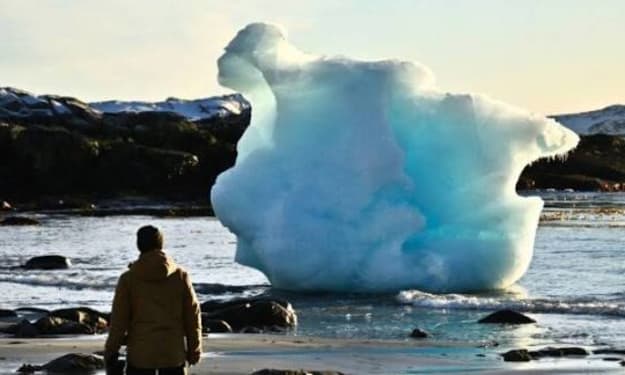
Sea Levels Are Rising Globally. Around Greenland, They’re Projected to Fall. AI-Generated.
As climate change accelerates, one of its clearest signals is rising sea levels around much of the world. This increase threatens coastal cities, low‑lying islands, and millions of people with flooding, erosion, and salt‑water intrusion into freshwater systems. Yet an unexpected scientific finding has emerged: sea levels around the island of Greenland are projected to fall in coming decades, even as the global average rises. Global Sea Level Rise: A Broad Picture Across the planet, sea levels are increasing due to two well‑established effects of human‑driven climate change. First, as the ocean absorbs heat trapped by greenhouse gases, water expands in volume — an effect called thermal expansion. Second, ice sheets and glaciers on land, particularly in Greenland and Antarctica, are melting and adding freshwater to the ocean. Together, these processes have already caused global mean sea level to rise by roughly 8–9 inches (about 20–23 cm) since the late 19th century, with the rate of increase accelerating in recent decades. My NASA Data Rising sea levels are a major concern for coastal communities worldwide. Even modest increases amplify the reach of storm surges, worsen tidal flooding, and erode beaches and infrastructure. Projections suggest rising sea levels will continue through the 21st century under all but the most aggressive emissions reductions. My NASA Data The Greenland Exception Despite this overall trend, new research published in Nature Communications reveals a striking local deviation around Greenland: relative sea levels there are expected to drop rather than rise by 2100. State of the Planet The key to this counter‑intuitive projection lies in how both the land and the surrounding water respond to the rapid loss of ice mass on Greenland’s enormous ice sheet. Gravitational Effects The Greenland Ice Sheet is immense — in some places more than a mile thick — and its sheer mass has a measurable gravitational pull on surrounding ocean water. The weight of this ice also depresses the Earth’s crust beneath it. Harvard Magazine As the climate warms and the ice sheet shrinks, two important things happen: Gravitational pull weakens — With less ice mass, the local gravitational attraction on nearby water lessens, so water that was “pulled” toward Greenland redistributes away from the region. Land rebound occurs — Known as glacial isostatic adjustment (GIA), the Earth’s crust gradually uplifts as the weight of ice lessens. This vertical land motion can raise the land itself relative to the ocean surface. State of the Planet These combined effects mean that even though melting ice contributes to higher seas globally, the relative height of the sea around Greenland can fall because both gravitational and crustal changes overpower the local impact of added meltwater. How Much and What It Means According to the latest models, relative sea levels around Greenland could fall by about 0.9 meters (nearly 3 feet) under a low‑emissions scenario by the end of this century, and by as much as 2.5 meters (8.2 feet) under a high‑emissions pathway. State of the Planet This projected drop is not uniform; it varies by coastal area and model assumptions, but the trend is robust across scenarios. This doesn’t mean the water disappears — globally, oceans still gain volume — but locally, the sea surface near Greenland lowers relative to the land. State of the Planet Local Impacts and Challenges A falling sea level in Greenland has unique implications: Infrastructure and access: Harbors and fishing ports built for current water levels could become too shallow, complicating boat access and maritime activity. Coastal communities: Towns that depend on present sea levels for transportation, subsistence fishing, and supply routes may need to adapt to changing conditions. euronews Glacier behavior: Lower relative sea levels may affect how certain glaciers meet the ocean, potentially stabilizing some glacier fronts, though scientists are cautious about this outcome due to many uncertainties in glacier dynamics. State of the Planet Why This Matters This phenomenon highlights a critical point: sea level change is not uniform worldwide. While global averages are important for understanding broad climate patterns, specific regions can experience very different local outcomes due to complex interactions between ice sheets, land motion, and gravity. Belfer Center The Greenland case also underscores how melting ice interacts with Earth’s physical systems in ways that aren’t immediately intuitive. As scientists refine their models with decades of observational data, regional projections become more precise — but they also reveal how intricate and interconnected the climate system truly is. State of the Planet Looking Ahead For most of the world, the challenge remains rising seas and the need to protect vulnerable coasts. But Greenland’s example serves as a potent reminder that climate change’s effects are uneven and must be understood at both global and local scales. Continued research and monitoring will be essential as communities plan for a future shaped by changing oceans.
By Fiaz Ahmed 14 days ago in Longevity