aging
Aging with grace and beauty. Embrace age with aging advice, tips, and tricks.
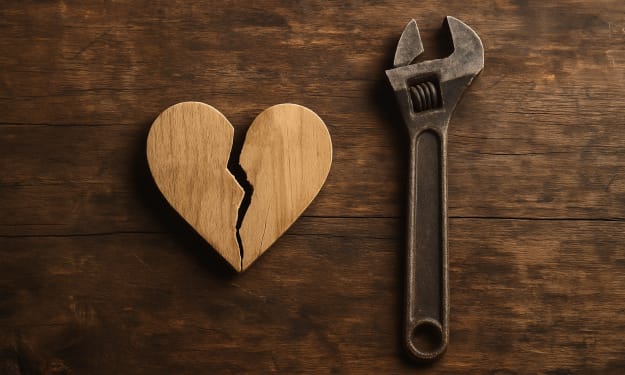
The Era of Repair:
This question is often asked of older couples: how did you manage to stay together so long? The answers tend to sound deceptively simple, but they reflect a set of values that no longer dominate cultural norms. The truth is that long-term relationships were rarely sustained because everything was easy or people were perfectly compatible. They endured because repair was valued over replacement. In past generations, when something was broken, people fixed it. They did not discard it at the first sign of wear.
By Dr. Mozelle Martin5 months ago in Longevity
That Nagging Knee Pain Might Be Starting in Your Feet. AI-Generated.
You’ve tried stretching your hamstrings, icing your knee, and strengthening your glutes, but that nagging pain in your knee or lower back just won’t quit. It’s a frustrating cycle for millions of people who treat the site of their pain without ever considering its true origin. The culprit is often hiding in plain sight, at the very foundation of your body: your feet.
By Fits Perfect: Custom Orthotics5 months ago in Longevity
The Echo of Now: Tracing Awareness Through Shifting Moments
In our fast-paced lives, we often experience time as a blur. Tasks, notifications, and obligations sweep past in a continuous current, leaving little room for awareness. Yet, embedded within every fleeting instant is a doorway to presence—a chance to trace consciousness as it moves through the body, mind, and surroundings. Mindfulness practice invites us to follow these subtle shifts, noticing the echo of each moment before it dissolves into the next.
By Victoria Marse5 months ago in Longevity
Mapping Emotion: Where Feelings Live in the Body
Emotions are not abstract phenomena floating somewhere in the mind—they are deeply embodied experiences. Anxiety tightens the chest, sadness weighs on the shoulders, anger churns in the stomach. Yet many of us go through life disconnected from these bodily signals, labeling emotions mentally while missing the subtle ways they are stored and expressed in the body. Learning to map emotion in the body is a foundational skill in mindfulness and somatic practices, opening the door to self-awareness, regulation, and emotional resilience.
By Black Mark5 months ago in Longevity
Somatic Rituals: Everyday Acts as Portals to Mindfulness
In a world that prizes speed, productivity, and multitasking, it’s easy to overlook the subtle rhythms of the body. Yet the body is always speaking—through tension, ease, gestures, posture, and breath. Somatic awareness, the practice of tuning into these bodily signals, can transform ordinary actions into portals to mindfulness. By engaging fully with simple rituals, we shift from autopilot to presence, discovering that life unfolds more richly when experienced through the body.
By Marina Gomez5 months ago in Longevity
How to Be a Calm in the Storm: Recognising a Panic Attack in Public and Offering Help
You’re in a queue at the supermarket, waiting for a train, or simply walking through a park. Suddenly, the person next to you seems to be in profound distress. They might be clutching their chest, breathing rapidly, or looking around with sheer terror in their eyes. Your first instinct might be concern, but it’s often followed by uncertainty. What’s happening? Is it a medical emergency? What should I do?
By Epic Vibes5 months ago in Longevity
Understanding the Posterior Annular Tear: Your Path to Pain Relief and Healing
If you’ve ever felt a sharp, persistent pain in your lower back, perhaps shooting down your leg, you know how debilitating it can be. It can turn simple tasks like tying your shoes or getting out of a car into monumental challenges. Often, this kind of pain is brushed off as a simple "bad back," but sometimes, the culprit is something more specific: a posterior annular tear.
By Epic Vibes5 months ago in Longevity
The Origin of the 10,000 Steps Per Day Idea
By: Paul Claybrook, MS, MBA In modern health culture, one of the most common pieces of advice people hear is to aim for 10,000 steps a day. Fitness trackers, apps, and wellness programs all use this benchmark as a daily goal, often presenting it as the gold standard for health. For many, the number has become synonymous with being “active” and “healthy.” But where exactly did this recommendation come from, and does it have any scientific foundation? Surprisingly, the 10,000-step guideline is not grounded in rigorous scientific evidence. Rather, it emerged from marketing, convenience, and the appeal of a nice, round number.
By Paul Claybrook MS MBA5 months ago in Longevity