
Sleep Better, Live Healthier: The Science Behind Rest and Lifespan
Discover how quality sleep affects your body, brain, and long-term

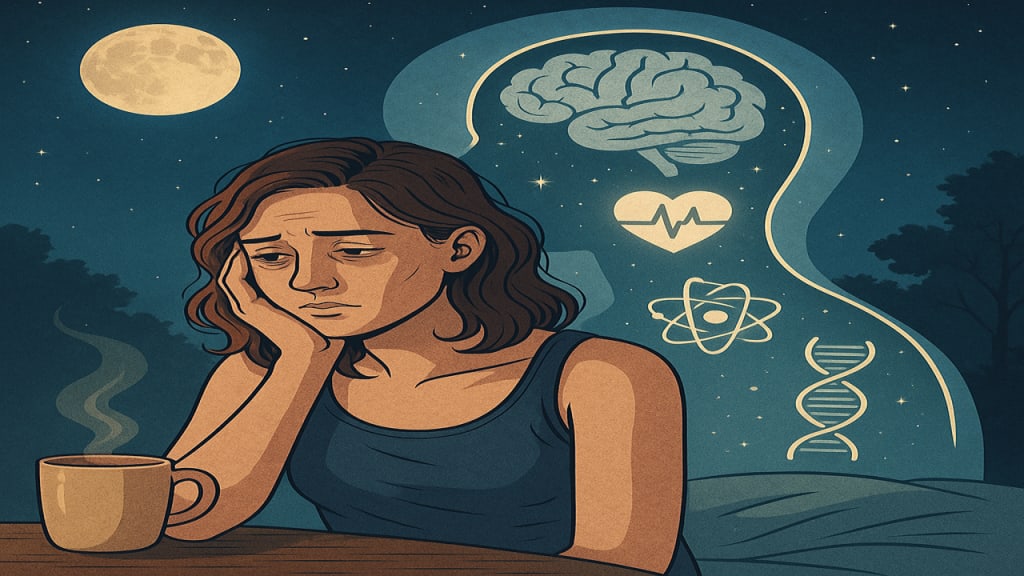
It wasn’t until I burned out at 32 that I realized how little I understood sleep—not just as a daily necessity, but as a foundation for health. Like most people chasing productivity, I wore my sleepless nights like a badge of honor. Caffeine in the morning, screens until midnight, and five hours of rest in between—it felt normal. But normal wasn’t working.
I wasn’t just tired. I was foggy, short-tempered, prone to illness, and stuck in a mental haze. What I didn't know was that I was slowly compromising my future—cell by cell.
So I started digging. And what I found changed everything.
Sleep Isn't Just Rest — It's Regeneration
Sleep is not a passive state. It's a biological process that clears toxins from the brain, repairs cells, balances hormones, and solidifies memory. During deep sleep, your body produces human growth hormone (HGH), which helps rebuild tissue and muscle. This process becomes increasingly critical as we age.
In a groundbreaking study from the University of California, Berkeley, researchers found that a lack of deep sleep is linked to early aging of the brain and increased risk of Alzheimer’s disease. Another study published in Sleep journal showed that consistently sleeping fewer than six hours a night is associated with a higher risk of heart disease, diabetes, and even cancer.
Your body needs sleep the same way it needs food and water—but we don’t treat it that way.
The Lifespan Connection
Here's where it gets really interesting: Researchers studying “Blue Zones” (regions of the world where people regularly live past 90 and 100) found that people in these communities prioritize rest. It's not just about how long they sleep, but how well. They follow natural light cycles, nap without guilt, and avoid late-night stimulation.
In Okinawa, Japan—home to some of the world’s oldest people—residents follow a cultural rhythm that balances movement, social connection, and plenty of rest. Science now confirms what their traditions always knew: good sleep adds years to your life and life to your years.
My Turning Point
My personal shift began with a challenge: no screens after 9 PM for 30 days.
The first week was brutal. I’d stare at the ceiling, itching to scroll. But by the second week, my body adjusted. I started waking up without an alarm. My skin cleared. My mood improved. By the end of the month, I wasn’t just less tired—I felt alive in a way I hadn’t in years.
- I began stacking sleep-supporting habits:
- I kept my room cool and dark.
- I stopped drinking caffeine after 2 PM.
- I made a wind-down routine—reading, stretching, and herbal tea.
- I tracked my sleep with a wearable, not obsessively, but to build awareness.
The changes were subtle but powerful. I wasn't chasing sleep anymore. I was working with it.
Why It Matters Now More Than Ever
We live in a culture that celebrates hustle and overwork. But the science is clear: chronic sleep deprivation shaves years off your life and dulls the quality of the ones you have left.
Even losing just one hour of sleep per night over time can increase inflammation, lower immune function, and impair decision-making. The World Health Organization now classifies night shift work as a probable carcinogen due to its disruption of the body’s circadian rhythm.
But there’s hope in that truth—because it means that one of the most powerful tools for health is completely within your control.
Sleep: Your Lifespan’s Secret Weapon
We chase supplements, diets, workout routines—all valid. But often, the real fix is behind closed eyes.
You don’t need to be perfect. Start with small changes:
- Go to bed 30 minutes earlier.
- Turn off your phone an hour before sleep.
- Get morning sunlight to regulate your body clock.
I used to think sleep was something I had to fit into my schedule. Now, it's something I protect. Because better sleep doesn’t just make for better mornings—it builds a stronger future.
Sleep isn’t a luxury. It’s your body’s oldest, wisest doctor—always ready, always free, and always working in your favor. All you have to do is listen.
About the Creator
majid ali
I am very hard working give me support
The Invisible Full-Time Job: Living With Chronic Pain While Trying to Keep Life Together
Most people think of a job as something you clock in and out of. A defined place where effort produces results. But when you live with chronic pain, you are working a second job every day—one that no one can see.
By Navigating the World2 days ago in Longevity
Becca
"Everything is so... flat." Denille said stupidly as she looked around her new neighborhood. She looked around at the muted desert where even the smallest sign of life seemed to have given up. The plant life was shrubs that were half cooked by the heat and where there should have been a lawn, a mess of white rocks laid glistening in the sun. Even the sky looked stretched thin, like the sun had ironed it smooth. She’d moved from Riverside, where at least there were hills, but here in Barstow, everything felt baked and brittle.
By Sara Wilson8 days ago in Fiction


Comments
There are no comments for this story
Be the first to respond and start the conversation.