

Imagine waking up one day to find that your hand won't stop trembling, or that your feet don’t move as quickly as your mind. Sounds like something out of a science fiction movie, right? But for millions of people around the world, this is everyday life with Parkinson’s disease.
And this isn’t a rare or distant problem. Famous figures like Michael J. Fox, Muhammad Ali, Pope John Paul II, and recently, Ozzy Osbourne (Heavy Metal Star from the Black Sabbath) have all bravely faced Parkinson’s.
Let’s dive in and unravel the mystery behind this disease that’s as puzzling as a Rubik’s cube — but sadly, less fun.
What is Parkinson’s Disease?
Parkinson’s disease (PD) is a chronic and progressive neurological disorder that primarily affects movement. It happens when brain cells responsible for producing dopamine, a chemical messenger involved in coordinating movement, begin to die off. Less dopamine means more movement problems.
To put it simply: your brain’s motor system starts to misfire, making tasks like walking, writing, or even smiling a bit more complicated. It’s like trying to dance when the music keeps skipping.
How Common is It?
Parkinson’s is the second most common neurodegenerative disorder, right after Alzheimer’s. It affects about 10 million people worldwide, and roughly 1 in 100 people over the age of 60.
While it’s more common in older adults, about 5–10% of cases appear before the age of 50 — a condition known as young-onset Parkinson’s (cue Michael J. Fox again, who was diagnosed at 29).
What Causes Parkinson’s?
The exact cause? Still a bit of a mystery — like why socks disappear in the laundry. But researchers believe it’s a mix of:
- Genetic factors – Certain gene mutations (like LRRK2 or PARK7) increase risk.
- Environmental triggers – Exposure to toxins like pesticides, herbicides, or heavy metals might contribute.
- Age – The biggest risk factor. As we age, our dopamine-producing neurons naturally decline.
- Head Trauma -- Twin studies showed those with a history of mild-to-moderate TBI (especially with loss of consciousness) had 3× the risk of developing PD than their non-injured twin, and recurrent injuries increased risk further
- Other theories – Oxidative stress, mitochondrial dysfunction, and even gut-brain connections are being explored.
What Happens in the Brain?
To understand Parkinson’s disease, we first need to take a quick tour of the brain — specifically, a region called the substantia nigra (Latin for “black substance”).
How It Normally Works:
The substantia nigra pars compacta is part of a larger movement-control system called the basal ganglia. It produces a chemical messenger called dopamine, which plays a key role in:
- Starting and coordinating movements
- Controlling muscle tone
- Allowing smooth, purposeful actions (like walking or writing)
Think of dopamine as the “lubricant” for your brain’s motor system — without it, everything starts to feel stiff, slow, and shaky.
In a healthy brain:
- The substantia nigra sends dopamine to another part of the brain called the striatum.
- This dopamine helps regulate a balance between two circuits: which facilitates movement and inhibits unnecessary movement.
- The result? Smooth, controlled, voluntary motion.
What Goes Wrong in Parkinson’s:
- The dopamine-producing neurons in the substantia nigra die off — often by the time symptoms appear, over 50-60% are already gone.
- As dopamine levels drop, communication between the substantia nigra and the striatum becomes impaired.
- The motor circuit becomes unbalanced, making it harder to start, control, and coordinate movement.
Signs and Symptoms: More Than Just Tremors
When people think of Parkinson’s, they usually picture shaking hands. But that’s just the tip of the iceberg.
Motor symptoms:
- Tremors (especially at rest)
- Bradykinesia (slowness of movement)
- Muscle rigidity
- Postural instability (balance problems)
Non-motor symptoms:
- Depression and anxiety
- Sleep disturbances
- Constipation
- Loss of smell
- Cognitive decline (in later stages)
So yes, Parkinson’s affects the whole person, not just their movements.
Impact on Quality of Life
Parkinson’s disease—though not directly fatal—substantially reduces quality of life, affecting both physical abilities and emotional well-being:
- Motor symptoms such as tremor, rigidity, slowness, and postural instability impair daily functioning: walking, dressing, using utensils, and speaking become more difficult.
- Non‑motor symptoms like depression, anxiety, apathy (affecting ~40% of patients) and sleep disturbances add emotional burden and isolation.
- Disease progression often leads to complications: falls, aspiration pneumonia (from swallowing difficulty), malnutrition, pressure ulcers, and blood clots, which can be life-threatening even if the disease itself is not directly lethal.
Can It Be Treated?
There’s no cure yet, but there are treatments that help manage symptoms and improve quality of life.
Medications
- The gold standard is Levodopa, which helps replenish dopamine.
- Other drugs like dopamine agonists or MAO-B inhibitors can also help.
Surgical options
- Deep Brain Stimulation (DBS) involves implanting electrodes in the brain to regulate abnormal signals.
Supportive therapies
- Physical therapy, occupational therapy, and speech therapy are essential.
- Mental health support and support groups can also make a big difference.
Can Parkinson’s Be Prevented?
There’s no guaranteed way to prevent Parkinson’s, but some lifestyle habits may help lower the risk:
- Regular exercise – Think brisk walking, swimming, or yoga.
- Healthy diet – Mediterranean or plant-based diets may be protective.
- Avoiding toxins – Reduce exposure to pesticides and heavy metals.
- Stay mentally and socially active – Brain games and friendships may help keep your neurons in shape.
About the Creator
Day 4 of Quitting
If this is how sobriety feels, maybe it’s better to go through life a little buzzed… this, along with other hits like, I want to kill myself, I wish I was dead, and I’m going to throw myself off a bridge have been the only thoughts on rotation these past few days. I promise myself that if, in a month, I still feel like this (‘this’ meaning despondent, full of rage, and simultaneously numb) I can go back to smoking. Until mid-February though? Nicotine is off the table.
By sleepy drafts11 days ago in Longevity
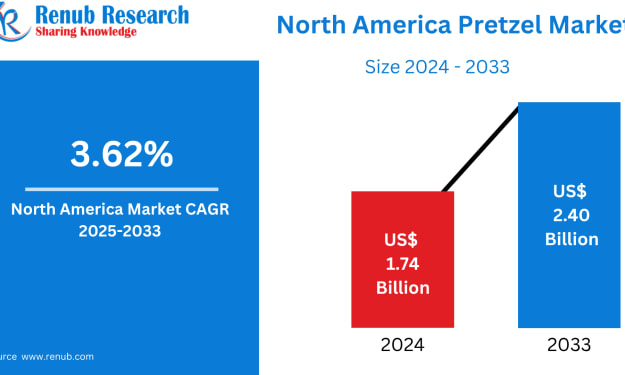
North America Pretzel Market Size and Forecast 2025–2033
The North America Pretzel Market is expected to reach US$ 2.40 billion by 2033, up from US$ 1.74 billion in 2024, expanding at a CAGR of 3.62% from 2025 to 2033, according to Renub Research. This steady growth reflects the enduring appeal of pretzels as a convenient snack, combined with evolving consumer preferences for healthier, premium, and flavor-forward food products.
By Marthan Sir5 days ago in Longevity



Comments
There are no comments for this story
Be the first to respond and start the conversation.