
Sex Reassignment Surgery Market Size & Forecast 2025–2033
A Global Shift Toward Gender-Affirming Healthcare


The Worldwide Sex Reassignment Surgery (SRS) Market is entering a transformative era—one shaped by growing social acceptance, rapid medical innovation, proactive government policy, and expanding accessibility. According to Renub Research, the global SRS market is expected to rise from US$ 2.93 Billion in 2024 to US$ 7.51 Billion by 2033, advancing at a striking CAGR of 11.02% from 2025 to 2033. This trajectory underscores not only the rising need for gender-affirming procedures but also the global shift toward inclusive, patient-centered healthcare.
As transgender health gains visibility and recognition, the demand for safe, effective, and accessible surgical options continues to accelerate. This article explores the key trends, growth drivers, challenges, regional performance, and major players shaping the future of the Sex Reassignment Surgery market.
Understanding the Sex Reassignment Surgery Market
Sex Reassignment Surgery—also known as Gender Confirmation Surgery or Gender-Affirming Surgery—refers to a set of procedures that help individuals transition from their assigned sex at birth to their self-identified gender. These surgeries may include:
Male-to-Female (MTF) procedures such as breast augmentation, vaginoplasty, and facial feminization
Female-to-Male (FTM) procedures like chest masculinization, phalloplasty, and metoidioplasty
Voice and airway surgeries
Body contouring
Comprehensive facial reconstruction
For many individuals, SRS is a critical step in alleviating gender dysphoria—a psychological discomfort caused by the mismatch between one’s gender identity and physical characteristics. Numerous clinical studies show that gender-affirming surgeries are associated with:
Better mental health outcomes
Increased self-confidence
Higher quality of life
Improved social and professional integration
As awareness, technology, and insurance coverage improve, the global SRS market is transitioning from a niche healthcare segment to a sophisticated, high-growth medical industry.
Market Outlook: A Decade of Strong Growth Ahead
The projected rise from US$ 2.93 Billion in 2024 to US$ 7.51 Billion by 2033 reflects several structural trends:
Greater social acceptance of transgender identity
Expansion of public and private health insurance
Improved safety and outcomes of surgical techniques
Growth of specialty clinics and advanced hospital units
Medical tourism, especially in Asia and Latin America
The combination of these elements positions the market for one of the most dynamic growth cycles in the global healthcare landscape.
Key Growth Drivers in the Sex Reassignment Surgery Market
1. Rising Global Acceptance and Awareness
Social attitudes toward gender diversity are evolving quickly. Governments, media platforms, and advocacy organizations are driving conversations that destigmatize transgender identities. As people understand gender dysphoria better, demand for gender-affirming care—including SRS—increases.
Policy breakthroughs are accelerating growth.
In May 2024, the U.S. Department of Health & Human Services finalized rules under Section 1557, prohibiting exclusions for gender-transition surgeries—a monumental step for accessibility.
With more countries recognizing transgender rights and protections, patients feel empowered to seek procedures aligned with their gender identity.
2. Advances in Surgical Technology and Techniques
Sex reassignment surgeries have witnessed steep improvements in both technique and technology:
Microsurgical innovations enhance precision and safety
Robotic-assisted systems help surgeons achieve better aesthetic and functional outcomes
Telemedicine improves pre- and post-op care
AI-driven surgical planning enhances efficiency and reduces complications
These advancements significantly reduce recovery time, minimize risk, and enhance results—driving higher patient satisfaction.
A notable development came in January 2024, when Medtronic plc acquired Ethicon’s surgical sutures and wound closure division (Johnson & Johnson). This acquisition strengthens Medtronic’s gender-reassignment surgery portfolio—a sign of major medtech firms entering the gender-affirming healthcare space.
3. Expanding Insurance Coverage and Financial Support
For years, the high cost of SRS prevented thousands of individuals from accessing essential care. That is rapidly changing.
Public healthcare systems in Europe
U.S. private insurers
Nonprofit funding organizations
State-led initiatives
…are profoundly improving affordability.
In January 2025, Fagron’s acquisition of CareFirst Specialty Pharmacy strengthened its hormone-therapy compounding capabilities—an essential part of transgender healthcare ecosystems.
As coverage increases worldwide, more candidates can access a full spectrum of gender-affirming treatments, boosting long-term market growth.
Challenges Slowing Market Expansion
Despite rapid growth, key barriers continue to limit global adoption.
1. High Cost of Procedures
Depending on the surgery type, costs range from US$ 10,000 to over US$ 100,000. Genital surgeries are the most expensive, often requiring multiple stages. Without extensive insurance coverage, many individuals:
Delay surgery
Seek cheaper overseas alternatives
Or forego surgical transition altogether
This creates a significant disparity in access across regions.
2. Shortage of Skilled Surgeons
Performing SRS requires expertise in:
Reconstructive microsurgery
Gynecology
Urology
Plastic surgery
Few surgeons possess this multidisciplinary skill set, resulting in:
Long waitlists (sometimes years long)
Unequal regional availability
Increased medical tourism
This shortage also leaves room for unregulated clinics, especially in developing countries—raising potential health risks.
Market Breakdown by Segment
Male-to-Female (MTF) Surgery: The Largest Segment
MTF procedures dominate global market share due to high demand for:
Facial feminization surgery
Breast augmentation
Vaginoplasty
Improved reconstructive techniques, hormone therapies, and increasing insurance coverage make MTF surgeries more accessible and effective. North America and Europe remain major hubs for these procedures.
Genital Sex Reassignment Surgery: High Growth but High Cost
Genital surgeries—vaginoplasty, phalloplasty, metoidioplasty—are the most comprehensive and transformative procedures in gender-affirming care. Demand is rising steadily as:
More patients seek full transition
Surgical methods improve
Specialized centers emerge in regions like Thailand, the U.S., and Europe
However, procedural complexity, cost, and long recovery times continue to restrict adoption.
Voice & Airway Surgery: A Rapidly Expanding Sub-market
Voice plays a fundamental role in gender expression. Surgeries such as:
Cricothyroid approximation
Feminization laryngoplasty
Airway modification surgeries
…are gaining popularity. Minimally invasive innovations are attracting more patients seeking permanent solutions compared to voice therapy alone.
End-User Analysis
Hospitals: The Dominant Treatment Providers
Hospitals lead the market thanks to:
Multidisciplinary teams
Extensive infrastructure
Access to emergency care
Broader insurance partnerships
Major hospital networks offer comprehensive programs including psychological assessment, hormone therapy, surgery, and post-op care.
In March 2024, Brigham and Women’s Hospital and Massachusetts General Hospital merged clinical departments—creating a powerhouse in gender-affirming surgical expertise and boosting their national draw for SRS patients.
Specialty Clinics: Fast-Growing with Patient-Centric Focus
Specialty gender clinics offer:
Personalized care
Shorter waiting times
High levels of privacy
Exclusive focus on gender-affirming services
Boutique-style facilities in North America, Europe, and Southeast Asia are reshaping the patient experience.
Country-Level Insights
United States
The U.S. is one of the largest SRS markets due to:
High social awareness
Insurance expansion
Advanced surgical expertise
Strong medical tourism inflow
However, policy differences across states create uneven access.
Germany
Germany stands out for:
Universal insurance coverage
Highly experienced surgeons
Strong legal protection for transgender individuals
Berlin and Munich are leading hubs for both domestic and international patients.
India
India’s market is growing rapidly, supported by:
Rising awareness
Cost-effective surgeries
Expanding medical tourism
Top cities like Mumbai, Delhi, and Chennai house skilled surgeons. However, societal stigma and insurance gaps remain obstacles.
Brazil
As one of the few countries where SRS is covered under public healthcare (SUS), Brazil is a major Latin American leader. Strong plastic surgery expertise and increasing private-sector clinics support market expansion.
Saudi Arabia
While gender-affirming surgeries remain restricted, growing awareness and outbound medical tourism are shaping a small but expanding market. Future opportunities may emerge under broader healthcare modernization efforts aligned with Vision 2030.
Market Segmentation Overview
By Surgery Type
Male-to-Female
Female-to-Male
By Surgical Procedure
Augmentation Mammoplasty
Genital Surgery
Facial Feminisation Surgery
Facial Masculinisation Surgery
Voice & Airway Surgery
Body Contouring & Adjunct Procedures
Others
By End User
Hospitals
Specialty Clinics
Ambulatory Surgery Centres
Others
By Country
Covers North America, Europe, Asia Pacific, Latin America, and Middle East & Africa, including the U.S., Germany, India, Brazil, Saudi Arabia, China, Japan, and more.
Leading Companies Covered
Mount Sinai Health System
Boston Medical Center
Rumer Cosmetic Surgery
The London Transgender Clinic
Phuket Plastic Surgery Institute
Gender Surgery Amsterdam
UCSF Transgender Care
Transgender Surgery Institute of America
Center for Gender Confirmation Serbia
Papillon Gender Clinic (UK)
Final Thoughts
The Global Sex Reassignment Surgery Market is poised for sustained expansion through 2033—propelled by progressive policy, high patient demand, and groundbreaking medical innovation. As societies grow more inclusive and healthcare systems more responsive, gender-affirming care is shifting from a marginalized specialty to a mainstream medical necessity.
While barriers such as cost, surgeon shortages, and cultural resistance remain, the trajectory is undeniably upward. The next decade will be defined by improved accessibility, faster care pathways, and a more interconnected global network of specialized providers.
Most importantly, the evolution of the SRS market represents more than medical progress—it reflects a global commitment to dignity, identity, and human rights.
About the Creator
Renub Research
Renub Research is a Market Research and Consulting Company. We have more than 15 years of experience especially in international Business-to-Business Researches, Surveys and Consulting. Call Us : +1-478-202-3244
Keep reading
More stories from Renub Research and writers in Longevity and other communities.
Global Defibrillator Market Companies Analysis
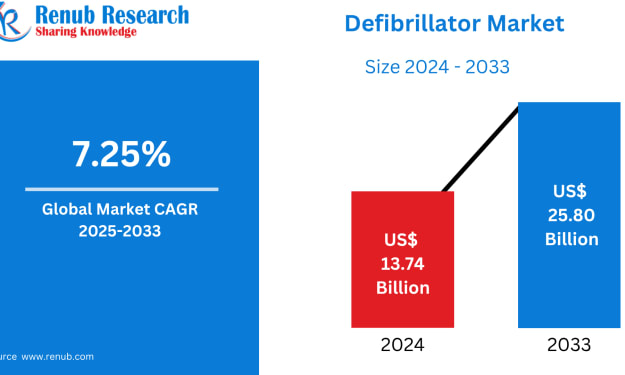
The global defibrillator market is entering one of its most transformative decades. According to Renub Research, the industry is projected to rise from US$ 13.74 billion in 2024 to US$ 25.80 billion by 2033, growing at a steady CAGR of 7.25%. This expansion is powered by surging cardiac ailments, wider deployment of public-access defibrillators, and the rapid modernization of emergency response systems worldwide.
By Renub Research2 months ago in Longevity
Day 4 of Quitting
If this is how sobriety feels, maybe it’s better to go through life a little buzzed… this, along with other hits like, I want to kill myself, I wish I was dead, and I’m going to throw myself off a bridge have been the only thoughts on rotation these past few days. I promise myself that if, in a month, I still feel like this (‘this’ meaning despondent, full of rage, and simultaneously numb) I can go back to smoking. Until mid-February though? Nicotine is off the table.
By sleepy drafts6 days ago in Longevity
Mapped: Global Inflation by Country in 2025
As the world enters 2025, inflation remains a pressing concern, reshaping economies, influencing policymaking, and affecting the daily lives of millions. From soaring grocery bills to rising energy costs, global inflation continues to be a topic of intense scrutiny. Mapping inflation by country provides a revealing snapshot of the economic health of nations and highlights the uneven impact of monetary and fiscal policies worldwide. A Patchwork of Inflation Rates Inflation is far from uniform. While some countries are experiencing moderate price increases, others face alarming surges that threaten economic stability. According to recent global data, the highest inflation rates in 2025 are concentrated in countries grappling with political instability, currency devaluation, or supply chain disruptions. For instance, several emerging markets in Africa and South America report inflation exceeding 50%, reflecting deep structural challenges. Conversely, advanced economies like the United States, the Eurozone, and Japan have managed to keep inflation relatively contained, typically within the 2–4% range. Central banks in these regions continue to employ monetary tools, such as interest rate adjustments and quantitative easing measures, to balance growth with price stability. Yet even here, consumers notice subtle shifts in daily costs—from housing to transport—demonstrating that even moderate inflation has tangible effects. Drivers of Global Inflation in 2025 Several key factors have driven inflation patterns this year. One major contributor is energy prices. The global energy market has been volatile, with oil, gas, and renewable energy infrastructure costs impacting both production and household expenses. Countries heavily reliant on energy imports, particularly in Asia and Europe, have felt these effects acutely. Supply chain disruptions also play a role. While pandemic-related bottlenecks have eased compared to recent years, geopolitical tensions—such as conflicts in Eastern Europe and trade disputes in Asia—continue to create uncertainty. Industries from electronics to food production face challenges in sourcing materials, which in turn drives up prices for consumers. Currency fluctuations are another significant factor. Countries experiencing rapid depreciation of their national currencies see imported goods become more expensive, fueling domestic inflation. Venezuela and Zimbabwe remain extreme examples, where currency crises exacerbate the cost-of-living crisis. Regional Patterns and Surprises Mapping global inflation reveals intriguing regional trends. Latin America continues to experience high inflation, with countries like Argentina and Brazil witnessing double-digit increases due to fiscal deficits and volatile currencies. In contrast, neighboring Chile and Peru maintain relatively stable prices, reflecting stronger monetary frameworks and proactive policy responses. In Africa, inflation hotspots such as Nigeria and Sudan reflect both political instability and rising food costs, while South Africa and Kenya maintain moderate inflation thanks to more effective economic management. Asia presents a mixed picture: India and China have seen manageable inflation, while Pakistan and Sri Lanka confront higher rates due to energy and currency pressures. Europe largely benefits from coordinated policy responses through the European Central Bank and other regional mechanisms, though Eastern European nations face elevated costs due to energy dependence and geopolitical risks. North America remains relatively stable, but the U.S. Federal Reserve continues to weigh inflation control against potential economic slowdown. Implications for Policy and Consumers Global inflation data has profound implications for policymakers. Central banks must balance the need to curb inflation without triggering a recession, often requiring a careful mix of interest rate adjustments, monetary tightening, and stimulus measures. Fiscal policies, including taxation and government spending, also play a crucial role in influencing price levels. For consumers, inflation impacts purchasing power, savings, and lifestyle choices. High inflation erodes income, making essentials like food, housing, and healthcare less affordable. Countries with persistent inflation may also experience social unrest as citizens react to declining living standards. The Path Ahead The 2025 global inflation map underscores the importance of understanding both macroeconomic trends and local contexts. While advanced economies leverage sophisticated monetary tools, developing nations remain vulnerable to external shocks and internal inefficiencies. Economists argue that long-term solutions require structural reforms, improved governance, and diversified economies to withstand price pressures. As the year progresses, monitoring inflation by country provides valuable insight into global economic health. While challenges remain, data-driven strategies offer hope for stabilizing prices and ensuring that economies can grow without imposing unbearable burdens on citizens. In a world of interconnected markets, no nation is immune from the ripple effects of global inflation. By mapping these trends, policymakers, investors, and consumers gain a clearer understanding of where the risks lie—and how to respond to them effectively.
By Fiazahmedbrohi 5 days ago in Longevity


Comments
There are no comments for this story
Be the first to respond and start the conversation.