
Scientists Discover Lyme Disease’s Weak Spot – A Game-Changer for Treatment
New Research Uncovers a Breakthrough Approach

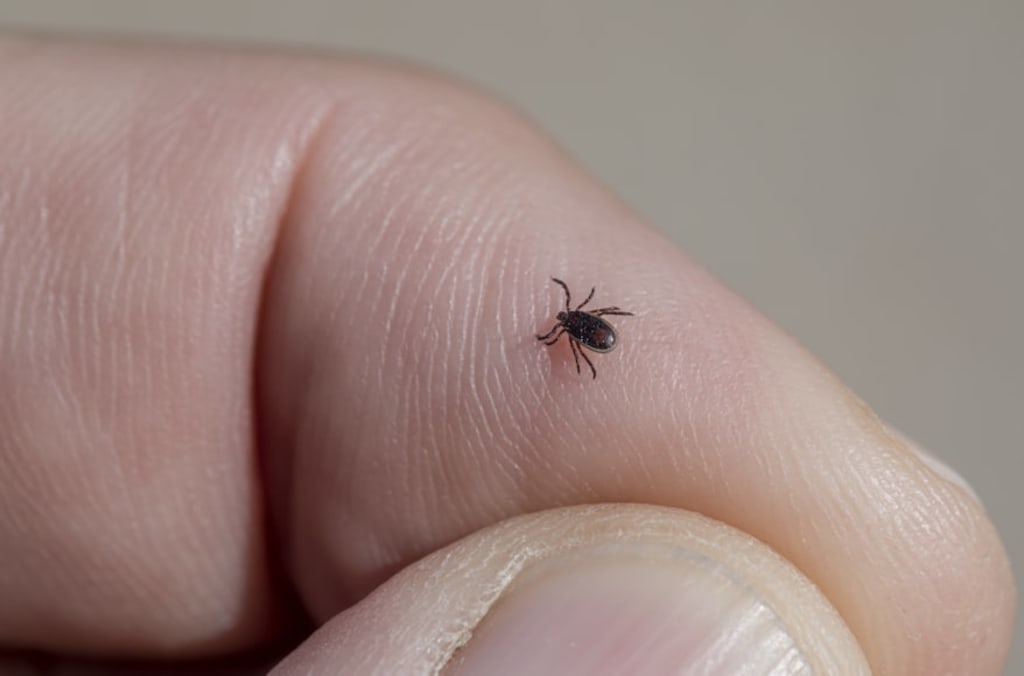
Lyme disease is the most common tick-borne illness in the United States and Europe. It is caused by the bacterium Borrelia burgdorferi, which has developed unique ways to survive inside the human body. Scientists have now discovered a critical weakness in this bacterium an enzyme called BbLDH that could lead to revolutionary new treatments.
This exciting discovery, published in the journal mBio, opens up the possibility of developing targeted drugs that stop Lyme disease without harming beneficial bacteria in the body.
What Makes Lyme Disease So Difficult to Treat?
Lyme disease spreads through tick bites, and its symptoms can range from mild to severe. If left untreated, it can cause joint pain, fatigue, heart problems, and even neurological issues.
One of the biggest challenges in treating Lyme disease is that Borrelia burgdorferi has unique metabolic pathways the chemical processes it uses to survive. Traditional antibiotics can help, but they are not always effective in completely eliminating the bacteria, leading to chronic Lyme disease symptoms in some patients.
This is why scientists have been searching for a specific weakness in the bacterium’s biology that can be targeted with precision medicine.
The Key Discovery: BbLDH Lyme Disease’s Achilles’ Heel
Researchers from Virginia Commonwealth University have identified an enzyme called BbLDH (lactate dehydrogenase) as a critical factor for Borrelia burgdorferi’s survival.
Unlike most organisms, Virginia Commonwealth University(Vitamin B1) for its metabolism. Instead, it depends entirely on BbLDH to convert pyruvate to lactate, a process that helps the bacteria maintain its energy balance (NADH/NAD+ levels).
This unique metabolic feature makes BbLDH an ideal target for new treatments blocking this enzyme could kill the bacteria without affecting other cells in the body.
How Scientists Plan to Exploit This Weakness
Using advanced research methods like X-ray crystallography, genetic analysis, and biochemical testing, scientists studied how BbLDH functions inside the bacteria.
Their experiments showed that:
- BbLDH is essential for Borrelia burgdorferi to grow and infect a host.
- Blocking BbLDH stops the bacteria from thriving in lab cultures and living organisms.
- Several promising LDH inhibitors (compounds that block the enzyme) have been discovered.
These inhibitors could serve as a foundation for new Lyme disease treatments that are more effective and targeted than current antibiotics.
What This Means for Lyme Disease Treatment
According to Dr. Chunhao (Chris) Li, the lead researcher, this discovery is a major breakthrough in the fight against Lyme disease. He explains that BbLDH has a unique structure, making it a perfect drug target for genus-specific inhibitors medications designed to stop only Lyme disease bacteria without harming other microbes.
This research could lead to:
- More effective treatments for Lyme disease.
- Fewer side effects compared to broad-spectrum antibiotics.
- Better prevention strategies for tick-borne illnesses.
- New insights into other tick-borne diseases that share similar metabolic features.
Why This Discovery Is So Important
The number of Lyme disease cases is rising every year, creating an urgent need for better treatments. Many patients experience long-term symptoms, even after taking antibiotics, leading to frustration and health complications.
By targeting BbLDH, researchers are paving the way for more precise and effective treatments that could eliminate the bacteria more efficiently, reducing the risk of chronic Lyme disease symptoms.
This breakthrough not only brings hope to Lyme disease patients but also opens doors for future research into tick-borne illnesses.
What’s Next?
Scientists are now focusing on testing these newly discovered inhibitors in clinical settings to develop safe and effective Lyme disease treatments.
If successful, these next-generation Lyme disease drugs could:
- Stop the bacteria in its tracks before it causes severe symptoms.
- Reduce the need for long-term antibiotic treatments.
- Help millions of people suffering from Lyme disease and other tick-borne infections.
The discovery of BbLDH as Lyme disease’s weak spot is a game-changer, bringing new hope for better treatments and a healthier future.
Stay tuned for more updates as researchers continue working towards a cure for Lyme disease!
About the Creator
Akrang Raja
Welcome! Explore health 🩺 & business finance 💼 articles. Expert advice, actionable insights. Simplify money management, boost productivity, achieve wellness. Trusted content for your goals. Follow for regular updates!
Keep reading
More stories from Akrang Raja and writers in Longevity and other communities.
Protein Powder for Men: How Much Should You Really Use?
As men age, maintaining muscle becomes a key health goal. Age-related muscle loss (called sarcopenia) can begin as early as your 30s, but the right nutrition can help slow or even reverse this process. Protein is essential here—it breaks down into amino acids that rebuild muscle. While protein powders offer a quick fix, how much should men depend on them? Let’s break it down.
By Akrang Raja 10 months ago in Longevity
Top tipple tricks
Been thinking a lot about drinking, lately. Not least because of a recent episode of over-indulgence and the inevitable after effects. Some readers may recall the earlier articles I wrote about beating the booze. Here I set out an experiment in techniques for cutting down on my alcohol intake. The experiment was successful, the techniques worked, and I have armed myself with an arsenal of weapons in the war against the demon drink. I have yet to fire the first round however. It's all a question of timing (perhaps procrastination).
By Raymond G. Taylor5 days ago in Psyche



Comments
There are no comments for this story
Be the first to respond and start the conversation.