
Saudi Arabia Osteoporosis Drugs Market Poised for Steady Growth Through 2033
Rising Aging Population, Biologics Adoption, and Vision 2030 Healthcare Reforms Reshape Bone Health Treatment Landscape


Saudi Arabia Osteoporosis Drugs Market Size and Forecast 2025–2033
The Saudi Arabia Osteoporosis Drugs Market is projected to grow from US$ 210.89 million in 2024 to US$ 308.84 million by 2033, registering a compound annual growth rate (CAGR) of 4.33% between 2025 and 2033. This steady expansion reflects the growing burden of osteoporosis, increased screening rates, rapid uptake of biologics, and government-led healthcare reforms under Vision 2030.
Osteoporosis has emerged as a major public health concern in Saudi Arabia, particularly among older adults and postmenopausal women, as lifestyle changes, vitamin D deficiency, and increasing life expectancy contribute to declining bone density across the population. While bisphosphonates continue to dominate the market by volume due to affordability, the biologics segment is expected to grow at the fastest rate, driven by superior efficacy and improved patient outcomes.
Saudi Arabia Osteoporosis Drugs Market Overview
Saudi Arabia’s osteoporosis drugs market is undergoing a structural transformation. The nation’s aging demographic profile, combined with rising awareness of bone health and improved access to diagnostic services, has significantly increased demand for effective osteoporosis therapies.
Healthcare reforms under Vision 2030 have prioritized preventive care, early diagnosis, and domestic pharmaceutical manufacturing. These policies are not only improving patient access but also strengthening the availability of both innovative biologics and cost-effective generics across public and private healthcare facilities.
Currently available treatments include bisphosphonates, calcitonin, parathyroid hormone analogs, selective estrogen receptor modulators (SERMs), RANK ligand inhibitors, and sclerostin inhibitors. While traditional oral therapies remain widely prescribed, injectable biologics are gaining strong momentum, particularly among patients at high risk of fractures.
Despite these advances, challenges remain. Underdiagnosis in rural areas, low treatment adherence, and limited nationwide screening programs continue to hinder optimal disease management. Addressing these gaps through digital health, integrated care models, and patient education will be critical to reducing the long-term economic and clinical burden of osteoporosis.
Key Drivers of Market Growth
1. Rapidly Growing Aging Population
Saudi Arabia’s population is aging at an unprecedented rate, directly fueling the demand for osteoporosis medications. Individuals aged 60 and above are more susceptible to bone density loss, fragility fractures, and mobility-related complications.
As healthcare access improves and life expectancy increases, a larger segment of the population is entering the age group most vulnerable to osteoporosis. This demographic shift is driving long-term demand for preventive therapies and chronic osteoporosis management drugs, making aging one of the most powerful growth drivers for the market.
2. Increased Screening and Early Diagnosis
The growing availability of dual-energy X-ray absorptiometry (DEXA) scanners and bone mineral density (BMD) testing has dramatically improved osteoporosis detection rates across Saudi Arabia. These diagnostic tools are now widely deployed in major hospitals, specialty clinics, and tertiary care centers.
Public health awareness campaigns have encouraged postmenopausal women and high-risk individuals to undergo early screening. Early diagnosis enables timely treatment initiation, significantly increasing the pool of patients eligible for pharmacological interventions and boosting overall drug demand.
3. Government-Led Healthcare Initiatives
Osteoporosis has been recognized as a priority under Saudi Arabia’s national healthcare strategy. Government programs now support:
Subsidized osteoporosis medications
Expanded reimbursement policies
Preventive screening initiatives
Public education campaigns
Vision 2030 has also accelerated investment in local pharmaceutical manufacturing and healthcare infrastructure, ensuring stable drug supply chains and encouraging innovation in osteoporosis treatment.
Challenges Facing the Saudi Arabia Osteoporosis Drugs Market
1. Low Treatment Adherence and Persistence
One of the most significant challenges is poor adherence to long-term treatment regimens. Many patients discontinue therapy due to side effects, lack of immediate symptom relief, or limited understanding of osteoporosis as a progressive condition.
Oral therapies requiring daily or weekly dosing are particularly affected by non-compliance. This reduces treatment effectiveness and increases the risk of fractures, hospitalizations, and long-term disability.
Improving patient outcomes will require better education, alternative dosing schedules, digital monitoring, and follow-up support to maintain long-term engagement.
2. Limited Access in Rural Areas
Although urban centers benefit from advanced diagnostics and specialist care, rural regions still face shortages of endocrinologists, DEXA scanners, and structured fracture liaison services (FLS). This uneven access results in delayed diagnosis and undertreatment outside major cities.
Expanding telemedicine, mobile diagnostics, and regional healthcare facilities will be critical to ensuring equitable osteoporosis care nationwide.
Regional Analysis of the Saudi Arabia Osteoporosis Drugs Market
Dhahran Osteoporosis Drugs Market
Dhahran benefits from a strong healthcare ecosystem, anchored by institutions such as Johns Hopkins Aramco Healthcare, which provides advanced diagnostics and endocrinology services. Vision 2030 healthcare expansion projects, including the Dhahran Al-Janoub Hospital, are improving access to osteoporosis screening and treatment.
Bisphosphonates remain the most commonly prescribed drugs, but biologics like denosumab are rapidly gaining adoption due to earlier diagnosis among insured populations. However, the region still lacks coordinated post-fracture care programs, presenting an opportunity for future improvement.
Riyadh Osteoporosis Drugs Market
As the capital city, Riyadh represents the largest regional market, supported by advanced hospitals, specialty clinics, and diagnostic centers. A high concentration of elderly residents and postmenopausal women has increased the incidence of osteoporosis.
Government reimbursement programs and awareness campaigns have improved access to both traditional and innovative treatments. While bisphosphonates dominate prescriptions, biologics such as romosozumab and denosumab are witnessing strong growth.
Challenges persist in suburban and underserved areas, where adherence and early diagnosis remain inconsistent. Expanded digital health tools could further enhance outcomes.
Jeddah Osteoporosis Drugs Market
Jeddah’s market is supported by prominent institutions such as King Fahd Hospital and the International Medical Center, offering comprehensive bone health services. The city serves both residents and medical expatriates, increasing demand for advanced therapies.
The availability of public-private healthcare partnerships has improved drug access, but long-term treatment persistence remains a challenge. Strengthening patient follow-up, fracture liaison services, and digital adherence programs could significantly improve outcomes in this region.
Market Segmentation Analysis
By Product Type
Bisphosphonates
Calcitonin
RANK Ligand Inhibitors
Parathyroid Hormone Therapy (PTH)
Selective Estrogen Receptor Modulators (SERMs)
Sclerostin Inhibitors
Others
Bisphosphonates continue to dominate due to affordability and widespread availability, while biologics and sclerostin inhibitors are the fastest-growing segments.
By Route of Administration
Oral
Injectable
Others
Injectable therapies are gaining traction due to improved compliance and reduced dosing frequency, particularly among elderly patients.
By States
Dhahran
Riyadh
Khobar
Jeddah
Dammam
Others
Urban centers account for the majority of revenue due to superior infrastructure and specialist access.
Competitive Landscape and Company Analysis
The Saudi Arabia osteoporosis drugs market is highly competitive, with global pharmaceutical leaders actively expanding their footprint. Companies focus on innovation, biologics development, partnerships, and localized supply chains.
Key Players Covered
Amgen Inc.
Eli Lilly and Company
F. Hoffmann-La Roche AG
GlaxoSmithKline Plc
Merck & Co. Inc.
Novartis AG
Pfizer Inc.
Teva Pharmaceutical Industries Ltd.
UCB S.A.
Each company has been analyzed based on:
Overview
Key decision-makers
Recent developments
SWOT analysis
Revenue performance
The increasing demand for biologics and long-acting injectable therapies is pushing companies to invest heavily in R&D, patient support programs, and strategic partnerships.
Future Outlook
The Saudi Arabia Osteoporosis Drugs Market is on a clear growth trajectory through 2033, supported by demographic trends, healthcare reforms, and rising awareness. While affordability keeps bisphosphonates dominant in volume, biologics will drive value growth, transforming the market landscape.
To fully realize this potential, Saudi Arabia must focus on:
Expanding nationwide screening programs
Improving treatment adherence
Enhancing rural healthcare access
Integrating digital health solutions
Strengthening fracture liaison services
As Vision 2030 continues to reshape healthcare delivery, osteoporosis management will shift from reactive treatment to proactive, long-term bone health preservation.
Final Thoughts
Osteoporosis is no longer a silent disease in Saudi Arabia. With stronger government commitment, improved diagnostics, and advanced drug therapies, the country is steadily building a more resilient bone health ecosystem. The coming decade will define how effectively Saudi Arabia balances affordability, innovation, and access — ensuring that millions can age with strength, mobility, and independence.
About the Creator
Renub Research
Renub Research is a Market Research and Consulting Company. We have more than 15 years of experience especially in international Business-to-Business Researches, Surveys and Consulting. Call Us : +1-478-202-3244
Keep reading
More stories from Renub Research and writers in Longevity and other communities.
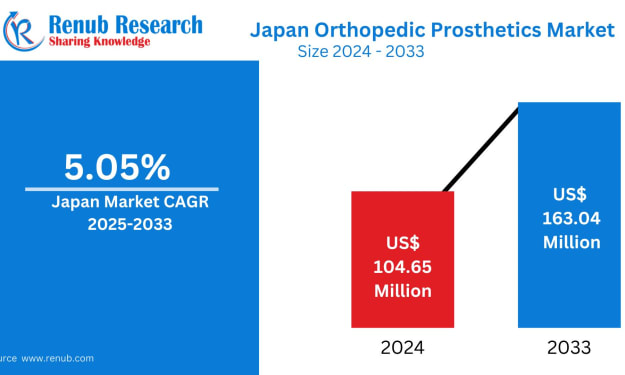
Japan Orthopedic Prosthetics Market Size and Forecast 2025–2033
Japan Orthopedic Prosthetics Market Overview Japan’s orthopedic prosthetics market is entering a new phase of steady and technology-driven expansion, shaped by demographic shifts, healthcare modernization, and rising awareness of mobility restoration solutions. According to Renub Research, the Japan Orthopedic Prosthetics Market is expected to reach US$ 163.04 million by 2033, up from US$ 104.65 million in 2024, growing at a CAGR of 5.05% from 2025 to 2033.
By Renub Researchabout 13 hours ago in Longevity
Day 4 of Quitting
If this is how sobriety feels, maybe it’s better to go through life a little buzzed… this, along with other hits like, I want to kill myself, I wish I was dead, and I’m going to throw myself off a bridge have been the only thoughts on rotation these past few days. I promise myself that if, in a month, I still feel like this (‘this’ meaning despondent, full of rage, and simultaneously numb) I can go back to smoking. Until mid-February though? Nicotine is off the table.
By sleepy drafts12 days ago in Longevity
So You Decided To Become a Nurse Practitioner:
So you decided to become an "Advanced Practice" nurse. Congratulations!... is what I would say if this was a good idea. Grad school? In this economy? What were you thinking? Likely it was something along the lines of either 1) “I've seen these other chucklefucks do it— Why can't I?” or even 2) “I've got a nice career, I should shake it up. I miss feeling like I have no clue what I'm doing.”
By Sandor Szabo3 days ago in Fiction


Comments
There are no comments for this story
Be the first to respond and start the conversation.