
Japan Orthopedic Prosthetics Market Size and Forecast 2025–2033
Aging Population, Advanced Technology, and Healthcare Innovation Drive Steady Market Expansion


Japan Orthopedic Prosthetics Market Overview
Japan’s orthopedic prosthetics market is entering a new phase of steady and technology-driven expansion, shaped by demographic shifts, healthcare modernization, and rising awareness of mobility restoration solutions. According to Renub Research, the Japan Orthopedic Prosthetics Market is expected to reach US$ 163.04 million by 2033, up from US$ 104.65 million in 2024, growing at a CAGR of 5.05% from 2025 to 2033.
This growth is being fueled primarily by Japan’s rapidly aging population, which has led to a significant rise in musculoskeletal disorders, limb amputations, and mobility impairments. As one of the world’s oldest societies, Japan faces a growing demand for advanced rehabilitation solutions that not only restore movement but also enhance quality of life and independence among elderly citizens.
At the same time, technological innovation is redefining orthopedic prosthetics in the country. The adoption of electric-powered, hybrid, and myoelectric prosthetics has accelerated, offering improved precision, comfort, and adaptability for patients. Japanese hospitals and rehabilitation centers are increasingly integrating robotics, sensor-based systems, and lightweight materials to deliver customized prosthetic solutions.
Government support for assistive technologies, combined with collaborations between domestic and international manufacturers, has created a supportive ecosystem for market expansion. While regulatory and reimbursement challenges remain, Japan’s emphasis on healthcare innovation and accessibility ensures that orthopedic prosthetics will remain a key growth segment in the medical device industry through 2033.
Renub Research Market Size and Forecast
The orthopedic prosthetics sector in Japan is transitioning from traditional mechanical devices to advanced digital and robotic systems. Renub Research highlights that sustained investments in healthcare infrastructure and rising patient awareness will continue to drive market momentum.
Japan Orthopedic Prosthetics Market Size (US$ Million):
2024: 104.65
2033: 163.04
CAGR (2025–2033): 5.05%
The market’s resilience reflects Japan’s long-term commitment to rehabilitation, mobility, and inclusive healthcare, making prosthetics a vital component of the nation’s medical technology landscape.
Key Factors Driving the Japan Orthopedic Prosthetics Market Growth
1. Aging Population and Rising Orthopedic Conditions
Japan has the highest proportion of elderly citizens globally, with more than one-quarter of its population aged 65 or older. This demographic shift has resulted in a growing incidence of arthritis, osteoporosis, fractures, limb loss, and degenerative joint conditions.
As mobility becomes a critical determinant of independence among seniors, demand for comfortable, lightweight, and functional prosthetics is rising. Orthopedic prosthetics are increasingly viewed not just as medical devices, but as essential tools for maintaining dignity, mobility, and social participation in older age.
2. Government Support and Advanced Healthcare Infrastructure
The Japanese government plays a pivotal role in expanding access to orthopedic prosthetics through healthcare reforms and funding initiatives. Public health policies emphasize rehabilitation, long-term care, and the integration of assistive technologies to support aging communities.
Investments in rehabilitation centers, specialist clinics, and digital health systems have strengthened service delivery and improved patient outcomes. Additionally, Japan’s structured regulatory framework, while stringent, ensures high-quality and safe prosthetic products enter the market.
3. Technological Innovation in Prosthetic Design
Technological advancement is transforming the prosthetics landscape in Japan. The introduction of myoelectric, electric-powered, and hybrid prosthetics has improved movement precision, grip strength, and overall user experience.
Manufacturers are increasingly using carbon fiber, titanium alloys, and 3D-printed components, resulting in lighter, stronger, and more personalized devices. Smart sensors and AI-driven systems now allow prosthetics to adapt to user behavior, further improving functionality and comfort.
4. Collaboration Between Local and Global Manufacturers
Japan’s orthopedic prosthetics market benefits from strong collaborations between local companies and international medical device leaders. While global firms bring innovation and research expertise, Japanese partners contribute knowledge of local regulations, cultural preferences, and patient care practices.
These partnerships enable faster product localization, better distribution, and more effective training for prosthetists and clinicians. As a result, patients gain access to world-class prosthetic solutions tailored to Japanese needs.
5. Rise in Trauma and Sports-Related Injuries
Although aging remains the dominant driver, demand is also increasing due to sports injuries, traffic accidents, and occupational trauma. Younger patients require prosthetics that support active lifestyles, athletic performance, and long-term durability.
This has encouraged manufacturers to develop high-performance prosthetic limbs for rehabilitation, competitive sports, and everyday mobility, broadening the market’s scope across age groups.
Challenges in the Japan Orthopedic Prosthetics Market
1. Stringent Regulatory Environment
Japan’s medical device regulations are among the strictest globally. While essential for patient safety, these regulations often result in lengthy approval timelines, high compliance costs, and complex documentation requirements.
Smaller manufacturers and startups face difficulties entering the market, potentially slowing innovation. Streamlining approval pathways without compromising quality remains a key challenge for the industry.
2. High Costs and Reimbursement Limitations
Advanced prosthetic devices, particularly myoelectric and robotic systems, are expensive to produce and maintain. Although Japan’s healthcare system provides partial reimbursement, coverage varies widely depending on device type and patient eligibility.
Out-of-pocket costs remain a barrier for many patients, limiting adoption of high-end prosthetics. Improving reimbursement policies will be critical for ensuring equitable access and long-term market growth.
Japan Orthopedic Prosthetics Market Regional Analysis
Tokyo Orthopedic Prosthetics Market
Tokyo is the largest and most technologically advanced orthopedic prosthetics market in Japan. Its dense population, concentration of major hospitals, and presence of leading research institutions support early adoption of innovative prosthetic solutions.
Government-backed R&D programs, combined with strong industry-academia collaboration, position Tokyo as a national leader in prosthetic development and clinical trials.
Kansai Orthopedic Prosthetics Market
The Kansai region—home to Osaka, Kyoto, and Kobe—represents a major growth hub. Osaka’s strong medical device manufacturing ecosystem supports large-scale production, while Kobe’s research institutes drive innovation in rehabilitation technologies.
Kyoto’s reputation for high-quality medical services also attracts medical tourists, boosting demand for advanced orthopedic prosthetics.
Aichi Orthopedic Prosthetics Market
Aichi Prefecture, centered around Nagoya, benefits from its industrial strength and manufacturing expertise. The presence of companies specializing in orthotics and prosthetics supports domestic production and innovation.
Matsumoto Prosthetics & Orthotics Manufacturing Co., Ltd., based in Komaki, Aichi, is a notable contributor to local prosthetic development, reinforcing the region’s strategic importance.
Other Key Regional Markets
Kanagawa, Saitama, Hyogo, Chiba, Hokkaido, Fukuoka, and Shizuoka are also witnessing growing demand due to expanding healthcare infrastructure and rising awareness of rehabilitation solutions, especially in aging communities.
Japan Orthopedic Prosthetics Market Segmentation
By Product Type
Upper Extremity Prosthetics
Lower Extremity Prosthetics
Liners
Sockets
Modular Components
Lower extremity prosthetics account for the largest share due to the high prevalence of lower limb amputations and mobility disorders among elderly patients.
By Technology
Conventional Prosthetics
Electric Powered Prosthetics
Hybrid Orthopedic Prosthetics
Electric-powered and hybrid devices are gaining popularity for their superior control, adaptability, and comfort.
By End User
Research Institutes
Hospitals
Diagnostic Laboratories
Others
Hospitals dominate the market due to their central role in surgery, rehabilitation, and long-term patient management.
By Cities
Tokyo
Kansai
Aichi
Kanagawa
Saitama
Hyogo
Chiba
Hokkaido
Fukuoka
Shizuoka
Competitive Landscape and Company Analysis
The Japan orthopedic prosthetics market is moderately competitive, with a mix of multinational corporations and domestic manufacturers focusing on innovation, quality, and service delivery.
Key companies profiled in the report include:
Johnson & Johnson
Össur hf.
Smith & Nephew plc
Stryker Corporation
B. Braun Melsungen AG
Hanger Inc.
Zimmer Biomet
Each company analysis includes an overview, key leadership, recent developments, SWOT analysis, and revenue insights. Market players are investing in R&D, digital prosthetics, and patient-centric designs to strengthen their competitive position in Japan.
Future Outlook: A Market Built on Innovation and Inclusion
The future of the Japan orthopedic prosthetics market looks promising, driven by sustained demographic demand, advanced technologies, and policy support for rehabilitation and mobility solutions. As Japan continues to redefine aging and disability care, prosthetics will play a vital role in improving patient independence and quality of life.
By 2033, the market is expected to evolve toward smart, connected, and fully customized prosthetic systems, integrating AI, robotics, and real-time monitoring. Companies that balance innovation with affordability and regulatory compliance will emerge as leaders in this growing sector.
Final Thoughts
Japan’s orthopedic prosthetics market is not just growing—it is transforming. With an aging society, world-class healthcare infrastructure, and relentless technological advancement, the country is setting new benchmarks in rehabilitation and mobility care. As highlighted by Renub Research, steady growth through 2033 reflects both rising demand and Japan’s long-term commitment to inclusive, innovation-driven healthcare.
For patients, providers, and manufacturers alike, orthopedic prosthetics represent a future where mobility, independence, and dignity are no longer limited by age or injury—but enabled by technology.
About the Creator
Renub Research
Renub Research is a Market Research and Consulting Company. We have more than 15 years of experience especially in international Business-to-Business Researches, Surveys and Consulting. Call Us : +1-478-202-3244
Keep reading
More stories from Renub Research and writers in Longevity and other communities.
Anti-venom Market Size and Forecast 2025–2033
Introduction Snakebites, scorpion stings, and other venomous encounters remain one of the world’s most under-recognized public health challenges. Each year, millions of people—particularly in rural, tropical, and developing regions—are exposed to venomous animals, often with limited access to timely medical care. In such settings, anti-venom is not merely a pharmaceutical product; it is a critical life-saving intervention.
By Renub Research6 days ago in Longevity
Day 4 of Quitting
If this is how sobriety feels, maybe it’s better to go through life a little buzzed… this, along with other hits like, I want to kill myself, I wish I was dead, and I’m going to throw myself off a bridge have been the only thoughts on rotation these past few days. I promise myself that if, in a month, I still feel like this (‘this’ meaning despondent, full of rage, and simultaneously numb) I can go back to smoking. Until mid-February though? Nicotine is off the table.
By sleepy drafts12 days ago in Longevity
Saudi Arabia Generic Drugs Market Size and Forecast 2025–2033
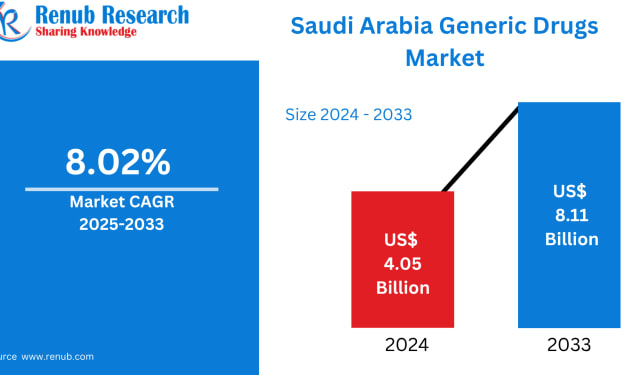
Saudi Arabia Generic Drugs Market Outlook The Saudi Arabia Generic Drugs Market is anticipated to grow to US$ 8.11 billion by 2033 from US$ 4.05 billion in 2024, expanding at a CAGR of 8.02% during 2025–2033. This growth is attributed to rising healthcare needs, proactive government efforts to curb pharmaceutical expenditure, and increasing awareness of cost-effective medication alternatives. Expanding domestic pharmaceutical manufacturing and regulatory support for generics are further strengthening the market’s long-term outlook.
By Marthan Sir4 days ago in Longevity



Comments
There are no comments for this story
Be the first to respond and start the conversation.