
Bacterial Skin Infections
A guide to Identify and Treating Impetigo, MRSA, and Infected Wounds
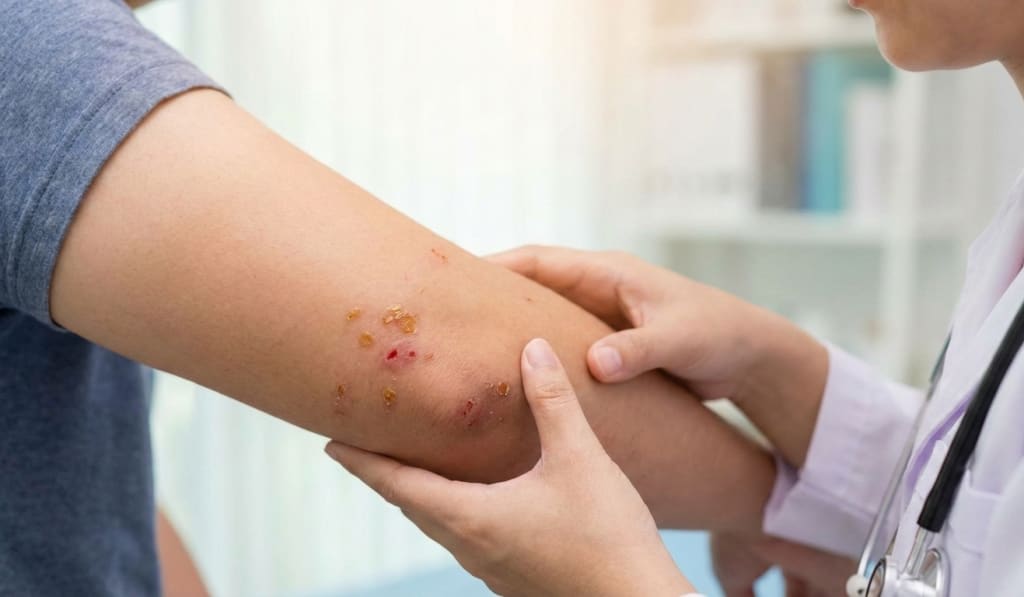
Introduction:
When it comes to skin irritation, not every one of them is a simple rash. There are some bacteria that can enter the skin through tiny cuts and hair follicles. These bacteria include Staphylococcus aureus (Staph) or Streptococcus pyogenes (Strep) that can cause infections ranging from irritation and bothersome to dangerous.
This article helps you identify common bacterial skin conditions and explains the gold-standard treatments used to clear them.
Major types of bacterial infections:
To treat an infection, you first have to know what you’re dealing with. Here are the three major types of skin infections.
Impetigo (The "Honey-Crust" Infection)
Impetigo is common in children but can also be seen in adults. It is Highly contagious and often starts as red sores around the nose and mouth.
Key Symptom:
- Blisters: Fluid filled sacs on skin that forms and easily ruptures.
- Red Sores: Burst and develop a honey-colored crust around mouth and nose.
- Crusting: leaks of fluid that dries up creating a honey colored crust.
- Itchy: The sores are itchy that can cause inflammation if scratching.
- Spreading: the sores spread as the infections spread due to scratching.
- Key Symptom: Often looks like a swollen, painful red bump or "boil" that may be warm to the touch and filled with pus. The red bumps often resemble spider bites.
- Risk: Can lead to deeper, systemic infections if not treated with specialized antibiotics.
- Increasing redness,
- Swelling, "streaking" away from the wound,
- Yellow/green discharge.
Risk: Spreads easily through shared towels or skin-to-skin contact.
MRSA & Staph (The "Spider Bite" Lookalike)
Methicillin-resistant Staphylococcus aureus (MRSA) is a "superbug" resistant to many antibiotics.
Infected Traumatic Lesions
These are secondary infections that happen when an existing cut, scrape, or surgical wound becomes contaminated.
Key Symptom:
Treatment: The Role of Mupirocin
When an infection is localized but aggressive, doctors move past over-the-counter (OTC) ointments and prescribe medications such as Mupirocin 2%
Why Mupirocin is the Preferred Choice
Mupirocin is a targeted antibiotic. Unlike standard first-aid creams, It works by stopping bacteria from making the proteins they need to grow. It is specifically used because:
- It tackles MRSA: It is one of the few topical treatments effective against resistant Staph strains.
- It’s narrow-spectrum: It kills the bad bacteria without unnecessarily disrupting all the healthy bacteria on your skin.
High Success Rate: Clinical studies show Mupirocin clears most impetigo cases within 7–10 days.
How to Apply It Correctly
To prevent the spread of the infection while treating it, use the Clean-Apply-Cover method:
- Clean: Gently wash the area with soap and water.
- Apply: Use a clean cotton swab to apply a thin layer of Mupirocin.
- Cover: Apply a sterile bandage to prevent the bacteria from spreading to other people or other parts of your body.
Prevention: Keeping the Infection from Coming Back
- Hygiene: Wash hands frequently with warm soap and water.
- Don’t Share: Keep towels, razors, and athletic gear separate until the infection is cleared.
- Nasal Decolonization: If you have recurring Staph infections, your doctor may suggest applying a specific nasal form of Mupirocin to your nostrils to eliminate the "reservoir" where bacteria hide.
When to Call Your Doctor
If you notice any of the following, seek medical attention immediately:
Conclusion: Taking Control of Your Skin Health
Bacterial skin infections like impetigo and MRSA can be frustrating and uncomfortable, but they are highly manageable when caught early. The key to a fast recovery lies in accurate identification and disciplined treatment.
While specialized medications like Mupirocin offer a powerful defense against these "superbugs," they are only one part of the healing process. Maintaining strict hygiene, preventing the spread to others, and most importantly, completing your entire antibiotic course are essential steps to ensure the infection is gone for good and doesn't return more resistant than before.
If you suspect persistent skin infection, don't wait for it to spread. Consult a healthcare professional to get a definitive diagnosis and a treatment plan tailored to your needs.
About the Creator
Keep reading
More stories from benjamin taylor and writers in Longevity and other communities.
Understanding Glaucoma
Introduction: According to a study conducted by JAMA Ophthalmology, Around 4.22 million people in the United States have glaucoma. Out of these numbers, around 1.49 million people (0.57%) of age 18 and above have vision affecting glaucoma. Glaucoma is an eye condition that affects and damages the Optic nerve due to intraocular pressure (increased eye pressure). This can lead to vision loss and cause permanent loss of vision if left untreated. In the beginning, the symptoms can be hard to notice which allows it to develop gradually.
By benjamin taylor2 months ago in Longevity



Comments
There are no comments for this story
Be the first to respond and start the conversation.