
Outdoor Fitness Activities for Mental Clarity: A Natural Path to Emotional and Cognitive Renewal
Discover How Outdoor Fitness Boosts Mental Clarity, Reduces Stress, and Enhances Emotional Well-Being Naturally

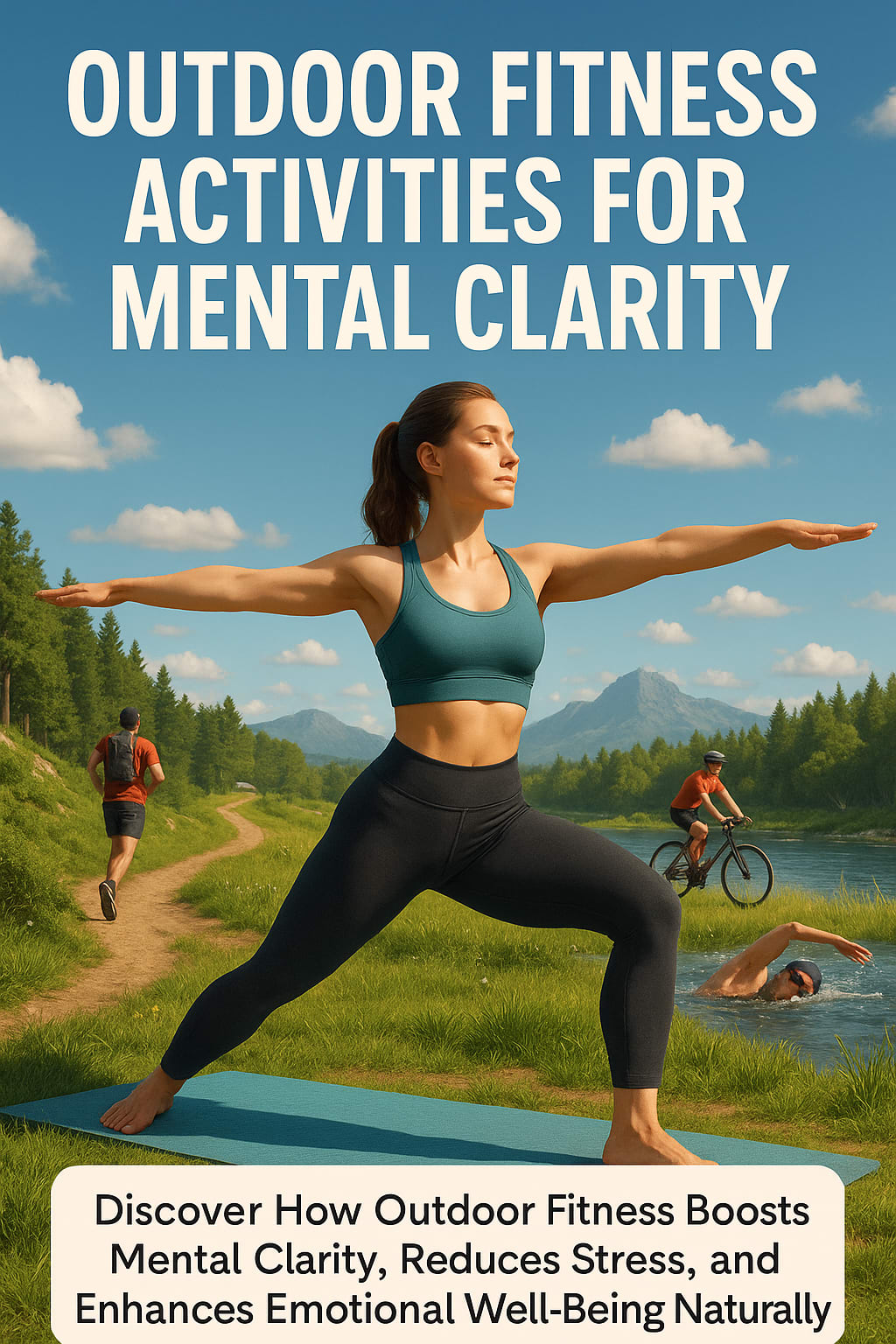
In our fast-paced world, mental fog, burnout, and emotional fatigue have become all too common. While therapy, medication, and mindfulness practices offer support, one profoundly effective, and often overlooked, tool is already right outside your door: outdoor fitness.
Beyond physical benefits, engaging in outdoor activities can sharpen your mind, clear emotional clutter, and restore inner balance.
Mental clarity isn’t just a result of meditation or journaling; it’s also born of movement, fresh air, and nature’s silent wisdom. Let’s explore how specific outdoor fitness activities can act as powerful allies for your mental well-being.
Why the Outdoors Matters for Mental Health
Nature is a potent healer. Research consistently shows that exposure to natural environments reduces cortisol levels, lowers blood pressure, and decreases symptoms of anxiety and depression.
But it’s not just the trees, wind, and open skies doing the work. It’s how your body interacts with them, through movement.
Physical activity alone stimulates endorphin release and promotes brain function. Pair it with the calming and expansive setting of the outdoors, and the impact becomes exponentially more powerful.
1. Trail Running: Shake Off Stress with Every Step
Running through a forest or over a rugged trail engages more than just your legs. The uneven terrain demands focus, which pulls your mind away from looping thoughts. Every root and rock forces your attention into the now.
The physical intensity triggers a cascade of neurochemicals, dopamine, endorphins, and serotonin, which naturally improve mood. Unlike treadmill running, trail running also gives you a sense of exploration and unpredictability.
It’s exercise, but it’s also an adventure. That mental shift, from routine to discovery, can break cognitive ruts and offer real clarity.
Pro Tip: Start slow. Let your body adapt to the changing surfaces. Over time, you’ll find that as your legs strengthen, your mental resilience follows suit.
2. Hiking: Reconnect with Stillness Through Movement
Hiking is the ideal fusion of movement and mindfulness. The rhythmic pace, the immersive soundscape of rustling leaves and birdsong, and the sheer act of looking up at a mountain or down a valley, it all resets the mind.
Unlike high-intensity workouts, hiking allows room for reflection. As your body moves steadily uphill or along a forest path, your brain gets space to process emotions, untangle thoughts, and often find surprising solutions to stubborn problems.
Hiking is a moving meditation. With each step, you walk away from mental clutter and toward clarity.
3. Cycling: Mental Focus in Motion
Outdoor cycling, whether on winding country roads or urban trails, demands consistent attention. You must navigate the road, maintain speed, and adjust for terrain, all while your body is working hard.
This combination creates a mental state called "flow," where distractions fade, and your focus becomes laser-sharp.
Flow states are associated with creativity, emotional regulation, and mental clarity. Cycling outdoors also expands your visual field. Wide, open landscapes help expand your cognitive perspective, offering a literal and metaphorical change in viewpoint.
Bonus: Group cycling adds a social layer, which boosts oxytocin levels and reinforces a sense of connection, crucial for emotional health.
4. Outdoor Yoga: Align Body, Breath, and Mind
Taking your yoga mat outside changes everything. The soft grass beneath you, the breeze brushing your skin, the sun warming your back, these elements awaken the senses and deepen your practice.
Outdoor yoga blends grounding and expansion. The breathwork calms the nervous system, while the physical poses release tension trapped in muscles. And because you're not confined by studio walls, your awareness expands. You feel more present, more alive, more aligned.
This state of embodied mindfulness is fertile ground for mental clarity. Problems seem smaller, priorities sharpen, and a sense of inner calm settles in.
5. Swimming in Natural Water: A Cold Reset
Swimming in lakes, rivers, or the ocean stimulates the vagus nerve, which plays a key role in regulating stress responses. Cold water immersion has been shown to reduce inflammation, elevate mood, and increase alertness.
But there’s more. Being in water requires a different kind of bodily awareness. You float, dive, and move with a freedom not possible on land. This disconnection from gravity and digital distraction invites a deeper connection to self.
If the water’s cold, even better. The shock ignites your nervous system in a controlled way, building resilience. You come out of the water feeling invigorated, cleansed both physically and mentally.
6. Rock Climbing: Focus and Fear as Tools for Clarity
Climbing sharpens the mind like few other activities. Every hold, every shift in weight, every decision carries a consequence. There’s no room for wandering thoughts when you’re scaling a rock face.
This extreme focus brings clarity. It demands presence, courage, and trust in your body. The fear that arises isn’t just an obstacle; it’s a gateway. When you climb through fear, you often find insight on the other side.
The world feels quieter at the top. Not just because you’re higher up, but because your mind is finally still.
7. Outdoor Group Fitness: Shared Movement, Shared Mindfulness
Bootcamps in the park, beach workouts, or group training sessions outside offer more than just a sweat session.
They provide accountability, community, and the emotional uplift that comes from shared struggle and shared progress.
Group workouts outdoors allow you to engage socially while reconnecting with the natural world.
This combination counters loneliness, a known contributor to mental fog and depression. And working out as part of a group builds confidence through encouragement, consistency, and collective energy.
Mental clarity often arises from community. You feel seen. You feel supported. And you walk away lighter than when you arrived.
The Mind Follows the Body
Mental clarity isn’t something you chase by thinking harder; it’s something you allow by moving differently. Outdoor fitness resets the body and, in turn, refreshes the mind.
Whether it's the breathless exertion of a hill sprint, the meditative stride of a hike, or the icy plunge into a wild lake, each experience clears away a layer of noise.
And that’s what clarity really is. Not the absence of thoughts, but the presence of the right ones.
So step outside. Move with purpose. Let the wind rearrange your thoughts, the trail disrupt your worries, and the sun warm your sense of self. Your mind and your life will thank you.
About the Creator
Richard Bailey
I am currently working on expanding my writing topics and exploring different areas and topics of writing. I have a personal history with a very severe form of treatment-resistant major depressive disorder.
Keep reading
More stories from Richard Bailey and writers in Longevity and other communities.
Day 4 of Quitting
If this is how sobriety feels, maybe it’s better to go through life a little buzzed… this, along with other hits like, I want to kill myself, I wish I was dead, and I’m going to throw myself off a bridge have been the only thoughts on rotation these past few days. I promise myself that if, in a month, I still feel like this (‘this’ meaning despondent, full of rage, and simultaneously numb) I can go back to smoking. Until mid-February though? Nicotine is off the table.
By sleepy drafts13 days ago in Longevity
20 Lessons from Dr. Peter Attia That Actually Extend Your Life
Dr. Peter Attia doesn't talk about health the way most doctors do. He's not optimizing for "normal labs," comfort, or what keeps people compliant. He's optimizing for not dying early and not living your last decades weak, dependent, and fragile.
By Destiny S. Harris4 days ago in Longevity



Comments
There are no comments for this story
Be the first to respond and start the conversation.