
New Clinical Trial Shows Why Vitamin D Matters in Covid-19
If restoring proper vitamin D3 levels supports viral clearance, does that mean its deficiency fuels the spread of Covid-19?


In August, a randomized clinical trial first showed that oral calcifediol (also called vitamin D3) reduced the odds of intensive care unit (ICU) admission from 50% (13 out of 26) to 2% (one out of 50) among Covid-19 patients. “Although this was a small trial, the ICU results are so dramatic that they are statistically highly significant,” stated a featured letter in The BMJ.
This month, another Covid-19 clinical trial on vitamin D3 from India was published in the Postgraduate Medical Journal of the British Medical Journal, titled “Short term, high-dose vitamin D supplementation for COVID-19 disease: a randomised, placebo-controlled, study (SHADE study).” And this study shows why healthy vitamin D status matters in Covid-19.
What the new clinical trial did and found
The trial randomly allocated asymptomatic or mild Covid-19 participants to the treatment (vitamin D3 liquid) or placebo (distilled water) groups. The treatment group had 16 participants, and the control group had 24. Notably, all participants were vitamin D3 deficient (<20 ng/ml), received standard care, and free of any major comorbidities.
The study used oral cholecalciferol, which is less potent than calcifediol used in the previous clinical trial. So, at the same dose, cholecalciferol is slower to raise vitamin D3 levels than calcifediol.
Regardless, the study gave high doses of oral cholecalciferol at 60,000 IU daily for seven days. On day-7, those still deficient in vitamin D3 received 60,000 IU daily again for another seven days, whereas those with sufficient levels received 60,000 IU weekly. The treatment lasted until day-14, and participants were monitored until day-21.
Since over 80% of infections show mild or no symptoms, early viral clearance would dramatically reduce the disease’s spread.
On day-14, cholecalciferol treatment restored proper vitamin D3 levels in the treatment group (~50 ng/ml), whereas the placebo group remained vitamin D3 deficient (<20 ng/ml).
And 62.5% (10 out of 16) of the treatment group tested negative for SARS-CoV-2 within 21 days; this number was only 20.8% (five out of 24) in the placebo group. That is a 3-fold statistically significant change. And there was no apparent vitamin D toxicity in anyone.
“In this first cholecalciferol intervention study for asymptomatic and mildly symptomatic SARS-CoV-2 positive individuals, we found that a greater proportion of patients could attain SARS-CoV-2 RNA negativity on high-dose vitamin D supplementation…compared to vitamin D-deficient individuals,” the authors concluded.
What the study means for the pandemic
The study does have several drawbacks. The geographical restriction and small sample size limit generalizability to the broader population. Although participants were free of comorbidities, there may be other confounding variables the study overlooked, such as socioeconomic status or sex. And moderate-to-severe Covid-19 patients were not examined.
Despite these caveats, the study tells us that adequate vitamin D3 status is important in swift viral clearance in people with asymptomatic or mild Covid-19. Since over 80% of infections show mild or no symptoms, early viral clearance would dramatically reduce the disease's spread. “RNA negativity by cholecalciferol supplementation may help in reducing transmission rates of the highly contagious SARS-CoV-2 infection,” the study authors wrote.
Vitamin D3 deficiency is highly prevalent—ranging from 35% of adults in the U.S. to 80% of adults in Pakistan, India, and Bangladesh. These numbers are even higher in senior populations at, for example, 61% in the U.S. and 96% in India. This widespread vitamin D3 issue also begs an interesting thought: Is vitamin D3 deficiency, which makes people carry the coronavirus longer, fueling the spread of Covid-19? While there is no robust supporting data at the moment, it is certainly a possibility to consider.
Is vitamin D3 deficiency, which makes people carry the coronavirus longer, fueling the spread of Covid-19?
For more information on how vitamin D3 counters and affects Covid-19 disease progression, kindly see here. In brief, vitamin D3 regulates both the immune system and renin-angiotensin system (RAS) to prevent cytokine storm and bradykinin accumulation, respectively, which are the two primary means by which Covid-19 kills. As follows, multiple studies have linked low vitamin D3 levels to increased risks of SARS-CoV-2 positivity and poor Covid-19 clinical outcomes.
Short abstract
A newly published clinical trial shows that treatment to restore proper vitamin D3 levels in deficient people with asymptomatic or mild Covid-19 quickens viral clearance. Specifically, 62.5% of people receiving oral cholecalciferol for 14 days tested negative for SARS-CoV-2 within the next seven days, compared to 20.8% in the placebo group. This result agrees with the first published clinical trial in August, where vitamin D3 therapy prevents ICU admission among Covid-19 patients. If people with healthy vitamin D3 status carry the coronavirus for a shorter duration, it suggests that vitamin D3 may play a role in Covid-19 spread. But this notion remains speculative, especially when the new clinical trial is just a preliminary phase.
About the Creator
Shin jie Yong
MSc (Research) | 13x (10x first-author) academic papers | Independent researcher and science writer | Named Standford's world's top 2% of most-cited scientists | A powerlifter with national records
Keep reading
More stories from Shin jie Yong and writers in Longevity and other communities.
If Coronavirus Thrive in Cold Noses, Then Keeping It Warm May Help
We often see the common cold and flu on the rise during the colder months. These respiratory viruses — coronavirus, rhinovirus, influenza virus, and respiratory syncytial virus — are classed as winter viruses that thrive in colder environments at around 33°C (91.4 °F) or lower.
By Shin jie Yong5 years ago in Longevity
Day 4 of Quitting
If this is how sobriety feels, maybe it’s better to go through life a little buzzed… this, along with other hits like, I want to kill myself, I wish I was dead, and I’m going to throw myself off a bridge have been the only thoughts on rotation these past few days. I promise myself that if, in a month, I still feel like this (‘this’ meaning despondent, full of rage, and simultaneously numb) I can go back to smoking. Until mid-February though? Nicotine is off the table.
By sleepy drafts10 days ago in Longevity
More Than 5 Million Native Plants Reintroduced in Deserts Are Slowing Land Degradation and Rebooting Arid Ecosystems
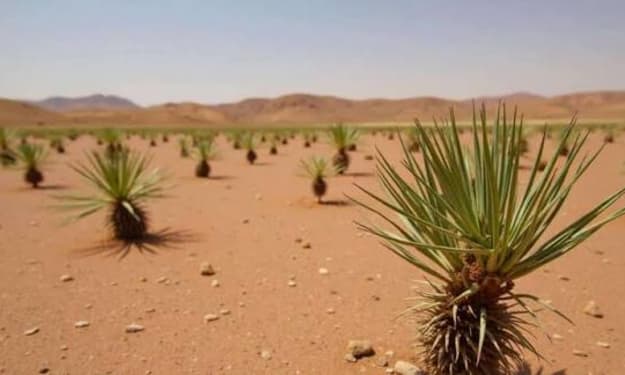
Deserts are often seen as barren, unforgiving landscapes, but they are far from lifeless. These ecosystems, while harsh, support unique biodiversity and provide critical environmental services, from carbon sequestration to regulating local climates. Yet, decades of overgrazing, unsustainable land use, and climate change have taken their toll, leaving many arid regions struggling with soil erosion, loss of native vegetation, and diminished ecological resilience. Now, a bold rewilding effort is turning the tide: over five million native plants have been reintroduced into deserts worldwide, and the early results are promising. The scale of the initiative Across regions from the deserts of the Middle East and North Africa to the arid plains of Australia and North America, conservation organizations, local communities, and governments have collaborated to replant native species that were once nearly wiped out. These plants range from hardy shrubs and grasses to iconic desert flowers, all carefully selected for their ability to survive in extreme conditions and restore ecological balance. The numbers are staggering: more than 5 million individual plants have been transplanted over the last five years, covering thousands of hectares. While this effort is labor-intensive, involving soil preparation, irrigation during establishment phases, and ongoing monitoring, the environmental payoff has been remarkable. Slowing land degradation One of the primary goals of these reintroductions is to combat land degradation, a process that affects over 40% of the planet’s land surface. In deserts, degradation is particularly acute because soil erosion occurs rapidly in the absence of stabilizing vegetation. Without plants to anchor the soil, wind and water can strip away fertile topsoil, creating a feedback loop of declining vegetation and worsening erosion. Early monitoring reports suggest that reintroduced native plants are helping to stabilize sandy soils and reduce the spread of desertification. In some areas of the Middle East, for instance, wind erosion rates have decreased by up to 30% in regions where shrubs and grasses were replanted. This stabilization not only benefits the environment but also local communities that rely on the land for grazing, agriculture, and other livelihoods. Rebooting arid ecosystems Beyond slowing soil loss, these plant reintroductions are rebooting entire desert ecosystems. Deserts are home to a diverse array of wildlife, including insects, birds, and mammals that rely on native plants for food and shelter. By re-establishing vegetation cover, these efforts have triggered a cascade of ecological benefits. In parts of the Sonoran Desert in North America, researchers observed a noticeable increase in pollinator populations, such as bees and butterflies, following the reintroduction of native flowering plants. Similarly, small mammals and reptiles that had disappeared from degraded areas are gradually returning, attracted by improved habitat structure and food availability. Climate resilience Another key advantage of reintroducing native plants is enhancing climate resilience. Many desert plants are adapted to survive extreme heat, drought, and poor soils. By re-establishing these species, ecosystems can better withstand climate-related stresses, such as prolonged droughts or extreme heatwaves. Additionally, some species improve soil moisture retention and reduce surface temperatures, creating microclimates that further support biodiversity. Community engagement and knowledge transfer What makes these rewilding efforts particularly successful is the integration of local communities. Indigenous knowledge about native species, planting techniques, and seasonal cycles has been invaluable. In some regions, schools and community groups participate in planting days, turning conservation into a source of pride and education. This engagement ensures that restored areas are maintained, monitored, and valued over the long term. Looking ahead While the reintroduction of five million native plants is a significant achievement, experts caution that long-term success requires continued investment, monitoring, and protection from overgrazing, development, and climate pressures. However, the initiative provides a compelling example of how targeted, science-backed restoration can reverse environmental damage. For arid ecosystems, these efforts are more than just planting trees and shrubs—they represent hope. They demonstrate that even the most fragile landscapes can recover when humans actively collaborate with nature, restoring not only plants but the entire web of life that depends on them. As the world grapples with climate change and land degradation, the lessons from these desert rewilding projects offer a blueprint for action: by investing in native biodiversity, we can slow degradation, rebuild ecosystems, and create landscapes that are resilient, productive, and teeming with life once again.
By Fiazahmedbrohi 2 days ago in Longevity



Comments
There are no comments for this story
Be the first to respond and start the conversation.