
Molecular Diagnostics Market Trends & Summary
Precision Testing Reshapes Global Healthcare as Molecular Diagnostics Surges Toward USD 28.83 Billion by 2033

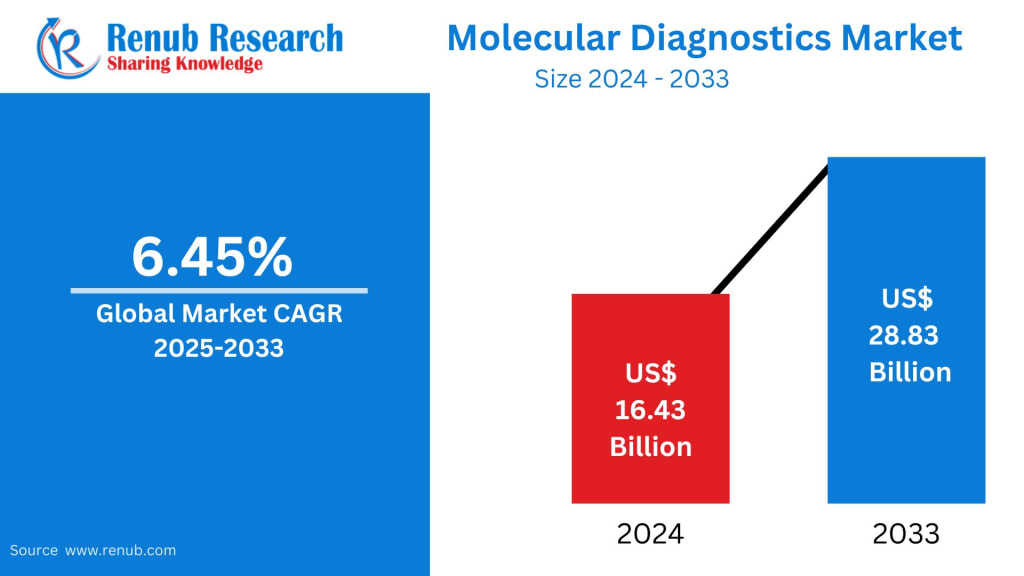
The global molecular diagnostics market continues to evolve at an impressive pace, fueling one of the most vital transformations in modern medical science. According to Renub Research, the market was valued at USD 16.43 billion in 2024 and is projected to reach USD 28.83 billion by 2033, expanding at a CAGR of 6.45% from 2025 to 2033. This steady climb reflects the worldwide demand for faster, more accurate diagnostics, rising infectious disease burdens, personalized medicine growth, and technological leaps in genomics and molecular biology.
From pandemic preparedness to precision oncology and prenatal screening, molecular diagnostics has positioned itself at the center of modern clinical decision-making. The market spans a wide array of technologies—including PCR, NGS, chips and microarrays, in situ hybridization, and mass spectrometry—used across hospitals, laboratories, research centers, and point-of-care settings.
Below is an in-depth look into the major market forces, challenges, technological breakthroughs, and country-level insights shaping the future of molecular diagnostics.
Understanding the Molecular Diagnostics Landscape
Molecular diagnostics tests examine DNA, RNA, and proteins to detect disease, guide treatments, and monitor patient health. Leveraging advanced tools such as polymerase chain reaction (PCR), next-generation sequencing (NGS), liquid biopsy, and microarrays, these diagnostics offer unprecedented accuracy and speed.
They are predominantly used for:
Infectious disease detection (COVID-19, HIV, hepatitis, tuberculosis)
Oncology diagnostics (identifying cancer-specific mutations)
Genetic disease screening
Prenatal testing
Pharmacogenomics (drug response profiling)
Blood screening & microbiology
Because these technologies provide rapid, sensitive, and sometimes non-invasive results, molecular diagnostics are becoming essential in routine clinical care, supporting the global shift toward precision medicine.
Growth Drivers in the Molecular Diagnostics Market
1. Rising Burden of Infectious Diseases and Cancer
The sharp rise in infectious disease outbreaks and global cancer cases remains the strongest catalyst for molecular diagnostic adoption. PCR and NGS tests enable early detection and disease monitoring at levels unmatched by conventional diagnostics.
Global cancer data underscores the urgency:
20 million new cases and 9.7 million deaths in 2020
53.5 million people alive within five years of diagnosis
1 in 5 individuals projected to develop cancer in their lifetime
1 in 9 men and 1 in 12 women are likely to die from cancer
This epidemiological pressure has compelled healthcare systems worldwide to accelerate molecular testing capability—particularly for oncology, viral infections, and emerging pathogens.
2. Breakthrough Advances in Molecular Diagnostic Technologies
Rapid technological innovation continues to strengthen market momentum. The emergence of digital PCR, CRISPR-based diagnostics, microfluidics, automation, and AI-driven analytics is pushing molecular diagnostics into a new era of efficiency and accuracy.
A notable example came in September 2024, when Roche introduced its cobas® Respiratory Flex test, powered by TAGS (Temperature-Activated Generation of Signal) technology. This multiplex PCR platform identifies up to 15 pathogens in a single test, demonstrating how advanced multiplexing is enabling faster, more comprehensive diagnostics.
Further advancements—such as real-time PCR improvements, miniaturized sequencing systems, and cloud-based genomic data interpretation—are expanding molecular diagnostics from central laboratories into decentralized and point-of-care environments.
3. Growing Emphasis on Personalized Medicine
With healthcare increasingly moving toward individualized treatments, demand for molecular diagnostics is soaring. These tools help clinicians tailor therapy based on unique genetic biomarkers, resulting in improved treatment outcomes and reduced side effects.
This trend is especially dominant in oncology and rare diseases.
In August 2024, Hitachi High-Tech Corporation partnered with Gencurix, Inc. to strengthen cancer molecular diagnostics. Their collaboration combines biomarker discovery with diagnostic manufacturing expertise, accelerating next-generation testing services.
As pharmaceutical companies develop more targeted therapies, companion diagnostics and genomic testing will play an even more central role in treatment workflows.
Challenges Impacting Market Growth
1. High Testing Costs and Capital Investment
Despite technological innovation, the high equipment and reagent costs limit accessibility—particularly in low- and middle-income countries. Establishing a molecular diagnostics lab requires:
Advanced instrumentation
Skilled personnel
Strict quality control programs
Substantial infrastructure investment
These barriers slow the market’s expansion in cost-sensitive regions.
2. Regulatory and Standardization Constraints
Different nations follow their own regulatory approval pathways, often with complex documentation and validation requirements. These inconsistencies increase the time and cost for companies to launch new tests.
Additionally, variability in test interpretation and validation procedures across laboratories can impact diagnostic accuracy—reinforcing the need for global harmonization.
Market Segments Overview
Technology
Chips & Microarrays
In Situ Hybridization
Sequencing
Mass Spectrometry
PCR
Other Technologies
Applications
Pharmacogenomics
Infectious Disease
Oncology
Genetic Disease Screening
Blood Screening
Microbiology
HLA Typing
Products
Instruments
Reagents
Other Products
End Users
Hospitals
Laboratories
Other End Users
Key Market Segments and Insights
Chips and Microarrays
These platforms enable high-throughput analysis for gene expression, mutation detection, and biomarker profiling. They are particularly useful in genomics research and personalized medicine applications.
As multi-gene signatures become vital for cancer risk assessment and therapy selection, microarray demand will continue to expand.
PCR Technology
PCR remains the backbone of molecular diagnostics due to its unparalleled sensitivity and rapid results. Innovations like digital PCR (dPCR) and real-time PCR offer quantitative precision crucial for cancer monitoring and viral load detection.
Thanks to its affordability and versatility, PCR will continue dominating the molecular diagnostics landscape.
Infectious Disease Diagnostics
This segment represents one of the most significant revenue contributors. Molecular tests for COVID-19, HIV, tuberculosis, influenza, and respiratory pathogens remain essential, particularly for global pandemic preparedness.
These technologies dramatically reduce time-to-treatment, enabling faster patient isolation, therapy initiation, and outbreak control.
Oncology Diagnostics
Molecular diagnostics is redefining cancer care through:
Liquid biopsies
Companion diagnostics
Tumor mutation profiling
Comprehensive genomic sequencing
With global cancer cases rising, this segment is expected to witness sustained growth.
Instruments
From PCR machines to sequencers and microarray readers, the instrument segment is experiencing rapid innovation. Portable platforms and fully automated systems are enabling diagnostic expansion into decentralized settings, including remote clinics and field hospitals.
Country-Level Market Insights
United States
The U.S. leads globally due to its strong R&D ecosystem, robust healthcare spending, and high disease prevalence.
Key update:
January 2023 – QIAGEN N.V. partnered with Helix to accelerate companion diagnostics development and expand access to genomic testing.
The country is also a hub for precision oncology and advanced molecular testing laboratories.
Germany
Germany remains the molecular diagnostics powerhouse in Europe. Its aging population, cancer burden, and strong regulatory framework drive strong adoption.
Key update:
January 2024 – ELITechGroup launched its CE-IVDR certified GI Bacterial PLUS ELITe MGB Kit, further enhancing the region’s advanced diagnostics portfolio.
India
India is witnessing rapid growth driven by greater healthcare awareness, rising infectious diseases, and expanded diagnostic networks.
A notable milestone came in 2023, when Roche Diagnostics introduced a new molecular test, contributing to a 12% global revenue growth in diagnostics in H1 2023.
Affordability, scalability, and decentralized testing solutions will be essential for the Indian market’s future growth.
Saudi Arabia
Backed by Vision 2030, Saudi Arabia is investing heavily in healthcare infrastructure, digital transformation, and genomic research. Collaborations with global biotechnology companies are helping expand molecular diagnostic capabilities across the country.
This growing commitment to early detection and precision healthcare is accelerating market adoption.
Key Players in the Molecular Diagnostics Market
The market includes extensive competition among global leaders excelling in innovation, product expansion, and strategic partnerships.
Major companies covered:
F. Hoffmann-La Roche Ltd
Illumina Inc.
Hologic Corporation
Agilent Technologies
QIAGEN N.V.
Myriad Genetics
Abbott Laboratories
bioMérieux SA
Bio-Rad Laboratories
Sysmex Corporation
These companies are analyzed across five key viewpoints:
Overview, Key Persons, Recent Developments, Revenue, and Product Portfolio Strength.
Final Thoughts
The molecular diagnostics market is transitioning into an era defined by precision, speed, automation, and personalization. As infectious disease threats persist and cancer rates rise, molecular diagnostics will remain indispensable for global health systems.
With advancements in PCR, sequencing, microarrays, CRISPR diagnostics, and AI-based interpretation, the industry is poised to become even more accessible, faster, and more accurate.
By 2033, the market’s expected rise to USD 28.83 billion reflects not just financial growth but the increasing centrality of molecular diagnostics in global healthcare delivery.
About the Creator
Marthan Sir
Educator with 30+ years of teaching experience | Passionate about sharing knowledge, life lessons & insights | Writing to inspire, inform, and empower readers.
Keep reading
More stories from Marthan Sir and writers in Longevity and other communities.
Allergic Conjunctivitis Market Trends & Summary
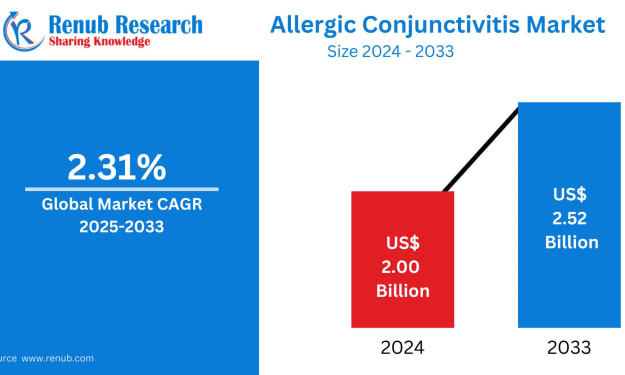
The Allergic Conjunctivitis Market is on a steady upward trajectory, driven by a sharp rise in allergic conditions worldwide and the growing demand for advanced eye-care solutions. According to Renub Research, the market is projected to reach US$ 2.52 Billion by 2033, up from US$ 2.00 Billion in 2024, reflecting a CAGR of 2.31% between 2025 and 2033.
By Marthan Sir2 months ago in Longevity
Day 4 of Quitting
If this is how sobriety feels, maybe it’s better to go through life a little buzzed… this, along with other hits like, I want to kill myself, I wish I was dead, and I’m going to throw myself off a bridge have been the only thoughts on rotation these past few days. I promise myself that if, in a month, I still feel like this (‘this’ meaning despondent, full of rage, and simultaneously numb) I can go back to smoking. Until mid-February though? Nicotine is off the table.
By sleepy drafts8 days ago in Longevity
Global Sensor Market Size and Forecast 2025–2033
Introduction Invisible to the eye yet fundamental to modern life, sensors have become the backbone of today’s digital economy. From smartphones that recognize faces to factories that optimize production in real time, from vehicles that detect hazards to hospitals that monitor patients remotely, sensors quietly convert the physical world into actionable data. As industries race toward automation, connectivity, and intelligence, the role of sensors has expanded from simple measurement tools to mission-critical components of digital transformation.
By jaiklin Fanandishabout 6 hours ago in Longevity


Comments
There are no comments for this story
Be the first to respond and start the conversation.