
Global Sensor Market Size and Forecast 2025–2033
How IoT, Smart Devices, and Automation Are Powering a US$ 539 Billion Sensor Economy


Introduction
Invisible to the eye yet fundamental to modern life, sensors have become the backbone of today’s digital economy. From smartphones that recognize faces to factories that optimize production in real time, from vehicles that detect hazards to hospitals that monitor patients remotely, sensors quietly convert the physical world into actionable data. As industries race toward automation, connectivity, and intelligence, the role of sensors has expanded from simple measurement tools to mission-critical components of digital transformation.
According to Renub Research, the Global Sensor Market is anticipated to grow to US$ 539.33 billion by 2033 from US$ 241.26 billion in 2024, registering a strong compound annual growth rate (CAGR) of 9.35% during 2025–2033. This expansion is being driven by rising adoption across automotive, healthcare, consumer electronics, and manufacturing, alongside the rapid growth of IoT ecosystems, smart devices, and automation technologies worldwide.
This editorial-style analysis explores what is fueling this momentum, the challenges that remain, and how technologies, applications, and regional markets are shaping the future of the global sensor industry.
Global Sensor Market Overview
A sensor is a device that detects physical inputs—such as light, temperature, pressure, motion, humidity, or chemical composition—and converts them into signals that can be interpreted by machines or humans. In the modern economy, sensors are the bridge between the physical and digital worlds.
Their importance has surged due to their central role in Internet of Things (IoT) devices, smart homes, industrial automation, medical diagnostics, vehicle safety systems, and wearable technology. Sensors are now embedded in everyday products ranging from smartphones and automobiles to fitness trackers and smart thermostats, making them almost universal.
Technological advances in wireless connectivity, miniaturization, MEMS (micro-electromechanical systems), AI-based analytics, and low-power design have further enhanced sensor performance while reducing size and cost. As the world becomes increasingly connected, sensors are shaping the future of digital transformation, predictive maintenance, and data-driven decision-making across both consumer and industrial markets.
Growth Drivers in the Global Sensor Market
Proliferation of IoT and Smart Devices
The explosive growth of IoT systems and smart devices is one of the strongest forces behind the expansion of the sensor market. Smart homes, connected cities, industrial automation, and precision agriculture all rely on sensors to collect real-time data, enable automation, and support remote monitoring. Temperature, motion, proximity, and environmental sensors are essential for these systems to function efficiently.
Demand for smart living, smart infrastructure, and intelligent operations is encouraging governments and enterprises to invest heavily in sensor technology. Companies are deploying sensors to optimize efficiency, reduce downtime through predictive maintenance, and enhance supply chain visibility. This digital revolution is fundamentally reshaping manufacturing, logistics, and utilities. For example, in March 2022, SensiML Corporation announced support for the Arduino Nicla Sense ME board, integrating Bosch Sensortec sensors to enable intelligent IoT endpoints.
Automotive Industry Growth and Safety Standards
The automotive sector has become one of the most sensor-intensive industries in the world. Modern vehicles integrate multiple sensor types for Advanced Driver Assistance Systems (ADAS), autonomous driving, electric vehicle management, infotainment, and cabin monitoring. Radar, LiDAR, ultrasonic, image, and temperature sensors are now standard components in next-generation vehicles.
Governments worldwide are enforcing stricter automotive safety standards, making sensor deployment mandatory for features such as collision avoidance, lane-keeping assistance, and adaptive cruise control. At the same time, consumer demand for enhanced in-car experiences and better fuel efficiency is driving sensor usage in engine management, climate control, and cabin surveillance. In May 2024, Sheba Microsystems Inc. introduced Sharp-7, the world’s first autofocus automotive camera with an 8-megapixel sensor and built-in MEMS driver—demonstrating how innovation continues to expand sensor applications in mobility.
Technological Advancements and Miniaturization
Continuous innovation in MEMS, nanotechnology, wireless communication, and AI-driven analytics has significantly improved sensor accuracy, reliability, and energy efficiency while reducing size and power consumption. Miniature sensors are now precise enough to be embedded in wearables, smartphones, and medical devices.
The healthcare sector, for instance, benefits greatly from biosensors used in diagnostics and remote monitoring. AI and data analytics further enhance sensor functionality by enabling real-time interpretation and predictive insights. These technological advances are broadening the scope of sensor applications across industries, accelerating global market growth.
Challenges in the Global Sensor Market
High Costs of Advanced Sensor Technologies
Despite strong demand, the high cost of advanced sensors—particularly in aerospace, medical equipment, and autonomous vehicles—can limit widespread adoption, especially in emerging economies. These costs arise from intensive R&D, premium raw materials, complex manufacturing processes, and system integration requirements.
Calibration, compliance, and maintenance further add to total ownership costs, making deployment challenging in price-sensitive markets. While industries continue to seek cost-effective alternatives, premium pricing remains a significant constraint for advanced sensor technologies.
Data Security and Privacy Concerns
As sensors increasingly collect and transmit sensitive data—especially in healthcare, smart homes, and industrial systems—cybersecurity and privacy risks are growing. Unauthorized access, data breaches, or misuse of information can compromise personal safety and operational integrity.
Regulations such as GDPR in Europe and similar data protection laws worldwide impose strict requirements on data storage and handling, increasing compliance complexity. Ensuring secure sensor networks adds cost and technical challenges, making data security a critical hurdle for the market.
Key Technology Segments in the Global Sensor Market
Global Radar Sensor Market
Radar sensors play a vital role in automotive safety, air navigation, weather monitoring, and industrial applications. They provide accurate distance, speed, and object detection across diverse environmental conditions. With the rapid adoption of ADAS and autonomous vehicles, radar sensors are experiencing robust demand. Their growing use in surveillance, intelligent traffic systems, and drone technology further strengthens market growth. Enhanced performance and improving affordability are also expanding radar sensor applications in commercial markets.
Global Optical Sensor Market
Optical sensors are essential across consumer electronics, healthcare, and environmental monitoring. They measure light, color, and distance and are widely used in smartphones, smart lighting, fitness trackers, and industrial equipment. Advances in photonics and fiber optics have improved accuracy and energy efficiency. Optical sensors are also critical for automation, quality control, and safety systems. As industries demand more responsive and energy-efficient technologies, this segment continues to grow steadily.
Global Level Sensor Market
Level sensors monitor liquid or solid levels in tanks, silos, and containers. They are widely used in water treatment, oil and gas, food and beverage, and chemical industries. Innovations in non-contact technologies such as ultrasonic and radar-based sensors improve safety and precision. Increasing automation, environmental regulations, and smart factory initiatives are driving demand for accurate fluid control and leak detection solutions.
Global CMOS Sensor Market
CMOS sensors dominate the digital imaging market, powering cameras in smartphones, surveillance systems, automotive vision platforms, and medical diagnostics. Their advantages include high resolution, fast processing, and low power consumption. Rising demand for high-definition imaging in consumer electronics and vehicles is fueling growth. With ongoing advances in 3D sensing and AI-enabled imaging, CMOS technology is poised for sustained expansion.
Global MEMS Sensor Market
MEMS sensors are widely used in smartphones, wearables, automotive systems, and medical devices to detect pressure, motion, acceleration, and orientation. Their compact size, low power requirements, and high precision make them ideal for mobile and embedded applications. The global surge in consumer electronics and smart wearable devices is driving significant growth in this segment.
Application-Based Market Insights
Global Electronics Sensor Market
Sensors enable touch, motion, biometric, and environmental sensing in electronic devices. As smartphones, tablets, gaming systems, and smart appliances become more sophisticated, the need for integrated sensors is rising. Biometric authentication, gesture recognition, and immersive gaming all depend on advanced sensor technology. The evolution of electronics into interactive, intelligent systems is driving strong growth in this market.
Global Healthcare Sensor Market
Healthcare is undergoing a transformation powered by sensor technology. From diagnostics and drug delivery systems to wearable health monitors and remote patient tracking, sensors provide real-time insights into patient health. Devices such as glucose monitors, heart rate sensors, and body temperature trackers support preventive care and chronic disease management. The COVID-19 pandemic accelerated adoption of contactless and connected health solutions, reinforcing long-term demand for healthcare sensors.
Regional Outlook
United States Sensor Market
The U.S. market is supported by strong demand across automotive, healthcare, consumer electronics, and industrial sectors. Leading technology companies drive innovation, while smart manufacturing, ADAS integration, and IoT-based healthcare solutions continue to expand opportunities. Government initiatives for smart infrastructure and defense modernization further encourage adoption. In August 2024, Dexcom launched its over-the-counter continuous glucose monitor, Stelo, in the U.S. at a price of up to US$ 99, reflecting growing consumer access to advanced healthcare sensors.
Germany Sensor Market
Germany is a hub for industrial automation, automotive manufacturing, and precision engineering—sectors that heavily rely on sensors. Industry 4.0 initiatives position sensors at the heart of intelligent factories and predictive maintenance. Germany’s automotive industry continues to invest in safety and e-mobility technologies, while strong R&D capabilities and export-oriented manufacturing reinforce its leadership in sensor adoption.
India Sensor Market
India’s expanding industrial base, growing electronics manufacturing, and rapid deployment of smart city technologies are driving sensor demand. Government programs such as “Make in India” and “Digital India” support local production and adoption in public services. With rising needs in healthcare, agriculture, and transportation, India is emerging as a strategic growth market. In June 2024, HIKROBOT introduced machine vision photoelectric sensors in India to address diverse industrial sensing needs, enhancing efficiency in factory automation.
Brazil Sensor Market
Brazil’s sensor market is expanding with modernization in agriculture, healthcare, and automotive industries. Precision farming uses soil and weather sensors to optimize yields, while healthcare systems adopt diagnostic and monitoring technologies. Manufacturing and logistics are increasingly integrating sensors as part of digitalization efforts. Economic reforms and rising foreign investment are strengthening the country’s sensor ecosystem.
Saudi Arabia Sensor Market
Saudi Arabia is rapidly adopting sensors across smart infrastructure, oil and gas, healthcare, and transportation. The Vision 2030 initiative is driving investments in smart cities, digital healthcare, and industrial automation. Sensors are also vital in oil, petrochemical, renewable energy, and environmental monitoring projects. In May 2025, Saudi Arabia’s National Center for Environmental Compliance launched smart buoys equipped with sensors to monitor water quality in Jubail Port, highlighting the nation’s commitment to smart environmental management.
Market Segmentation Snapshot
By Type: Radar, Optical, Biosensors, Touch, Image, Pressure, Temperature, Proximity & Displacement, Level, Motion & Position, Humidity, Accelerometer & Speed, Others
By Technology: CMOS, MEMS, NEMS, Others
By End User: Electronics, IT & Telecom, Industrial, Automotive, Aerospace & Defense, Healthcare, Others
By Region: North America, Europe, Asia Pacific, Latin America, Middle East & Africa
Competitive Landscape
Leading companies in the global sensor market include Texas Instruments, TE Connectivity, Omega Engineering, Honeywell International, Rockwell Automation, Siemens AG, STMicroelectronics, ams OSRAM, NXP Semiconductors, and Infineon Technologies. These players focus on innovation, strategic partnerships, and portfolio expansion to address evolving industry requirements. Renub Research evaluates each company across five key viewpoints: overview, key personnel, recent developments, SWOT analysis, and revenue performance.
Final Thoughts
The global sensor market stands at the center of the world’s digital transformation. As industries pursue automation, connectivity, and data-driven intelligence, sensors are becoming indispensable across virtually every sector. With Renub Research projecting growth from US$ 241.26 billion in 2024 to US$ 539.33 billion by 2033 at a CAGR of 9.35%, the market’s long-term outlook is both robust and resilient.
While challenges such as cost barriers and data security concerns remain, ongoing innovation in MEMS, AI, wireless connectivity, and miniaturization continues to unlock new possibilities. From smart cities and autonomous vehicles to precision healthcare and intelligent factories, sensors will define how the physical world interacts with the digital one.
In the coming decade, sensors will not just support technology—they will shape how economies operate, how industries compete, and how societies experience the connected future.
About the Creator
jaiklin Fanandish
Jaiklin Fanandish, a passionate storyteller with 10 years of experience, crafts engaging narratives that blend creativity, emotion, and imagination to inspire and connect with readers worldwide.
Keep reading
More stories from jaiklin Fanandish and writers in Longevity and other communities.
United States Active Pharmaceutical Ingredients Market Size and Forecast 2025–2033
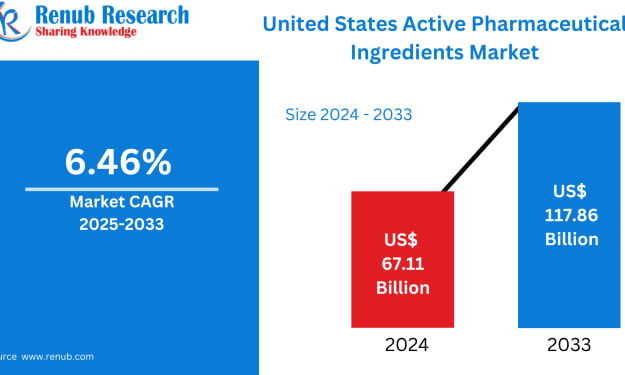
United States Active Pharmaceutical Ingredients Market The U.S. Active Pharmaceutical Ingredients (API) Market is anticipated to grow from US$ 67.11 billion in 2024 to US$ 117.86 billion in 2033, registering a CAGR of 6.46% during 2025–2033. This robust expansion is fueled by the rising demand for both branded and generic drugs, the increasing burden of chronic diseases, and rapid innovation in biopharmaceutical research. As the backbone of every therapeutic product, APIs are becoming increasingly strategic to healthcare security, drug affordability, and pharmaceutical competitiveness in the United States.
By jaiklin Fanandishabout 3 hours ago in Longevity
Day 4 of Quitting
If this is how sobriety feels, maybe it’s better to go through life a little buzzed… this, along with other hits like, I want to kill myself, I wish I was dead, and I’m going to throw myself off a bridge have been the only thoughts on rotation these past few days. I promise myself that if, in a month, I still feel like this (‘this’ meaning despondent, full of rage, and simultaneously numb) I can go back to smoking. Until mid-February though? Nicotine is off the table.
By sleepy drafts8 days ago in Longevity
Saudi Arabia Date Syrup Market Size and Forecast 2025–2033
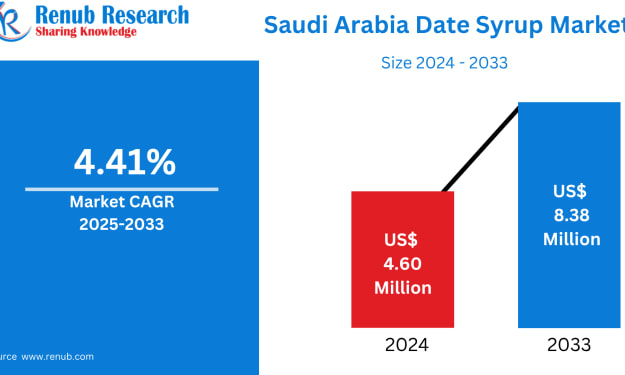
Saudi Arabia Date Syrup Market: A Sweet Tradition Entering a Modern Growth Phase The Saudi Arabia Date Syrup Market is expected to reach US$ 8.38 million by 2033, up from US$ 4.6 million in 2024, expanding at a CAGR of 6.88% from 2025 to 2033. Supported by the Kingdom’s rich date cultivation heritage and growing preference for organic, traditional, and functional food products, the market is being driven by rising health awareness, increasing demand for natural sweeteners, and wider adoption across culinary and foodservice applications.
By Marthan Sir5 days ago in Longevity


Comments
There are no comments for this story
Be the first to respond and start the conversation.