
Life in China During the 2019-nCoV Crisis
A firsthand account of the coronavirus pandemic

In the last few months, I've been an avid reader of dystopian literature, not knowing just how close my reality would become to those in the books.
For the Chinese people, the Lunar New Year is the most important holiday of the year. The day before the virus became front-page news, I was still out visiting my relatives with my parents. It was the first day of the Lunar New Year and we drove to Shenzhen to visit my uncle and his family. Back then, the virus had started but was only a small problem. Still, we took precautions. The original plan was for all of us to go to a restaurant together, but we decided it would be safer to just eat at my uncle’s home. As our car left the neighborhood, the typically traffic-jammed roads were practically free of vehicles. I won't deny that it felt good not having to sit through hours of traffic, but given that it was one of the busier roads in the city, something definitely felt weird. When we arrived at my uncle's neighborhood, it was also eerily empty–just like my neighborhood and the roads. My uncle's wife, my aunt, is a nurse, so due to the coronavirus, she was still working during the break. Despite that, we were all happy and in a merry mood for it was the New Year after all. The adults gave the children red packets and we all had a great time. Although some of our talk involved the coronavirus, nobody was particularly worried for we all thought it would soon pass.
The next day, I was out walking in my neighborhood to get a little fresh air. As I walked around, the place felt a lot emptier than usual. The phrase that popped into my head was "ghost town" and indeed it really was. Usually there would be a dozen or so people out and about, running around, walking their dogs, or just casually strolling along, but there was almost nobody outside. There's a plaza right outside the shops that's usually packed with kids of all ages doing all sorts of activities while their parents watch on. That day, though, there were only two kids riding their bikes. Everywhere I went was deserted and the few people left had on face masks like we were all a part of some secret spy organization. It was as if the world had changed overnight, which, basically, it had.
People were scared to go outdoors. This tiny new virus had complete control over the nation. Grocery stores ran out of eggs and other fresh produce, people scrambled to purchase the last few face masks, and whole cities went into lockdown. My school was even forced to push back its start date and switch to online courses. As of now, nobody knows when classes will resume as normal.
This epidemic was a case of history repeating itself. In 2003 there was a highly similar virus called the SARS virus. It originated in Guangdong and spread all over the world, killing many and infecting many more. I wasn’t born then, so all this was new to me. My mom was in Vancouver with my sister, Della, so it didn’t really impact them either. So, this was the first time I was up close and personal with such a terrifying virus.
The coronavirus is zoonotic and has been confirmed to have started in an alleged seafood market in Wuhan, and as large numbers of people have been travelling this break, it has quickly infected near 30,000 people already, as of February 6th. Every Chinese province has been infected as well as several other countries.
Despite this, my father, along with many other people across the country, still go out to work every day. My mother always reminds him to be careful and to always wear his face mask. On the other hand, my mother and I have stayed home since the visit to my uncle's. To have as little physical contact with the outer world as possible, my mom calculates the amount of food we eat so that the least number of trips to the grocery store is needed. Although we still make much use of our time reading, watching the news, doing chores, and in my case, dancing and doing schoolwork, I still wish to go to school and resume our lives as normal.
According to the news, medical workers labored during the holidays, working for up to six hours without food, water, or a chance to go to the bathroom. It is thanks to their hard work and sacrifices, that a few people have already recovered and the mortality rate of this coronavirus is so low. We also can't overlook the contributions made by the scientists working on a cure, the donators and volunteers supporting the cause, and the people who stay at home, lowering the risk of spreading the disease.
With everybody doing their best to contribute, I’m sure this epidemic will pass soon and we will all have learned a valuable lesson from it. The lesson each person learns will be different, for example some might learn to not eat things that weren't meant to be eaten, others to be more aware of hygiene, and still others to appreciate what they have while they have it.
About the Creator
Fiona
Just a young aspiring writer and poet ❥
Day 4 of Quitting
If this is how sobriety feels, maybe it’s better to go through life a little buzzed… this, along with other hits like, I want to kill myself, I wish I was dead, and I’m going to throw myself off a bridge have been the only thoughts on rotation these past few days. I promise myself that if, in a month, I still feel like this (‘this’ meaning despondent, full of rage, and simultaneously numb) I can go back to smoking. Until mid-February though? Nicotine is off the table.
By sleepy drafts16 days ago in Longevity
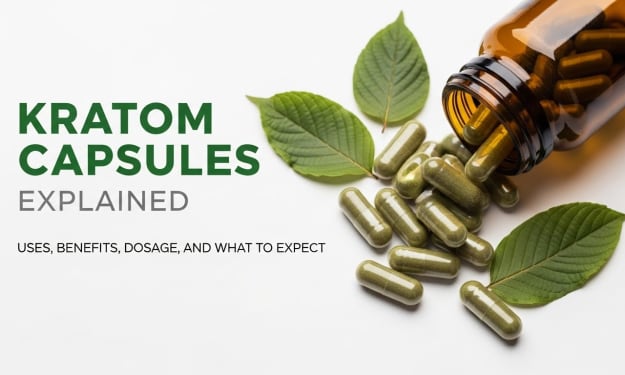
Kratom Capsules Explained. Uses, Benefits, Dosage, and What to Expect
Kratom capsules are one of the most popular ways to use kratom. Many people choose capsules because they are easy to take, taste free, and simple to measure. If you dislike the bitter flavor of kratom powder or want a cleaner option, capsules solve that problem.
By Jack Wilder3 days ago in Longevity
Affection and Healing for Yourself
During the night of the last quarter moon, I gathered my ritual supplies. I carefully handled the chunk of black tourmaline that would protect me from your overall negative and narcissistic energy. I carefully walked the house with my stick of selenite in hand, asking the universe to cleanse our working space.
By Alisha Wilkins ✒️🦋🖋️3 days ago in Fiction



Comments
There are no comments for this story
Be the first to respond and start the conversation.