
A First in 100 Years: A Chinook Salmon Returns to Its Native California River
After a Century of Absence, the Return of a Single Fish Signals a Powerful Ecological Comeback

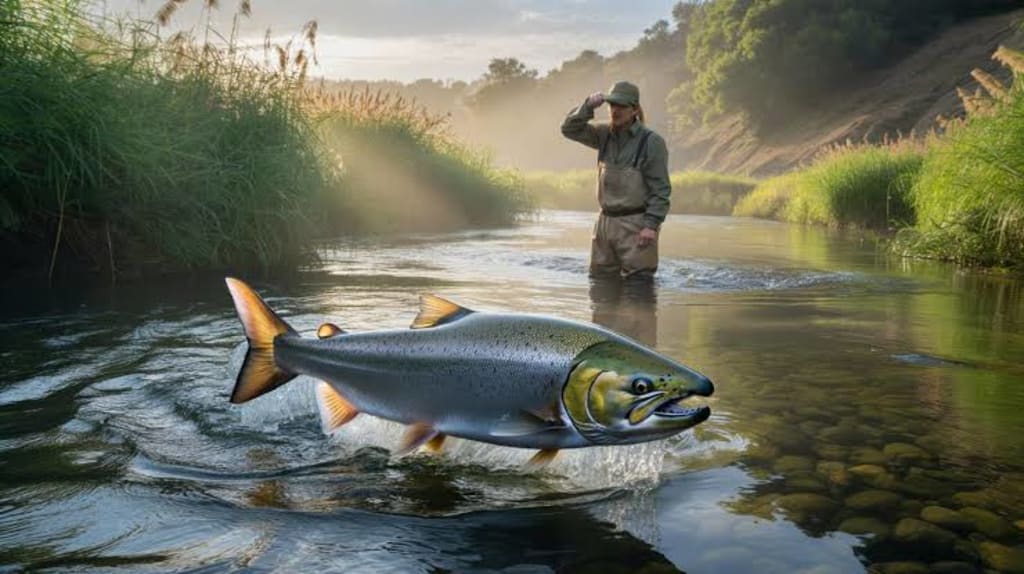
For the first time in more than a century, a Chinook salmon has been documented returning to its native river in California—a moment that conservationists are calling historic, symbolic, and deeply hopeful. This single fish represents far more than a biological curiosity. It is living proof that decades of environmental restoration, policy reform, and community activism can slowly reverse even the most severe ecological damage.
A Journey Once Thought Impossible
Chinook salmon, also known as king salmon, are famous for their extraordinary life cycle. Born in freshwater rivers, they migrate thousands of miles into the Pacific Ocean before returning—often to the exact stream of their birth—to spawn and die. This instinct, known as natal homing, is one of nature’s most remarkable feats.
Yet for many California rivers, that cycle was broken long ago. The construction of large dams in the early 20th century blocked salmon from reaching their historic spawning grounds. Combined with overfishing, pollution, water diversion for agriculture, and urban development, Chinook populations collapsed. Some rivers saw salmon disappear entirely, becoming ecologically silent for generations.
That is why the recent sighting of a Chinook salmon in a river where it had been absent for 100 years has stunned scientists. It was not stocked, released, or guided by humans. It found its way back on its own.
What Changed After a Century?
This return did not happen by accident. Over the past few decades, California has invested heavily—though not without controversy—in river restoration projects. Aging dams have been removed or modified, fish ladders installed, water flows restored, and riparian habitats rehabilitated. Environmental regulations have reduced industrial pollution, while fishing limits have given depleted stocks a chance to recover.
Climate science has also improved water management. Agencies now release colder water from reservoirs at strategic times to mimic natural river conditions that salmon need to survive. In some regions, tribes and local communities have played a leading role, drawing on generations of ecological knowledge to guide restoration efforts.
The return of a single Chinook suggests that these fragmented efforts are finally beginning to connect.
Why One Fish Matters
Skeptics may ask: what difference does one salmon make? Ecologists answer clearly—everything starts with one.
Salmon are a keystone species. Their bodies transport ocean nutrients far inland, feeding not just fish but birds, mammals, insects, and even forests. When salmon disappear, entire ecosystems weaken. When they return, ecological networks slowly rebuild.
More importantly, this salmon demonstrates that the river itself is becoming viable again. Chinook are highly sensitive to water temperature, oxygen levels, and habitat quality. Their presence signals improving river health—conditions good enough not just for salmon, but for countless other species, including humans.
Cultural and Historical Significance
For Indigenous communities in California, salmon are not just wildlife; they are relatives, teachers, and central figures in cultural identity. Many tribes have fought for decades to restore salmon runs that were lost due to colonial-era infrastructure projects.
The return of this Chinook has therefore been met with emotion as well as scientific excitement. Elders describe it as a reminder of what the land once was—and what it could be again. It also strengthens legal and moral arguments for continued dam removal and river protection.
Challenges Still Ahead
Despite this milestone, conservationists warn against complacency. One fish does not mean the crisis is over. Climate change continues to threaten salmon through warming waters, drought, and altered ocean conditions. Many rivers remain blocked, degraded, or over-allocated.
There is also the question of whether this return can become a trend. For a self-sustaining population to reestablish, many salmon must follow this path consistently over years. That will require long-term funding, political will, and cooperation between environmental groups, farmers, energy producers, and governments.
A Rare Moment of Environmental Optimism
In an era dominated by headlines about extinction, climate disasters, and ecological collapse, the return of a Chinook salmon after 100 years offers something rare: credible hope. It shows that nature has not forgotten its pathways—and that if given even a narrow opening, it will try to heal itself.
This single fish is not the end of the story. It is the opening line of a possible recovery—one written slowly, against great odds, but now undeniably underway.
About the Creator
Fiaz Ahmed
I am Fiaz Ahmed. I am a passionate writer. I love covering trending topics and breaking news. With a sharp eye for what’s happening around the world, and crafts timely and engaging stories that keep readers informed and updated.
Keep reading
More stories from Fiaz Ahmed and writers in Longevity and other communities.
Neither Swimming Nor Pilates: The Best Activity for People With Knee Pain
Knee pain is one of the most common physical complaints worldwide, affecting people of all ages—from young athletes to older adults. Whether caused by arthritis, old injuries, excess weight, or simple wear and tear, knee pain often leaves people confused about one crucial question: Which exercise is actually safe and effective? While swimming and Pilates are frequently recommended, emerging evidence and expert opinion suggest there is another activity that may be even better for protecting and strengthening painful knees.
By Fiaz Ahmed 2 months ago in Longevity
The Hidden Cost of "Safe" Senior Living: When Retirement Dreams Turn Into Legal Battles
Older Americans often view senior housing as a reward after years of effort. These places, such as self-contained apartments or full-service retirement homes, advertise professional care, calm routines, and peace of mind. Loved ones might picture them as quiet refuges.
By William Powell7 days ago in Longevity
Why Nutrition During Pregnancy Matters More Than You Think
Pregnancy is one of the most important stages in a woman’s life, not only emotionally but also nutritionally. During these nine months, the body works continuously to support the growth and development of a new life. Because of this, nutrition plays a crucial role in ensuring both the mother and the baby remain healthy.
By Being Inquisitive2 days ago in Longevity
Lycan Lore
As the students of my 10am mythology class take their seats, I decide to steer the day's curriculum away from Greek and dive into a Western European discourse on the misaligned beliefs of the Werewolf. A tale of truth or fiction. No one really knows.
By Lamar Wigginsabout 18 hours ago in Fiction


Comments
There are no comments for this story
Be the first to respond and start the conversation.