
I DON’T SEE COLOUR
These are my reflections on how to grapple with uncomfortable conversations about race, racism and allyship in 2022. Written in August 2020.


I am recovering. I am recovering from a paralysis and inertia brought on by an overwhelm of my senses in my now smaller world due to social distancing. For several weeks, things seemed more acute and real. I noticed things I had not in the past. I noticed the chirping of birds on a background of a new silence. I noticed the smell of the Scottish gorse flower peppered across Edinburgh. I noticed the taste of tea.
Do you regular tea drinkers normally notice this?
Working on the front line in the NHS has had its challenges. I noticed the vibrations being given off by my colleagues and loved ones, buzzing more when engaging with the news and new guidelines. I noticed their eyes and facial expressions more, often mirroring my emotions. The over-triggering of my senses, I now understand, was a paradoxical manifestation of anxiety- an odd combination of hyper vigilantism and mindfulness. Living in a hyper-alert state for weeks wreaked havoc on my sleep pattern. I was sleeping but not resting. I felt fatigued. I would often joke at work that I was going through puberty again- my newly blemished skin and eruption of spots were just an outward reflection of my inward state of mind. No skin regimen, diet or exercise would fix it.
This state of mind was triggered by the social injustice and racial inequities highlighted by the COVID-19 pandemic. I shared a video recording of my reflections on some causative factors and suggestions on what individuals could do to improve the situation. My intention had been to follow this up with another video exploring why discussions about racial inequities were particularly challenging to have, along with suggestions on how to overcome these challenges. However, my paralysis overtook me. I absorbed the impact of news reports about the murder of George Floyd, Breonna Taylor, Ahmaud Arbery, Sheku Bayoh, and the Black lives matter movement and protests globally.
Nevertheless, the ideas kept flowing, adding to the weight of my paralysis, until I finally committed them to paper. Writing has always been a useful purge- a cleansing and cathartic experience.
Why did it take me so long this time?
I find myself going in circles, struggling to decide which discussion to engage with. On a base level, I feel anger at the suggestion of even engaging in discussions focused on IF racism exists. A circular gaslighting dance I do not want to partake in.
But if people don’t see it, they cannot imagine solutions.
The solution to this perhaps, is to share stories. Stories can be more powerful than statistics when properly applied. I also realised that, on an even deeper level, my anger stemmed from being triggered. The news stories and reports of racism in its various guises were reminding me of my past experiences. Experiences which I shrugged off, pushed past, and I thought to overcome. For some of these experiences, I had the agency and assertiveness to speak up for others, I was fortunate to have an ally step in for me. Either way, ‘reliving’ these experiences hurt and brought back feelings of unworthiness, sadness and anger. Discrimination is a powerful way to undermine any human being. I believe this is because it eats away at the fabric of your identity, sense of being and ego. It is like malignant cancer. It is unfair and social injustice. What is worse than this injustice is refusing to acknowledge the validity and reality of an individual’s experience because it is too uncomfortable to face. Remedying this discomfort by switching focus to all lives is a futile attempt to multitask.
It is like plastering over cracks on the walls of a house built on a precarious foundation.
Another decision I struggle with is which approach is best to take- a liberal or a radical approach? Some would say arguing about the best approach, is a waste of time and creates unnecessary division within camps. I would argue that failing to recognise diversity within a camp is a sure recipe for the failure of the camp. Acknowledging these differences, strengths and weaknesses of both approaches prepares us better for the mission. I now regard the various approaches as different tools in a toolbox. The more tools one has, the better-prepared one is for any project.
The master carpenter must know the best tool for the task at hand.
The liberal is the tactful peacekeeper. She is wise to her station and context in the game of power. She is outspoken, but not at the cost of intentionally causing harm, offence or loss of social capital. The liberal is strategic and favours the long game( think Martin Luther King). The radical burns a trail, brandishing her mission passionately and visibly for all to see, not fearing the consequences of causing harm, offence or loss of social capital ( think Malcolm X). The radical is often described as revolutionary, aggressive, angry and sometimes a troublemaker. The liberal is described as diplomatic, wise, palatable and sometimes a sell-out.
Which one are you?
If reading the previous paragraph has upset you- I am delighted! I am delighted because I know we share something in common. Holding up a mirror to oneself is a very painful exercise. But I believe it is the first step in learning to sit comfortably with one’s discomfort. Talking about race is uncomfortable. I cannot properly engage in such a discussion without addressing this discomfort. Neither can you.
So, I invite you to sit and be uncomfortable with me.
Let us acknowledge that things might get ugly. There may be tears, harsh words, feelings of guilt, awkward silences and short-term grudges. But these will likely pass. They will pass because if you sit with me to the end, we will both eventually recognise that the mission is bigger than both of us. In the game of negotiation, we are not opponents but counterparts trying to tackle a common problem. Sitting uncomfortably in a safe space is how we develop empathy. This is the second step in tackling our common problem. I can only really empathise with you if I can recognise my own blind spots.
Our blind spots lie at the edge of our privilege.
I wrote an article for YWCA Scotland about “leaning in” to my Nigerian privilege- the privilege of being born and growing up in a society where my skin colour was the standard and where my parents brought me up to believe and expect my world was limitless. For many, privilege is a dirty word. No wonder we have seen individuals recently attempt to publicly renounce their privilege- it does not quite work like that! Your privilege is not your fault or inherently bad. Privilege is bad if you fail to recognise it AND fail to consciously use it for good. Being unaware of one’s privilege is a waste, a nuisance and unhelpful.
However, by recognising my privilege, I also notice where I am likely to ‘trip up’ and miss things- my blind spots. The best intentions, empathy and education, will never rival a lived experience.
If it is not YOUR experience, you will never 100% get it.
Recognising this, is the third and final step. It is ok to be unable to 100% empathise with another person. What is not ok, is being defensive about our limitations and blind spots. Defensiveness and wilful ignorance is what leads to resentment and conflict. This ultimately slows down the progress in our mission to tackle social injustice and inequity.
Remember, it is bigger than both of us.
In medicine, we use a bio-psychosocial model approach to health, recognising the importance of caring for our patients holistically. The Marmot report ten years down the line, emphasises the ongoing impact of social injustice and inequities on the health and wellbeing of our patients. As nurses, midwives and doctors, we must advocate for patients and their families beyond the hospital bed and consultation room by insisting on and participating in creating an environment which fosters social justice and equity. Being ‘colour blind’ is disadvantageous because you fail to ‘see’ the individual as a whole- part of their community, society and world at large. Therefore, I would advocate that we apply a racial lens to all aspects of health and wellbeing. But first, we must be willing to wade through these uncomfortable discussions about systemic racism.
There you go. Three steps to get us to the beginning of our common goal. Are you ready?
By the way, of course I see colour- that was just the bait to lure you in.
About the Creator
Mami Wata Diaries
I tell stories about migration, health, red velvet cake and Black womxnhood, but not necessarily in that order. 🧜🏾♀️
Keep reading
More stories from Mami Wata Diaries and writers in Longevity and other communities.
Day 4 of Quitting
If this is how sobriety feels, maybe it’s better to go through life a little buzzed… this, along with other hits like, I want to kill myself, I wish I was dead, and I’m going to throw myself off a bridge have been the only thoughts on rotation these past few days. I promise myself that if, in a month, I still feel like this (‘this’ meaning despondent, full of rage, and simultaneously numb) I can go back to smoking. Until mid-February though? Nicotine is off the table.
By sleepy drafts10 days ago in Longevity
More Than 5 Million Native Plants Reintroduced in Deserts Are Slowing Land Degradation and Rebooting Arid Ecosystems
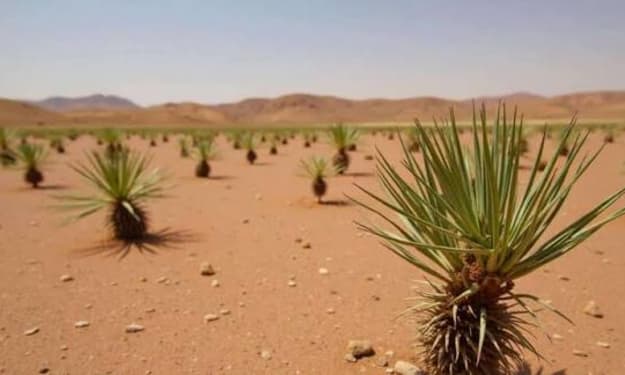
Deserts are often seen as barren, unforgiving landscapes, but they are far from lifeless. These ecosystems, while harsh, support unique biodiversity and provide critical environmental services, from carbon sequestration to regulating local climates. Yet, decades of overgrazing, unsustainable land use, and climate change have taken their toll, leaving many arid regions struggling with soil erosion, loss of native vegetation, and diminished ecological resilience. Now, a bold rewilding effort is turning the tide: over five million native plants have been reintroduced into deserts worldwide, and the early results are promising. The scale of the initiative Across regions from the deserts of the Middle East and North Africa to the arid plains of Australia and North America, conservation organizations, local communities, and governments have collaborated to replant native species that were once nearly wiped out. These plants range from hardy shrubs and grasses to iconic desert flowers, all carefully selected for their ability to survive in extreme conditions and restore ecological balance. The numbers are staggering: more than 5 million individual plants have been transplanted over the last five years, covering thousands of hectares. While this effort is labor-intensive, involving soil preparation, irrigation during establishment phases, and ongoing monitoring, the environmental payoff has been remarkable. Slowing land degradation One of the primary goals of these reintroductions is to combat land degradation, a process that affects over 40% of the planet’s land surface. In deserts, degradation is particularly acute because soil erosion occurs rapidly in the absence of stabilizing vegetation. Without plants to anchor the soil, wind and water can strip away fertile topsoil, creating a feedback loop of declining vegetation and worsening erosion. Early monitoring reports suggest that reintroduced native plants are helping to stabilize sandy soils and reduce the spread of desertification. In some areas of the Middle East, for instance, wind erosion rates have decreased by up to 30% in regions where shrubs and grasses were replanted. This stabilization not only benefits the environment but also local communities that rely on the land for grazing, agriculture, and other livelihoods. Rebooting arid ecosystems Beyond slowing soil loss, these plant reintroductions are rebooting entire desert ecosystems. Deserts are home to a diverse array of wildlife, including insects, birds, and mammals that rely on native plants for food and shelter. By re-establishing vegetation cover, these efforts have triggered a cascade of ecological benefits. In parts of the Sonoran Desert in North America, researchers observed a noticeable increase in pollinator populations, such as bees and butterflies, following the reintroduction of native flowering plants. Similarly, small mammals and reptiles that had disappeared from degraded areas are gradually returning, attracted by improved habitat structure and food availability. Climate resilience Another key advantage of reintroducing native plants is enhancing climate resilience. Many desert plants are adapted to survive extreme heat, drought, and poor soils. By re-establishing these species, ecosystems can better withstand climate-related stresses, such as prolonged droughts or extreme heatwaves. Additionally, some species improve soil moisture retention and reduce surface temperatures, creating microclimates that further support biodiversity. Community engagement and knowledge transfer What makes these rewilding efforts particularly successful is the integration of local communities. Indigenous knowledge about native species, planting techniques, and seasonal cycles has been invaluable. In some regions, schools and community groups participate in planting days, turning conservation into a source of pride and education. This engagement ensures that restored areas are maintained, monitored, and valued over the long term. Looking ahead While the reintroduction of five million native plants is a significant achievement, experts caution that long-term success requires continued investment, monitoring, and protection from overgrazing, development, and climate pressures. However, the initiative provides a compelling example of how targeted, science-backed restoration can reverse environmental damage. For arid ecosystems, these efforts are more than just planting trees and shrubs—they represent hope. They demonstrate that even the most fragile landscapes can recover when humans actively collaborate with nature, restoring not only plants but the entire web of life that depends on them. As the world grapples with climate change and land degradation, the lessons from these desert rewilding projects offer a blueprint for action: by investing in native biodiversity, we can slow degradation, rebuild ecosystems, and create landscapes that are resilient, productive, and teeming with life once again.
By Fiaz Ahmed Brohi3 days ago in Longevity



Comments
There are no comments for this story
Be the first to respond and start the conversation.