
How to Lead a Peaceful Life in a Chaotic World: Lessons from Ikigai.
Simple, Science-Backed Practices to Find Calm and Purpose in the Midst of Modern Chaos


"Peace isn't something you find outside. It's something you build within - slowly, quietly, daily."
In the whirlwind of deadlines, bills, expectations, and an always-on digital world, many of us find ourselves gasping for moments of calm. The corporate grind, social pressure, trauma, financial stress, and even the constant noise of our own thoughts have made peace feel like a luxury - one often tied to therapy sessions many can no longer afford.
Let's be honest - mental health is a touchy and sensitive subject. And rightfully so. The rising cost of therapy, paired with inflation eating away at basic needs, has made emotional healing feel exclusive. Time is short, days are long, and even getting help can feel overwhelming. For many, peace is no longer found in expensive solutions, but in what's accessible: a book, a walk, a moment of stillness, or a reminder that you're not alone.
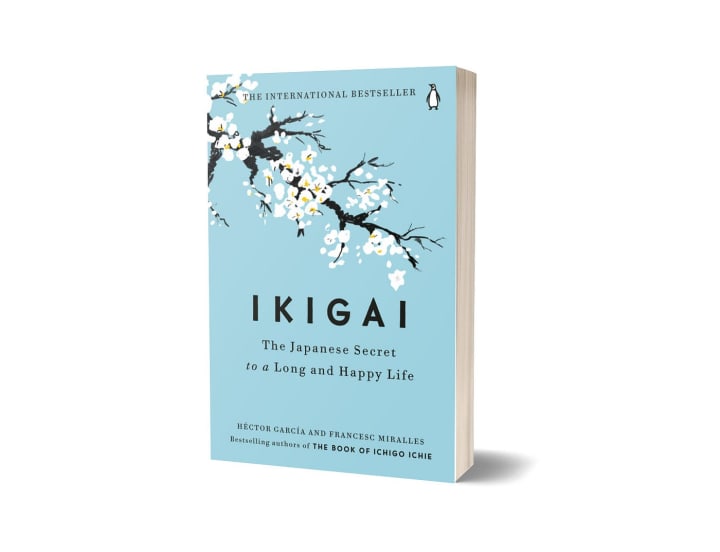
I've been listening to Ikigai: The Japanese Secret to a Long and Happy Life, and it's reshaped how I approach peace. This isn't just another self-help trend. It's a gentle philosophy that reconnects us to what really matters. Rooted in centuries of Japanese tradition, Ikigai offers a framework for living intentionally - not as a means to escape chaos, but as a way to thrive within it.
Today, let's break down why peace feels so far away, and how you can actually invite it back into your daily life - no therapist, no retreat, no perfection required.
Why So Many Are Struggling with Peace Today?
The modern world thrives on urgency and achievement, leaving little room for introspection. Here's why peace feels increasingly elusive:
1. Corporate Life Disconnects Us from Our Inner Needs
We're conditioned to chase external markers of success - promotions, pay raises, titles - all while neglecting the inner voice that whispers, "Is this enough?" According to a 2022 Gallup global workplace study, 60% of employees reported feeling emotionally detached at work, and 19% were outright miserable. Without purpose-aligned work, we burn out - fast.
2. Unresolved Trauma, Grief, or Burnout Gets Swept Under the Rug
Modern society glorifies productivity, which leaves little space to process pain. Instead of healing, we bury unresolved emotions under layers of busyness, only for them to resurface later as anxiety, numbness, or fatigue. Dr. Gabor Maté, a renowned trauma expert, notes that "the attempt to escape from pain is what creates more pain."
3. The Therapy Gap
While therapy is invaluable, its high costs and limited accessibility leave millions without support. In the U.S., a 2023 study by the Kaiser Family Foundation found that nearly 45% of adults who needed mental health services didn't receive them - primarily due to cost or access.
4. Social Media Noise
Constant comparison chips away at self-worth. A Harvard University study found that people who spent more time on social media were more likely to experience symptoms of depression - especially when using it passively (scrolling rather than engaging).
5. A World That Rewards Hustle, Not Healing
Capitalism values output over well-being. Rest is framed as laziness, and slowing down feels counterintuitive when everyone else seems to be sprinting ahead. But as the World Health Organization recognized in 2019, burnout is now classified as a legitimate workplace syndrome.
Peace isn't just about silence. It's about feeling safe, balanced, and whole - even while life keeps moving.
7 Daily Practices to Invite Peace, Inspired by Ikigai.
To cultivate peace, we must first understand the four pillars of Ikigai:
- What you love
- What you're good at
- What the world needs
- What you can be paid for
When these elements intersect, they create a sense of meaning and fulfillment. Here's how to apply this wisdom to your everyday life:
1. Do Something You Love - Every Single Day
Your "ikigai" is your reason to wake up. Start with small pleasures. Art, cooking, journaling - anything that lights a spark. A 2020 study in the Journal of Positive Psychology confirmed that people who engage in hobbies are significantly less likely to experience symptoms of depression and anxiety.
2. Move Your Body, Even a Little
A still body traps stress. Movement - even stretching or walking - releases it. Harvard Medical School reports that even 20 minutes of walking per day can drastically reduce anxiety and improve sleep.
3. Simplify Your Meals and Your Schedule
Eat light. Make room for air - and life. Overconsumption (of food, media, work) often buries peace. Mindful eating not only aids digestion but, according to UC San Diego Center for Mindfulness, it also reduces binge eating and increases enjoyment of food.
4. Connect Without Pressure
Talk to someone who makes you feel safe. Or simply sit in silence beside them. Human connection, according to research from Stanford University, boosts oxytocin, the "love hormone," which lowers cortisol and fosters emotional regulation.
5. Declutter Your Mental Space
Journal, sketch, speak out loud. Get the noise out. Let the quiet in. Expressive writing, according to Dr. James Pennebaker's research at the University of Texas, has been proven to improve immune function and reduce mental distress.
6. Spend Time in Flow
That place where you lose track of time doing something you enjoy? That's peace in disguise. Psychologist Mihaly Csikszentmihalyi, who coined the term "flow," found that people who regularly enter flow states report higher overall life satisfaction and lower anxiety.
7. Remember Your Purpose
Your life has meaning - even if the world distracts you from it. Ikigai teaches us that purpose doesn't have to be grand. It can be as simple as nurturing a pet, creating art, or checking in on a friend. According to a 2021 study from the University of Michigan, having a sense of purpose is associated with better sleep, healthier habits, and even longer life expectancy.
Final Thoughts
We live in a world that often feels broken. But here's the truth:
We can't fix the world - but we can fix ourselves.
Peace doesn't come from controlling everything. It comes from choosing what to hold onto - and what to let go of. You don't need perfect routines or luxury retreats. You need presence, purpose, and a gentle reminder that you are already enough.
Healing isn't linear. Some days are messy. But each breath, each choice to slow down, each pause to reflect - these are the bricks that build your sanctuary.
So start where you are. Choose one peaceful thing today. Then do it again tomorrow.
That's how we begin.
About the Creator
Dishmi M
I’m Dishmi, a Dubai-based designer, writer & AI artist. I talk about mental health, tech, and how we survive modern life.
Subscribe for healing advice, human stories & future thoughts!
Reader insights
Nice work
Very well written. Keep up the good work!
Top insights
Compelling and original writing
Creative use of language & vocab
Eye opening
Niche topic & fresh perspectives
A wildflower in California reveals a newly documented evolutionary process
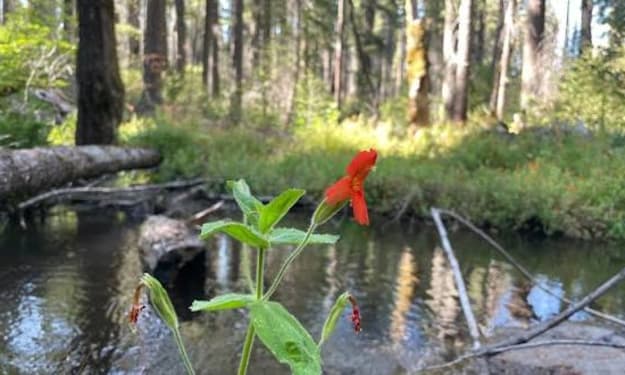
In a remarkable breakthrough for evolutionary biology, researchers studying wildflower populations in California have documented one of the clearest cases yet of rapid genetic evolution occurring in nature. The findings, centered on the bright red scarlet monkeyflower (Mimulus cardinalis), reveal how some plant populations were able to adapt and recover following the region’s most severe drought in over a millennium — providing tangible evidence of an evolutionary process known as evolutionary rescue. The scarlet monkeyflower, a wildflower native to moist areas along streams and springs in California, has long been familiar to botanists and hikers alike for its vivid blooms and distinctive habitat. However, during the early 2010s, California experienced an unprecedented megadrought that lasted several years, killing hundreds of millions of trees and dramatically altering the ecological landscape. While many plant species suffered catastrophic declines, some populations of Mimulus cardinalis showed a surprising resilience. Scientists from multiple institutions undertook a long‑term study to understand how this wildflower weathered such extreme conditions. Over eight years, researchers tracked 55 populations of the monkeyflower across its natural range, closely monitoring their numbers and health. They also conducted whole‑genome sequencing to observe genetic changes over time, looking for evidence that natural selection had acted on specific traits. The results were illuminating. At sites where populations had nearly collapsed — with numbers dropping by as much as 90% — genetic analysis revealed consistent shifts in allele frequencies across the genome. These shifts were not random; they were associated with traits that likely enhanced drought tolerance, enabling some individuals to survive and reproduce where others perished. As these “advantaged” genotypes became more common, the population as a whole began to recover, a hallmark of what biologists call evolutionary rescue. Evolutionary rescue occurs when the genetic variation present within a population allows it to adapt fast enough to avoid extinction under sudden environmental stress. While theoretical models have long predicted such processes, direct evidence in the wild—especially involving plants—has been limited. This study is among the first to document genomic changes in natural plant populations that are clearly linked to a major environmental crisis. For decades, evolutionary biologists have debated how quickly natural selection can operate in real‑world scenarios. Classic case studies like Darwin’s finches in the Galápagos have demonstrated adaptive changes in beak shape over a few generations. But plant studies have often lagged behind, in part because many species have long lifecycles or reproduce clonally, making rapid evolution harder to detect. The California wildflower case breaks new ground by combining long‑term fieldwork with cutting‑edge genomic analysis. Researchers noted that the recovery of the monkeyflower populations did not happen overnight — it took roughly two to three growing seasons for numbers to rebound significantly. Yet in evolutionary terms, this pace is considered rapid. The drought likely imposed intense selective pressure, filtering out less drought‑tolerant genotypes and leaving behind a smaller cohort better suited to the harsh conditions. As these were the individuals contributing more seeds to the next generation, their genetic traits spread through the population. The implications of this research extend beyond wildflowers. As climate change accelerates and extreme weather events become more frequent, scientists are increasingly interested in how species will respond — whether through behavioral changes, migration, or evolutionary adaptation. Cases like Mimulus cardinalis suggest that some species may harbor the genetic diversity necessary to adapt swiftly when environments change dramatically. However, not all species will be so fortunate, and the mechanisms of evolutionary rescue are still not fully understood. “This is one of the clearest cases we've seen where a wild plant species shows genomic evidence of adapting to extreme environmental stress,” said one of the study’s lead authors. “It gives us hope that under certain conditions, natural selection can work fast enough to help populations persist — but it also raises many questions about the limits of such adaptation.” The study’s methods also signal a new era in ecological research. By combining consistent field monitoring with high‑resolution genetic data, scientists can now track evolution as it happens rather than inferring processes from fossils or distant historical records. This “real‑time” view of evolution may become vital for conservation efforts, helping biologists identify which populations are most at risk and which may have the inherent capacity to adapt. For conservationists, the findings underscore both the resilience and vulnerability of natural ecosystems. While some populations like the scarlet monkeyflower demonstrate extraordinary adaptive potential, others with limited genetic diversity may face a greater threat of decline or extinction as climates shift. Understanding the genomic underpinnings of adaptation could therefore inform strategies to protect biodiversity in a warming world. As research progresses, scientists hope to explore similar evolutionary dynamics in other species and regions. The California wildflower study stands as a testament to the power of modern genomics and long‑term ecological research — and a reminder that evolution, far from being a slow, imperceptible force, can sometimes unfold before our eyes.
By Fiaz Ahmed 3 days ago in Longevity



Comments (1)
I read Ikigai too. Its truly a masterpiece. great referencing. i also reccomend reading The Art of Happiness by Howard C.