

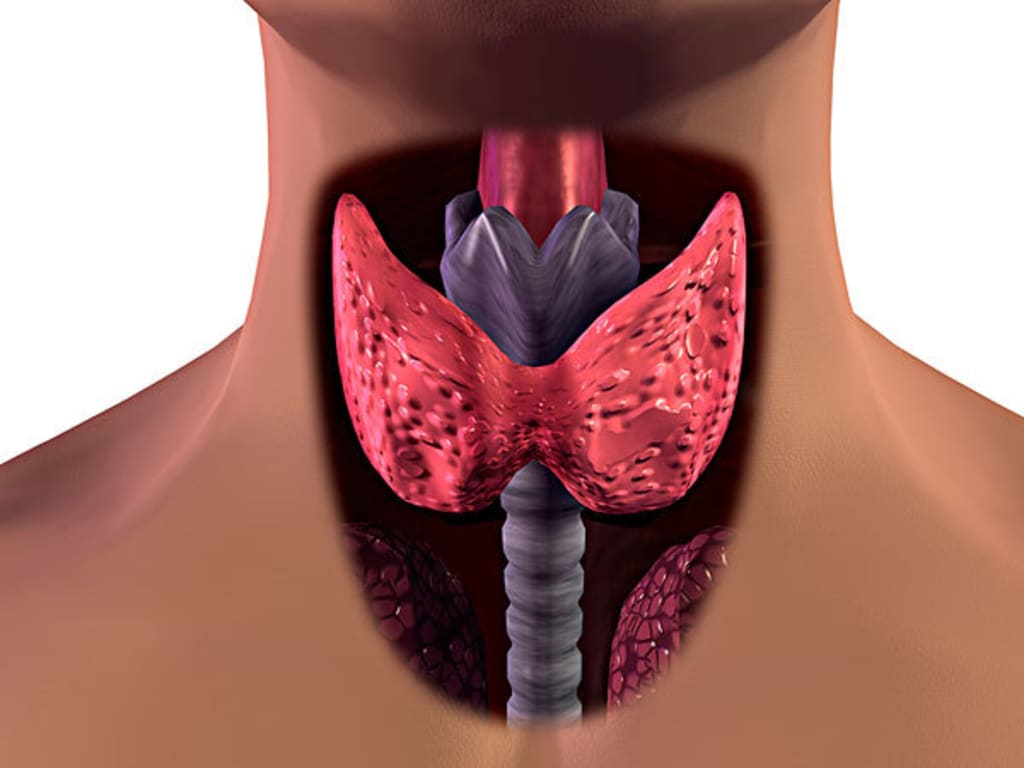
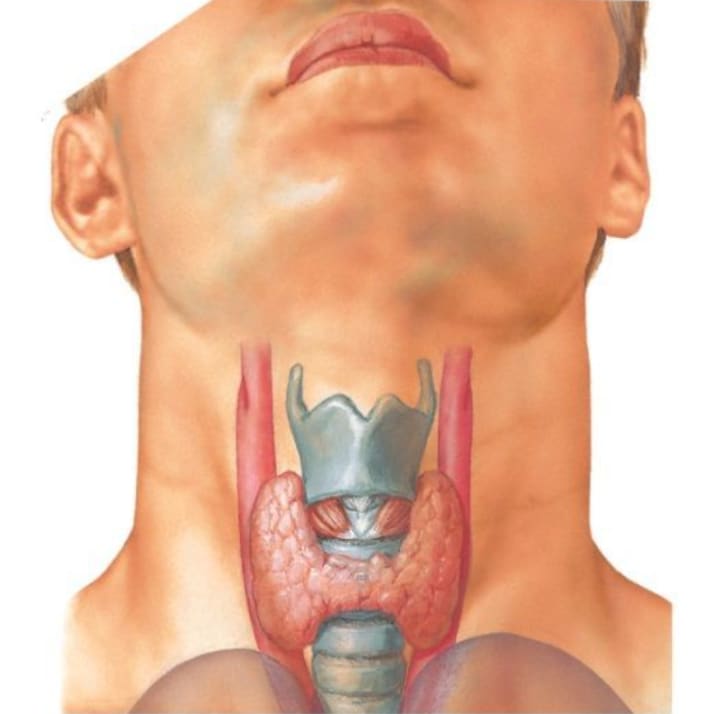
The thyroid gland is the largest endocrine organ in the human body. It is located below the laryngeal junction and on both sides of the trachea. It is shaped like a shield and produces thyroid hormones. It is responsible for regulating the metabolism and normal operation of cells in the body. It affects blood pressure, heart rate, body temperature and weight. Excessive thyroid secretion can cause "hyperthyroidism", and too little secretion is "hypothyroidism". In addition, the abnormal proliferation of the thyroid tissue to form a protruding mass is called "#thyroid nodules#". What symptoms will turn into a few malignant thyroid nodules to reflect a thyroid problem?
When the thyroid gland begins to secrete abnormally
Hyperthyroidism: increased sweating, unbearable heat, weight loss, rapid heartbeat
Hypothyroidism: chills, weight gain, slower heartbeat
"Brain Fog Symptoms"
The so-called "foggy brain" is used to describe cognitive problems, including memory loss, unclear thinking, and inability to concentrate. When the thyroid function is low, insufficient hormones secreted to the brain may cause "brain fog" to occur.

Mood swings
Do you feel sad or upset? There are many reasons for this low mood, and changes in thyroid function may impact the brain's serotonin level. One of the signs that hypothyroidism is just beginning to appear is a feeling of depression; while hyperthyroidism can cause irritability and irritability.
Problems with pregnancy and childbirth
Studies have found that if the abnormal thyroid gland is not treated in time, other problems such as toxemia of pregnancy will be easily complicated during pregnancy, which will increase the probability of miscarriage or stillbirth, and may also cause premature delivery or low birth weight.
Irregular menstruation
An abnormal thyroid gland can lead to irregular menstrual periods, too much or too little menstrual blood. Thyroid disease is especially common in young women, so pay special attention to the symptoms of irregular menstruation.
Puffy face
Do you feel your face looks puffy or drooping eyelids? It may be that thyroxine does not work properly, causing moisture to accumulate in the body. It may even cause thick lips and large tongue and dry skin.
Blurred vision
The accumulation of water caused by an abnormal thyroid gland may also occur in the tissues around the eyes. At this time, the muscles near the eyes will become larger, making people feel unable to focus when looking at things, blurred vision, and even double vision.
Carpal tunnel syndrome
When the thyroid is unbalanced, excess water can accumulate in other parts of the body. There is a "Median Nerve" that controls the sensation and movement of the wrist and hand. The Median Nerve passes through a section of the wrist called the "Carpal Tunnel". If there is too much water in this area, the Median Nerve will be restricted to the wrist. Between the bones and tendons of the tunnel, the hands and wrists may feel tingling and numbness, or the wrists and upper arms may feel a sharp tingling sensation. This is the so-called "carpal tunnel syndrome."
Changes in taste
The presentation of taste requires the brain and the mouth to work together. An abnormal thyroid gland can disturb the brain or mouth, leading to disturbances in the sense of taste.
Low libido
Most patients with hypothyroidism have signs of low libido or decline. This is because when the secretion of adrenaline is insufficient and the body's metabolic rate slows down, the body's efficiency in converting adult sex hormones will be reduced, resulting in insufficient female estrogen and male testosterone hormone concentrations.
Hair loss crisis
It is normal for the daily hair loss to be between 50 and 100 hairs. If you find too serious hair loss, or even start to see the scalp, you should pay attention to the warning signs of abnormal thyroid.
hypertension
Hypothyroidism can cause blood vessels to lose elasticity, and the heart will work harder to transport blood to all parts of the body. Hyperthyroidism is a hormone that causes a faster heartbeat. Both conditions can lead to high blood pressure.
Constipation or diarrhea
When the thyroid gland is low, the lack of hormones may slow down digestion, leading to constipation; on the contrary, hyperthyroidism can stimulate digestion, causing increased bowel movements or diarrhea.
How to eat hyperthyroidism?
Foods recommended for hyperthyroidism:
Cruciferous vegetables
Cruciferous vegetables contain an antioxidant substance, which can be decomposed into thiocyanate under certain conditions. The thiocyanate can inhibit the absorption of thyroid iodine in the human body, and in the long term, it will cause the thyroid hormone production function in the human body to become impaired, thereby helping to control hyperthyroidism.
Chinese kale, rape, broccoli, cauliflower, cabbage, kale, bamboo shoots, etc.
Low-iodine food
Iodine is one of the indispensable trace elements in the human body, but it produces thyroid hormones. Therefore, hyperthyroidism should reduce the intake of iodine.
Iodine-free salt, natural herbal tea, unsalted baked nuts, oats, honey, maple syrup, egg whites, unsalted milk and egg bread, fresh fruits, black pepper, spices, etc.
Calcium/Vitamin D
Hyperthyroidism may cause bone weakness, so calcium and vitamin D should be added to help strengthen bone density.
Spinach, okra, mushrooms, salmon, yogurt, beans, nuts, etc.
Rich in selenium
Foods rich in selenium can help balance thyroid hormone levels, prevent cell damage, and protect the thyroid and surrounding tissues.
Brazilian beans, turkey, mushrooms, chia seeds, sunflower seeds, etc.
Foods recommended to avoid for hyperthyroidism:
Too much iodine content
Too much iodine will cause the thyroid gland to become more hyperactive and must be avoided to prevent deterioration.
Seafood, kelp, sushi, seaweed, algae extract, egg yolk, iodized salt, etc.
gluten

Gluten may damage the intestines, cause autoimmune diseases in some people, or cause thyroid inflammation.
Wheat, barley, malt, rye.
Soybeans
Although soybeans and their soy products do not contain iodine, they may affect some treatments for hyperthyroidism.
Soybeans, soy sauce, tofu, soy milk, etc.
caffeine
Caffeine may aggravate the symptoms of hyperthyroidism, causing more serious symptoms such as anxiety, nervousness, irritability, and rapid heartbeat. .
Coffee, tea, sparkling water, chocolate, etc.
About the Creator
Keep reading
More stories from writers in Longevity and other communities.
Day 4 of Quitting
If this is how sobriety feels, maybe it’s better to go through life a little buzzed… this, along with other hits like, I want to kill myself, I wish I was dead, and I’m going to throw myself off a bridge have been the only thoughts on rotation these past few days. I promise myself that if, in a month, I still feel like this (‘this’ meaning despondent, full of rage, and simultaneously numb) I can go back to smoking. Until mid-February though? Nicotine is off the table.
By sleepy drafts23 days ago in Longevity
The Duelist
The rays of a dying red sun flashed against the onrushing blade. The grey beards say the key to dueling lies in size, speed, reach, righteous fury, whatever the person in front of them pays them to say. Matteo knew better than any it was none of these and had an undefeated record on these sands to prove it.
By Matthew J. Fromm5 days ago in Fiction


Comments
There are no comments for this story
Be the first to respond and start the conversation.