
How Stress Nearly Destroyed My Health
The Wake-Up Call That Saved My Life—And What I Learned About Letting Go

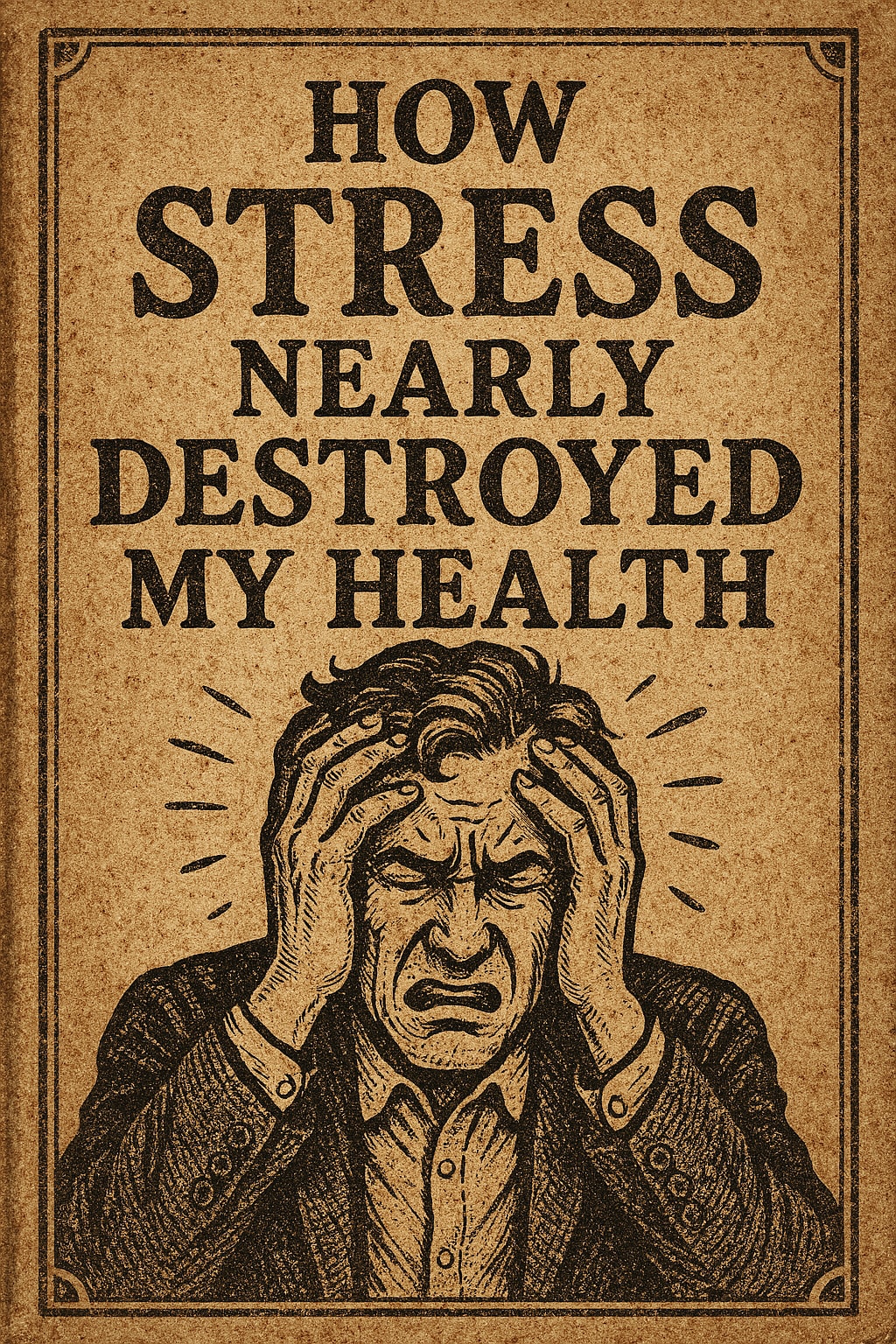
The doctor's words were clinical, but they hit like a freight train:
"Your body is showing signs of chronic stress damage. If you don't make changes immediately, we're looking at serious long-term consequences."
I was 33 years old. No family history of major illness. Active enough. Ate relatively well.
But my body was breaking down from the inside out.
The culprit? Stress I'd been carrying for so long, I'd forgotten what it felt like to be without it.
When Success Becomes Poison
From the outside, my life looked perfect.
I had the career everyone said I should want. The promotions. The recognition. The salary that made my parents proud.
But inside, I was drowning.
Here's what my daily reality looked like:
• Waking up at 4 a.m. with racing thoughts and a pounding heart
• Skipping meals because "I didn't have time"
• Working through weekends and vacations
• Snapping at people I loved over small things
• Feeling exhausted but unable to sleep
• Constant headaches, digestive issues, and muscle tension
I told myself this was normal. This was what ambition looked like. This was the price of success.
Until my body sent me a message I couldn't ignore.
The Breaking Point
It happened during a routine presentation at work.
Mid-sentence, my vision started tunneling. My chest tightened. I couldn't catch my breath. The room spun.
I excused myself, stumbled to the bathroom, and collapsed on the floor, convinced I was having a heart attack.
The ER doctor ran tests. My heart was fine. Physically, I was "healthy."
But my cortisol levels—the stress hormone—were dangerously elevated. My blood pressure was too high. My body was in constant fight-or-flight mode, even when there was no threat.
"Your body thinks it's constantly under attack," the doctor explained. "And it's destroying itself trying to protect you."
What Stress Was Stealing From Me
That diagnosis forced me to research what chronic stress actually does. The findings terrified me:
Stress was actively shortening my life by:
• Weakening my immune system (I'd been sick constantly)
• Damaging my cardiovascular system
• Accelerating cellular aging
• Disrupting my sleep cycles
• Impairing cognitive function and memory
• Increasing inflammation throughout my body
• Raising my risk for diabetes, heart disease, and stroke
I wasn't just tired. I was literally aging faster than I should.
The career I was sacrificing everything for? It was killing me.
The Changes That Saved My Life
Recovery wasn't instant. But I made non-negotiable changes:
I learned to say no. To extra projects. To after-hours emails. To obligations that drained me.
I protected my sleep. Eight hours became sacred. No negotiation.
I started moving. Not intense workouts—just daily walks that cleared my head.
I practiced actual rest. Not scrolling my phone, but genuine recovery time.
I reconnected with people. Real conversations. Real laughter. Real support.
I stopped glorifying busy. Being overwhelmed wasn't a badge of honor anymore.
Within three months, my blood pressure normalized. Within six months, the constant tension headaches disappeared. Within a year, I felt like a different person.
Not because my life became easier, but because I stopped treating my body like it was disposable.
The Lesson I Wish I'd Learned Sooner
Here's the truth they don't tell you about stress:
Your body keeps the score.
You can ignore the signs. Push through the exhaustion. Convince yourself you'll rest later.
But "later" might come too late.
Every day of chronic stress is a withdrawal from your health account. And unlike money, you can't always earn it back.
Your Health Is Waiting
If you're reading this while running on empty—if you're normalizing constant tension, skipping sleep, and telling yourself you'll slow down eventually—please hear this:
You don't get a second body.
The stress you're carrying today is shaping the health you'll have at 50, 60, 70. Every choice matters. Every moment of rest counts.
Start protecting your health now by:
• Setting real boundaries around work
• Prioritizing sleep like your life depends on it (because it does)
• Finding daily stress-relief practices that work for you
• Saying no without guilt
• Remembering that you can't pour from an empty cup
Your achievements mean nothing if you're too sick to enjoy them.
The Life I'm Living Now
I make less money now than I did at my peak. My title is less impressive. My calendar is less packed.
But I sleep through the night. My blood pressure is healthy. I laugh regularly. I'm present with people I love.
I traded the life that looked good for the life that feels good.
And I'm not just living longer—I'm living better.
That's what matters.
Your health is your true wealth. Protect it fiercely.
----------------------------------
Thank you for reading...
Regards: Fazal Hadi
About the Creator
Fazal Hadi
Hello, I’m Fazal Hadi, a motivational storyteller who writes honest, human stories that inspire growth, hope, and inner strength.
Keep reading
More stories from Fazal Hadi and writers in Longevity and other communities.
Day 4 of Quitting
If this is how sobriety feels, maybe it’s better to go through life a little buzzed… this, along with other hits like, I want to kill myself, I wish I was dead, and I’m going to throw myself off a bridge have been the only thoughts on rotation these past few days. I promise myself that if, in a month, I still feel like this (‘this’ meaning despondent, full of rage, and simultaneously numb) I can go back to smoking. Until mid-February though? Nicotine is off the table.
By sleepy drafts23 days ago in Longevity
Essence, Embodiment, and Relational Reality
The Failure of Reduction and the Need for Synthesis There is a persistent failure in many modern attempts to explain what a human being is. Some frameworks reduce the person entirely to matter, insisting that identity, consciousness, morality, and meaning are nothing more than emergent properties of physical processes. Other frameworks move in the opposite direction, detaching spirit from reason and grounding belief in intuition alone, often at the cost of coherence or accountability. Both approaches fail because both misunderstand essence. One denies that essence exists at all. The other treats it as something vague and undefinable.
By Peter Thwing - Host of the FST Podcast4 days ago in Longevity
🅼🅸🅳🅽🅸🅶🅷🆃 🆂🅽🅰🅲🅺🆂
"It's 10 in Tuscon! We all know what that means... It's Time for Midnight Snacks with your man, Gerald Gee! Ready to spend the night together? Me too! I'm full of snacks and can't wait to regurgitate them all back into your hungry ears. Crack a brew! Pop some corn! Anything to get ready for one hell of a show where the talk maybe cheap but the words cut deep...
By Lamar Wiggins8 days ago in Fiction


Comments
There are no comments for this story
Be the first to respond and start the conversation.