
How Physical Therapy Staffing Improves Rehab Outcomes for Patients
Exploring How Staffing Ratios, Specialization, and Consistency Shape Recovery

Introduction
Rehabilitation is rarely a straight line. Anyone who has gone through physical therapy whether for a sports injury, post-surgery recovery, or managing a chronic condition knows that progress depends on much more than exercises and treatment plans. The people behind those plans matter just as much. This raises an important question: How does physical therapy staffing influence the outcome of patient rehabilitation?
In this blog, we’ll look beyond numbers and explore the deeper connection between staffing models, therapist expertise, and patient recovery. By unpacking how staffing ratios, skill distribution, and consistency shape rehab experiences, we’ll see why physical therapy staffing is one of the most critical (yet often overlooked) factors in delivering better patient outcomes.
Why Staffing Matters in Physical Therapy
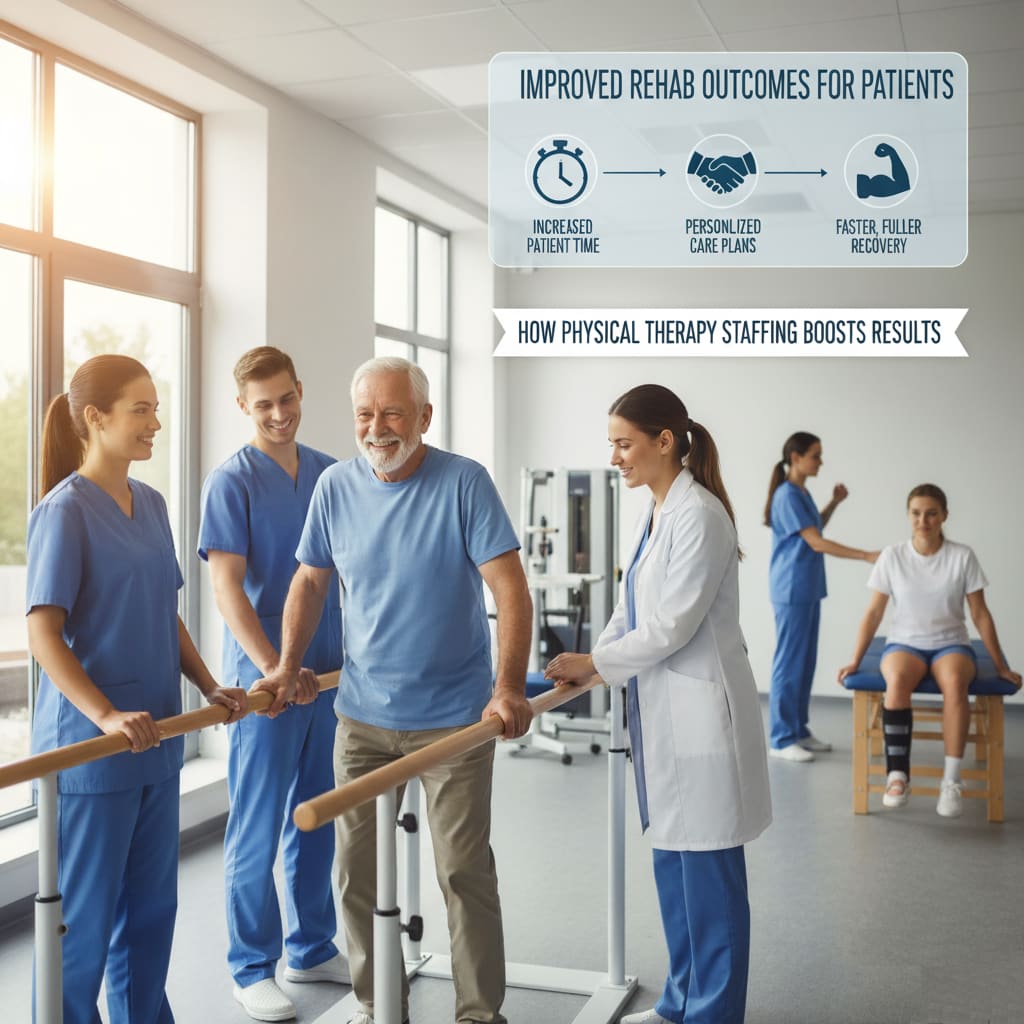
Staffing is not simply a logistical issue it directly shapes the quality of care. In rehab settings, patients rely on one-on-one guidance, frequent adjustments to treatment, and ongoing motivation. When staffing levels are insufficient, patients risk delayed progress, reduced supervision, and even incorrect execution of exercises.
Think of it this way: therapy is both science and relationship. When a therapist has time to understand a patient’s unique recovery journey, outcomes naturally improve. When staffing falls short, therapy often becomes rushed, fragmented, and less effective.
So, the real question becomes: What changes when patients have access to well-staffed therapy teams?
Therapist-to-Patient Ratios and Caseload Management
One of the most visible aspects of staffing is the therapist-to-patient ratio. This balance directly affects whether patients receive personalized attention or become one of many in an overbooked caseload.
- High caseloads: When therapists juggle too many patients, each individual gets less time, less monitoring, and fewer adjustments to their plan. Patients may leave sessions without clarity or confidence, which slows recovery.
- Balanced caseloads: With manageable ratios, therapists can monitor form, provide encouragement, and adjust exercises in real-time. This increases adherence, prevents re-injury, and accelerates recovery.
Several studies have highlighted that optimal ratios don’t just improve patient satisfaction they lower dropout rates in rehab programs. Patients who feel heard and supported are far more likely to stick with their therapy plan until full recovery.
In practice, this is where therapy staffing services often come into play, ensuring facilities can meet demand with appropriate caseload distribution. Balanced staffing means patients are less likely to feel like they’re on an assembly line and more like they’re in a guided recovery journey.
Skill Mix, Specialization, and Clinical Competency
Not all physical therapists are alike, and that’s a strength when staffing is done well. Consider the variety of patient needs:
- An athlete recovering from a torn ACL.
- A stroke survivor regaining motor function.
- A child with developmental delays.
- An older adult managing arthritis.
Each case requires a different set of expertise. A strong staffing model ensures the right mix of specialists orthopedic, neurological, pediatric, geriatric so patients can be matched with professionals who understand their condition in depth.
This raises an important question: Wouldn’t recovery be faster and smoother if your therapist specialized in your exact condition?
The answer is almost always yes. Specialized knowledge allows therapists to anticipate challenges, modify exercises appropriately, and set realistic goals tailored to a patient’s circumstances. Effective staffing models prioritize this diversity of expertise, creating teams that can handle a wide spectrum of patient needs.
Consistency of Care and Continuity
Rehab is not just about techniques it’s about trust. Patients often feel vulnerable during recovery, both physically and emotionally. Continuity of care builds a relationship where therapists understand not just a patient’s injury, but their fears, motivations, and progress over time.
Frequent staff turnover disrupts this process. Patients may need to re-explain their history, lose momentum, or feel less comfortable with new therapists. Studies show that consistency leads to higher adherence rates, as patients are more likely to follow through when working with someone familiar and trusted.
A stable staffing structure ensures that care remains seamless, fostering trust and accountability that translates directly into better rehab outcomes.
Reducing Burnout Among Therapists
Staffing levels don’t just affect patients they affect therapists, too. When caseloads are too heavy or staffing is stretched thin, therapists face fatigue and burnout. This not only reduces job satisfaction but also diminishes the quality of patient care.
Healthy staffing structures allow therapists to give their best energy and focus to each session. When therapists are supported, they’re more likely to stay motivated, empathetic, and attentive qualities that patients immediately benefit from.
In short, taking care of therapists through proper staffing indirectly but powerfully takes care of patients.
Patient-Centered Benefits of Strong Staffing Models
When staffing is strong, the benefits cascade to patients in multiple ways:
- Improved motivation: Patients feel supported and encouraged, which boosts adherence.
- Faster recovery timelines: Personalized and consistent attention leads to quicker progress.
- Reduced risk of re-injury: Therapists catch mistakes early, preventing setbacks.
- Greater satisfaction: Patients perceive their care as higher quality, which enhances trust in the healthcare system overall.
These benefits highlight why staffing should be seen not as a background issue, but as a central pillar of effective rehabilitation.
Regional Perspective: Michigan Therapy Staffing Challenges and Insights
Zooming in on specific regions can make these issues more tangible. Take Michigan therapy staffing as an example. The state faces rising demand for physical therapy due to an aging population, more joint replacement surgeries, and higher survival rates after serious illnesses like strokes.
However, workforce shortages remain a challenge, especially in rural areas where access to specialized therapists can be limited. Urban centers may have more resources, but high demand still puts pressure on staffing ratios.
To address these challenges, Michigan has seen initiatives such as expanded residency programs for physical therapists, increased use of tele-rehab for rural populations, and partnerships between hospitals and universities to strengthen the pipeline of future professionals. These localized solutions remind us that staffing isn’t just a national issue it’s one that requires regional adaptation and creativity.
The Future of Therapy Staffing in Rehab
Looking ahead, staffing in physical therapy is likely to evolve alongside healthcare as a whole. A few trends stand out:
- Telehealth integration: Virtual therapy sessions can supplement in-person care, easing the strain on staff while maintaining consistency for patients.
- AI-assisted scheduling: Tools that balance caseloads and predict staffing needs may reduce burnout and improve patient access.
- Hybrid care models: Combining in-person therapy with remote monitoring could make staffing more efficient without sacrificing quality.
The common thread is adaptability finding ways to keep therapy personal, patient-centered, and effective even as staffing challenges persist.
Conclusion
So, how does staffing impact rehab outcomes? The answer lies in the details: balanced therapist-to-patient ratios, diverse specialization, consistency of care, and sustainable workloads. Together, these factors ensure patients not only receive treatment but also thrive during their recovery journey.
Ultimately, rehab success depends not just on exercises or equipment, but on the people delivering care and whether there are enough of them to make every patient feel supported. That’s why discussions about physical therapy staffing should be at the forefront of improving healthcare systems, both today and in the future.
About the Creator
Manish Therapy Services, Inc.
Manish Therapy Services is a trusted therapy staffing company providing skilled physical, occupational, and speech therapists to healthcare facilities across the U.S. We deliver quality rehab staffing solutions with care and precision.
Keep reading
More stories from Manish Therapy Services, Inc. and writers in Longevity and other communities.
Therapy Staffing Services: Costs, Compensation Package, Positions, and Is It For You?
In today's healthcare environment, keeping therapy departments fully staffed is a challenge that facilities across the country face every day. Whether you’re managing a hospital, outpatient clinic, or skilled nursing facility, unfilled therapy roles can disrupt patient care and strain your permanent team.
By Manish Therapy Services, Inc.10 months ago in Longevity
The Best Time To Eat Breakfast for Blood Sugar and Energy
Eating breakfast within 1–2 hours of waking up can help support blood sugar and provide energy and nutrients to start your day. Eating breakfast at a consistent time is important. Changing meal times can disrupt the body’s internal clock, which helps regulate blood sugar. A balanced breakfast with complex carbs, protein, and healthy fats helps support blood sugar.
By Good health to everyoneabout 18 hours ago in Longevity


Comments
There are no comments for this story
Be the first to respond and start the conversation.